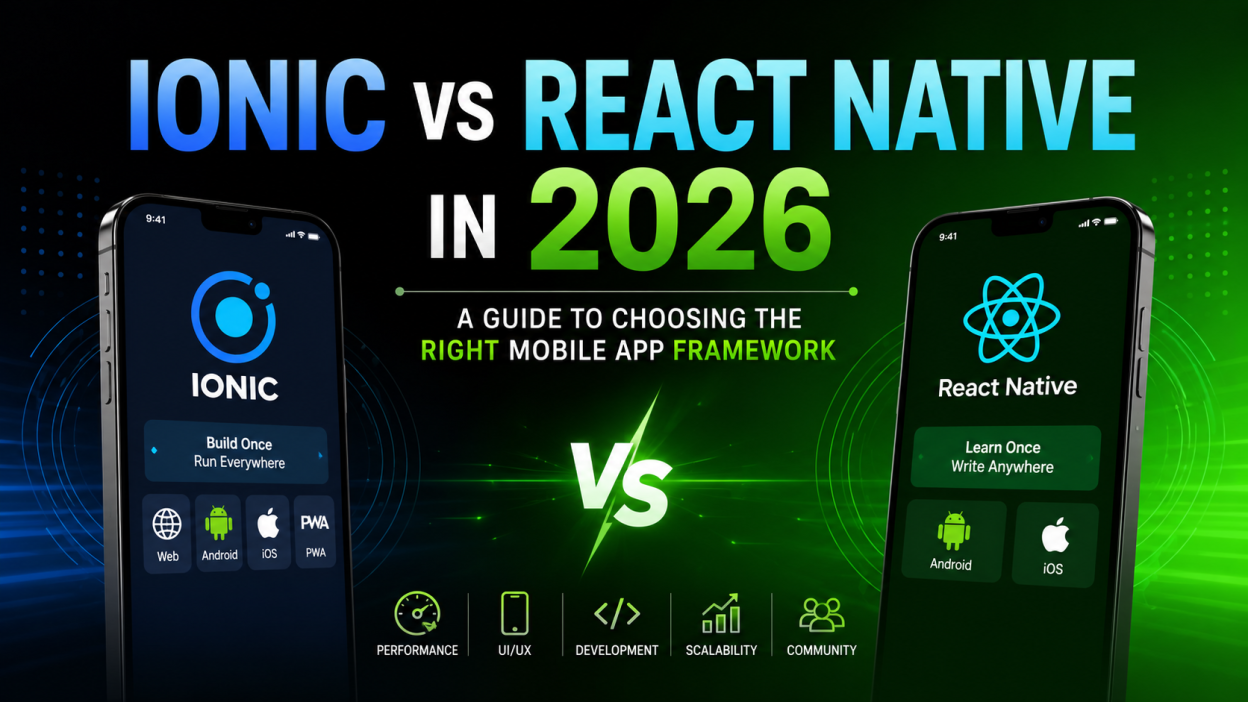
The mobile app development ecosystem in 2026 is more competitive and innovation-driven than ever. Businesses expect applications that are not only fast and scalable but also deliver a seamless, native-like user experience across devices. In this evolving landscape, two frameworks continue to dominate cross-platform development: Ionic vs React Native Framework.
At first glance, both frameworks promise “build once, run everywhere.” But in reality, they follow very different philosophies. Understanding these differences is the key to choosing the right tool for your project.
The Philosophy Behind Ionic: Web Technologies for Everything
The Ionic Framework is designed around a web-first approach. It allows developers to build mobile applications using familiar tools like HTML, CSS, and JavaScript. Instead of relying on native components, Ionic renders applications inside a WebView, essentially embedding a web application within a mobile container.
This approach makes Ionic incredibly accessible. A web developer can transition into mobile development without learning entirely new programming languages. In 2026, this advantage still holds strong, especially with improvements in browser performance and hardware acceleration.
Ionic’s integration with Capacitor has also matured significantly. It now provides smoother access to device features such as the camera, file system, and geolocation. While earlier versions of hybrid frameworks struggled with performance, modern Ionic apps are far more optimized and capable.
What truly sets Ionic apart is its versatility. Beyond mobile apps, developers can also create Progressive Web Apps (PWAs) and even desktop applications from the same codebase. This makes it a powerful choice for businesses looking to maintain a unified development strategy.
The Philosophy Behind React Native: Learn Once, Write Anywhere
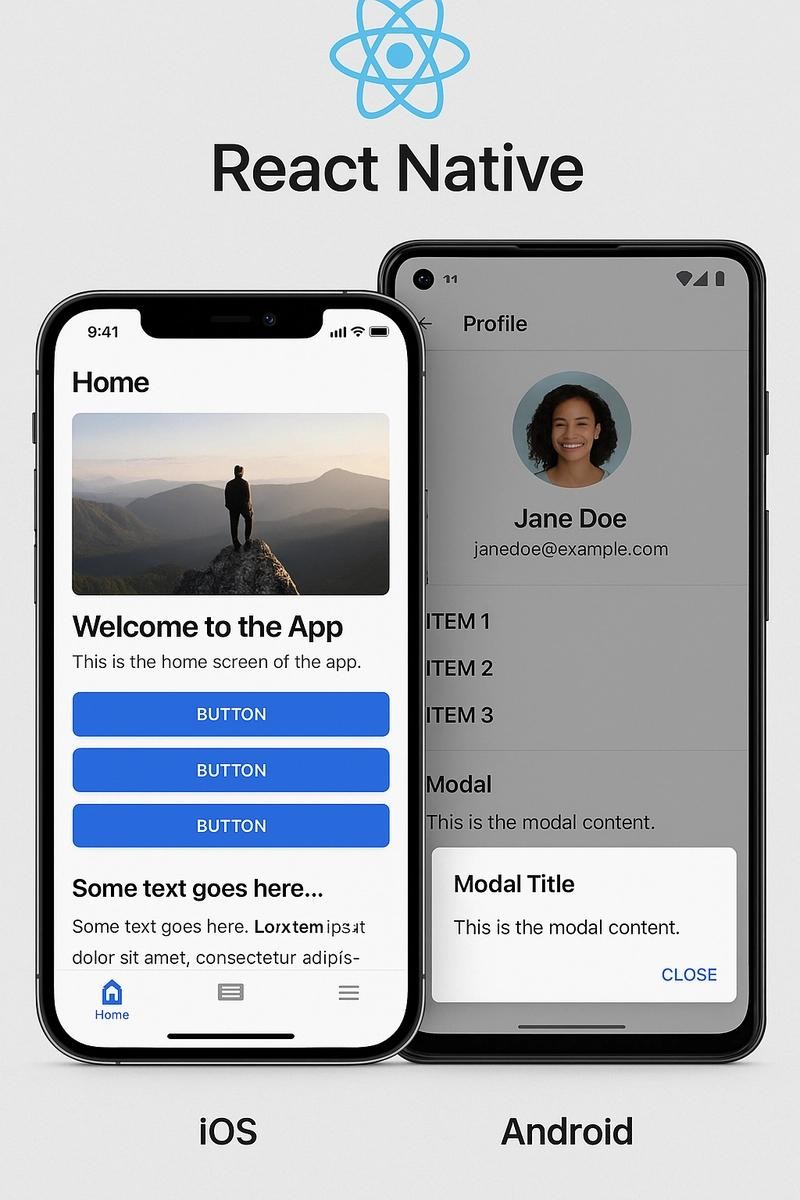
React Native, developed by Meta Platforms, takes a fundamentally different route. Instead of relying on web rendering, React Native uses native components to build the user interface.
This means that when users interact with a React Native app, they are essentially interacting with real native elements rather than simulated ones. The result is a smoother, faster, and more responsive experience.
React Native’s architecture has evolved significantly over the years. By 2026, enhancements like the Fabric renderer and TurboModules have made it more efficient and scalable. These improvements reduce the communication overhead between JavaScript and native code, resulting in better performance.
However, this power comes with added complexity. Developers often need to understand how mobile platforms work under the hood. While React Native simplifies much of the process, it still requires more effort compared to Ionic, especially for beginners.
Architectural Differences That Define Everything
The core difference between Ionic and React Native lies in how they render applications.
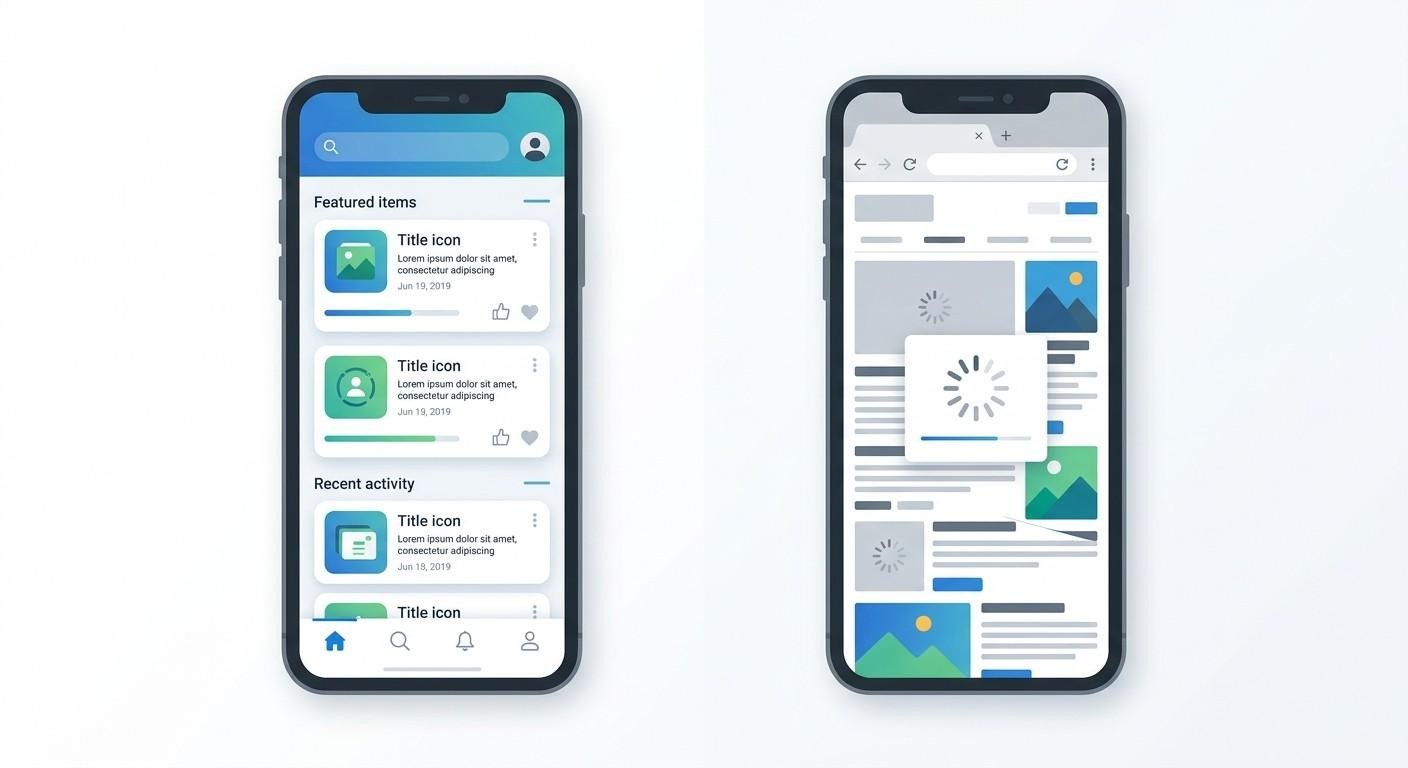
Ionic relies on a WebView, meaning the app is essentially a web page running inside a mobile shell. This makes development faster and more flexible but introduces limitations when dealing with intensive tasks like animations or real-time updates.
React Native, on the other hand, bridges JavaScript code with native APIs. Instead of rendering HTML elements, it uses platform-specific UI components. This approach provides better performance and a more authentic mobile experience.
This single architectural distinction influences performance, UI behavior, scalability, and even long-term maintenance.
Performance: The Real-World Perspective
Performance is often the deciding factor when choosing a framework. For simple applications such as content platforms, dashboards, or form-based tools, Ionic performs exceptionally well. Most users won’t even notice that the app is running inside a WebView.
However, as the complexity increases, React Native begins to stand out. Applications with heavy animations, real-time interactions, or complex workflows benefit from React Native’s native rendering capabilities.
In 2026, Ionic has improved significantly, but React Native still maintains an advantage in high-performance scenarios. This is especially important for apps like social media platforms, gaming interfaces, or fintech applications where responsiveness is critical.
User Experience and Interface Design
User experience goes beyond just visual design—it’s about how the app feels. React Native delivers a truly native experience, with smooth scrolling, responsive gestures, and fluid animations. This makes it ideal for applications where user engagement is a priority.
Ionic, while visually appealing, relies on web-based components. These components have improved significantly and can closely mimic native behavior. For many applications, especially business tools or content-driven apps, the difference is minimal.
However, in highly interactive applications, users may notice subtle differences in responsiveness and fluidity.
Development Experience and Learning Curve
One of Ionic’s strongest advantages is its simplicity. Developers familiar with web technologies can start building apps almost immediately. This makes it an excellent choice for beginners or teams transitioning from web development.
React Native, while still accessible, requires a deeper understanding of React and mobile development concepts. Developers need to manage state, navigation, and sometimes platform-specific code. This adds complexity but also provides greater control over the application.
In practical terms, Ionic accelerates development speed, while React Native offers more flexibility and power.
Comparison Table: Ionic vs React Native in 2026
| Feature / Aspect | Ionic Framework | React Native |
|---|---|---|
| Core Approach | Web-based (HTML, CSS, JS in WebView) | Native components via JavaScript |
| Performance | Good for simple apps, moderate for complex ones | High performance, near-native speed |
| UI/UX Experience | Web-like, but modern and responsive | True native feel with smooth interactions |
| Learning Curve | Easy for web developers | Moderate, requires React knowledge |
| Development Speed | Faster for MVPs and prototypes | Slightly slower but more robust |
| Native API Access | Via plugins (Capacitor) | Direct and more efficient |
| Cross-Platform Support | Mobile + Web + PWA | Primarily mobile (iOS & Android) |
| Scalability | Suitable for small to medium apps | Excellent for large-scale applications |
| Community & Ecosystem | Strong among web developers | विशाल ecosystem with enterprise adoption |
| Best Use Case | Internal tools, dashboards, content apps | High-performance, user-focused applications |
Industry Adoption and Real-World Usage
React Native has seen widespread adoption among major companies like Instagram and Shopify. Its ability to deliver high-performance apps while maintaining a shared codebase makes it a favorite for large-scale products.
Ionic, on the other hand, is commonly used in enterprise environments. It is particularly popular for internal applications, administrative dashboards, and projects where rapid development is more important than high-end performance.
Both frameworks have strong communities, extensive documentation, and a wide range of third-party tools.
Use Cases: Matching the Framework to the Problem
Choosing between Ionic and React Native is not about which one is better overall—it’s about which one fits your specific needs.
Ionic is ideal when speed, simplicity, and cross-platform reach are the primary goals. It works well for applications that do not require intensive performance or complex animations.
React Native is better suited for applications where performance, scalability, and user experience are critical. It excels in building consumer-facing apps that require smooth interactions and high responsiveness.
Future Trends in 2026 and Beyond
As we move forward, both frameworks continue to evolve. Ionic is narrowing the performance gap by improving its integration with native features and optimizing WebView rendering.
React Native is advancing its architecture to reduce latency and improve efficiency. With ongoing innovations, it is becoming even more competitive with fully native development.
Artificial intelligence is also playing a growing role in both ecosystems. From automated UI generation to intelligent debugging, AI tools are making development faster and more efficient.
Final Verdict: Which One Should You Choose?
The answer depends entirely on your priorities.
If you want rapid development, lower complexity, and the ability to target multiple platforms—including the web—Ionic Framework is a strong choice.
If your focus is on performance, scalability, and delivering a premium user experience, React Native is the better option.
In 2026, React Native has a slight edge for high-performance applications, while Ionic remains a powerful tool for fast and flexible development.
Conclusion
Both frameworks are highly capable and continue to shape the future of mobile app development. Ionic empowers developers to build quickly using familiar web technologies, while React Native enables the creation of robust, high-performance applications with a native feel.
The best decision comes down to understanding your project requirements, team expertise, and long-term goals. When chosen wisely, either framework can help you build successful, scalable mobile applications in today’s competitive digital world.
If you’re curious, I highly recommend checking out the UI/UX courses by Kaashiv Infotech. They offer hands-on training, real-world projects, and even AI integration in the curriculum.
 Visit: www.kaashivinfotech.com
Related Reads: