Complexity Analysis in Data Structures – When learning data structures and algorithms, one of the most important concepts every programmer encounters is complexity analysis. Writing a program that produces the correct output is only one part of software development. The other equally important aspect is ensuring that the program runs efficiently, especially when the amount of data increases.
In real-world applications such as search engines, social media platforms, banking systems, and e-commerce websites, millions of operations happen every second. If the algorithms used in these systems are inefficient, the entire application can become slow and unreliable. This is why developers analyze the performance of algorithms before implementing them in large-scale systems.
Complexity analysis provides a systematic way to evaluate how efficient an algorithm is. It helps programmers understand how the execution time and memory usage of a program change as the size of the input grows. Instead of relying only on testing, complexity analysis gives a theoretical framework that predicts how algorithms behave under different conditions. For beginners studying data structures, understanding complexity analysis is essential because it helps in selecting the right algorithm for solving problems efficiently.
What is Complexity Analysis?

Complexity analysis is the process of evaluating the performance and efficiency of an algorithm. It focuses on understanding how the computational resources required by an algorithm change as the input size increases. These resources generally include execution time and memory usage.
In simple terms, complexity analysis answers questions such as how long an algorithm will take to complete a task and how much memory it will consume while doing so. Rather than measuring exact execution time in seconds, complexity analysis focuses on the growth rate of an algorithm. This approach makes it possible to compare algorithms even when they run on different machines or environments.
For example, imagine two programs that perform the same task of searching for a number in a list. One program checks every element one by one, while another uses a more optimized approach that divides the list into smaller parts. Even without running the programs, complexity analysis can predict which algorithm will perform better when the list becomes very large.
The purpose of complexity analysis is not just academic. It directly affects how software systems scale and perform. Efficient algorithms ensure that applications remain responsive even when dealing with large datasets.
Why Complexity Analysis Matters in Programming

In the early stages of programming, most applications deal with small datasets, so performance differences between algorithms may not be noticeable. However, as data grows, inefficient algorithms can lead to serious performance issues.
Complexity analysis helps programmers understand these differences and design solutions that work efficiently even under heavy workloads. When developers understand how algorithms behave with large inputs, they can avoid performance bottlenecks and build scalable systems.
For example, an algorithm that works well for processing 100 records may become extremely slow when processing one million records. By analyzing complexity, programmers can anticipate these issues before deploying their software.
Another important reason complexity analysis matters is that it allows developers to compare different algorithms objectively. Many problems in computer science can be solved using multiple algorithms. Some may require less time but more memory, while others may use less memory but take longer to run. Complexity analysis helps developers make informed decisions about which algorithm best suits their needs.
In addition, efficient algorithms reduce computational costs. When programs use fewer CPU cycles and less memory, they save system resources and improve the overall performance of applications.
Understanding Time Complexity
One of the main components of complexity analysis is time complexity. Time complexity measures how the execution time of an algorithm changes as the input size increases.
It does not measure time in seconds or milliseconds. Instead, it measures the number of operations an algorithm performs relative to the size of the input. This allows programmers to understand how quickly the workload increases when the dataset becomes larger.
For instance, if an algorithm processes each element in a list once, the number of operations grows proportionally with the size of the list. If the list doubles in size, the number of operations also doubles. This behavior is known as linear growth.
In contrast, some algorithms grow much faster. Algorithms that use nested loops may perform operations proportional to the square of the input size. This means that when the input doubles, the number of operations may become four times larger.
Understanding these growth patterns helps programmers determine whether an algorithm is suitable for handling large datasets.
Understanding Space Complexity

While time complexity focuses on execution speed, space complexity measures the amount of memory an algorithm requires during its execution. Memory usage is an important factor, especially in systems with limited resources such as mobile devices, embedded systems, or real-time applications.
Space complexity includes memory used by the input data as well as any additional memory required by the algorithm. Some algorithms need extra data structures such as arrays, stacks, or recursion stacks to complete their tasks. The more additional memory required, the higher the space complexity.
In many situations, developers must balance time and space efficiency. An algorithm may run faster but require more memory, while another may use less memory but take longer to execute. Choosing the right approach depends on the requirements of the application.
For example, certain algorithms create temporary copies of data to simplify operations, which increases memory usage but reduces execution time. Other algorithms operate directly on existing data to minimize memory usage but may involve more processing steps.
Big O Notation and Algorithm Efficiency

To express algorithm complexity in a clear and standardized way, computer scientists use Big O notation. Big O notation describes how the performance of an algorithm grows relative to the input size.
Instead of focusing on exact numbers of operations, Big O highlights the dominant factor that affects growth. This simplification makes it easier to compare algorithms and understand their scalability.
For example, if an algorithm requires approximately 2n operations, Big O notation simplifies it to O(n) because the constant factor does not significantly affect growth for very large inputs.
Big O notation is widely used because it allows developers to analyze algorithms independently of hardware or programming languages. Whether a program runs on a powerful server or a small embedded device, the Big O complexity remains the same.
Different algorithms fall into different complexity categories. Some algorithms perform extremely efficiently even with large datasets, while others become impractical as the input size grows.
Common Complexity Classes in Algorithms

Several common complexity classes appear frequently in data structures and algorithms. Understanding these classes helps beginners recognize which algorithms are efficient and which ones may cause performance issues.
Constant time complexity represents the most efficient category. In this case, the algorithm performs the same number of operations regardless of the input size. Accessing an element in an array using its index is a good example of constant time performance.
Logarithmic complexity appears in algorithms that repeatedly divide the problem into smaller parts. Binary search is a classic example. Instead of examining every element, binary search halves the search space each time, making it extremely efficient for large datasets.
Linear complexity occurs when an algorithm processes each element individually. Searching through an unsorted list usually requires checking every element until the target value is found.
More complex algorithms involve quadratic growth, where the number of operations increases proportionally to the square of the input size. This often occurs when nested loops are used. Algorithms with quadratic complexity can become very slow when working with large datasets.
There are also algorithms with even higher complexities, such as cubic or exponential growth. These algorithms may work for very small datasets but are generally unsuitable for large-scale applications.
Best Case, Average Case, and Worst Case Analysis
Another important concept in complexity analysis is understanding that an algorithm’s performance can vary depending on the situation. Because of this, computer scientists analyze algorithms under three different scenarios.
The best case scenario represents the fastest possible execution of an algorithm. This occurs when the input data allows the algorithm to complete its task with minimal operations. For example, searching for an element at the beginning of a list results in the best-case scenario for a linear search algorithm.
The average case represents the typical performance of an algorithm under normal conditions. It reflects the expected behavior when inputs are random or evenly distributed.
The worst case scenario describes the maximum time an algorithm could take. This occurs when the input data forces the algorithm to perform the largest possible number of operations. Most complexity discussions focus on worst-case analysis because it guarantees that the algorithm will perform within acceptable limits even in the most demanding situations.
Understanding these scenarios helps developers evaluate how reliable an algorithm will be under different conditions.
Complexity Analysis in Data Structures

Different data structures provide different levels of efficiency for operations such as searching, inserting, deleting, and accessing elements. Complexity analysis helps programmers understand these differences and choose the appropriate structure for specific tasks.
Arrays provide very fast access to elements because their positions are fixed in memory. However, inserting or deleting elements may require shifting other elements, which increases the number of operations.
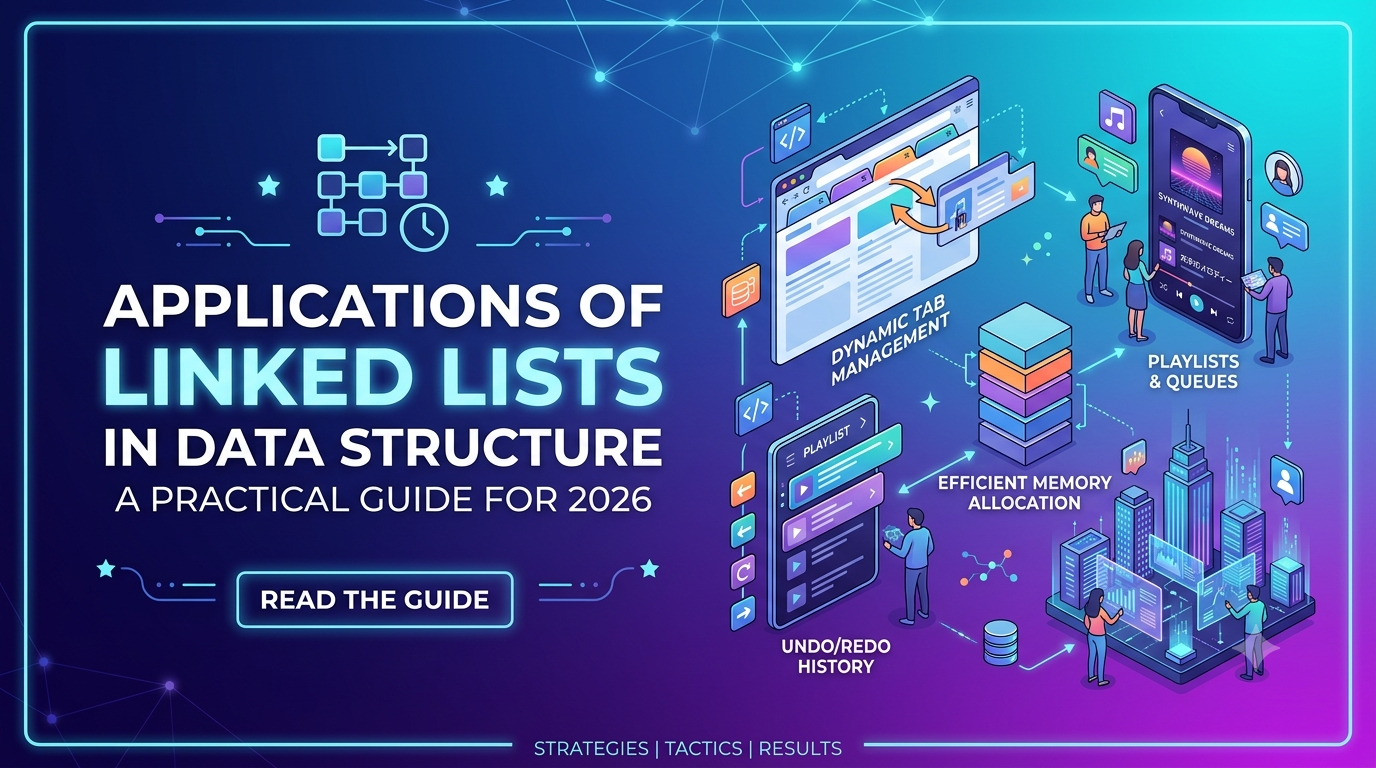
Linked lists allow efficient insertion and deletion because elements are connected through pointers rather than stored in continuous memory. However, accessing a specific element requires traversing the list from the beginning.
Stacks and queues are specialized data structures designed for specific operations such as pushing, popping, enqueuing, and dequeuing elements. These operations are usually very efficient and operate in constant time.
More advanced data structures such as binary search trees and heaps are designed to maintain organized data while supporting efficient searching and insertion operations. Their performance often depends on how well the data structure remains balanced.
Understanding the complexity characteristics of these structures helps developers choose the most efficient solution for their problems.
Real-World Applications of Complexity Analysis
Complexity analysis is not just a theoretical concept taught in computer science courses. It plays a crucial role in designing real-world systems that handle massive amounts of data.
Search engines rely on efficient algorithms to process billions of web pages and deliver results instantly. Social media platforms use optimized algorithms to manage large networks of users and interactions. Financial systems depend on fast algorithms to process transactions securely and reliably.
Even simple applications such as navigation systems or recommendation engines rely heavily on efficient algorithms. Without proper complexity analysis, these systems would struggle to handle the enormous amount of data they process every day.
By understanding algorithm complexity, developers can design systems that remain fast and responsive even as the amount of data continues to grow.
How Beginners Can Master Complexity Analysis

Learning complexity analysis may seem challenging at first, especially for beginners who are just starting to study algorithms. However, with consistent practice and the right approach, it becomes easier to understand.
One effective way to learn complexity analysis is by studying how different algorithms behave with varying input sizes. Observing how loops, recursion, and nested structures affect performance helps build intuition about algorithm efficiency.
Practicing problems related to searching, sorting, and recursion is also helpful because these algorithms demonstrate different complexity patterns. Over time, recognizing these patterns becomes second nature.
Reading algorithm implementations and analyzing their complexity is another useful strategy. By understanding how experienced programmers design efficient solutions, beginners can develop their own problem-solving skills.
Most importantly, beginners should focus on understanding the conceptual ideas behind complexity analysis rather than memorizing formulas.
Conclusion
Complexity analysis is a fundamental concept in data structures and algorithms that helps programmers evaluate the efficiency of their solutions. By analyzing how execution time and memory usage grow with input size, developers can design programs that perform well even when handling large datasets.
Concepts such as time complexity, space complexity, and Big O notation provide a structured way to compare algorithms and understand their scalability. These tools allow programmers to identify inefficient approaches and replace them with optimized solutions.
For beginners, mastering complexity analysis is an essential step toward becoming a skilled software developer. As programming problems become more complex and data continues to grow, the ability to analyze and optimize algorithms becomes increasingly valuable.
With continuous practice and a deeper understanding of algorithm behavior, complexity analysis transforms from a challenging concept into a powerful tool for building efficient and scalable software systems.
Want to learn more ?, Kaashiv Infotech Offers, Data Science Course, Data Analytics Course, Power BI & More, Visit Our Website course.kaashivinfotech.com.