
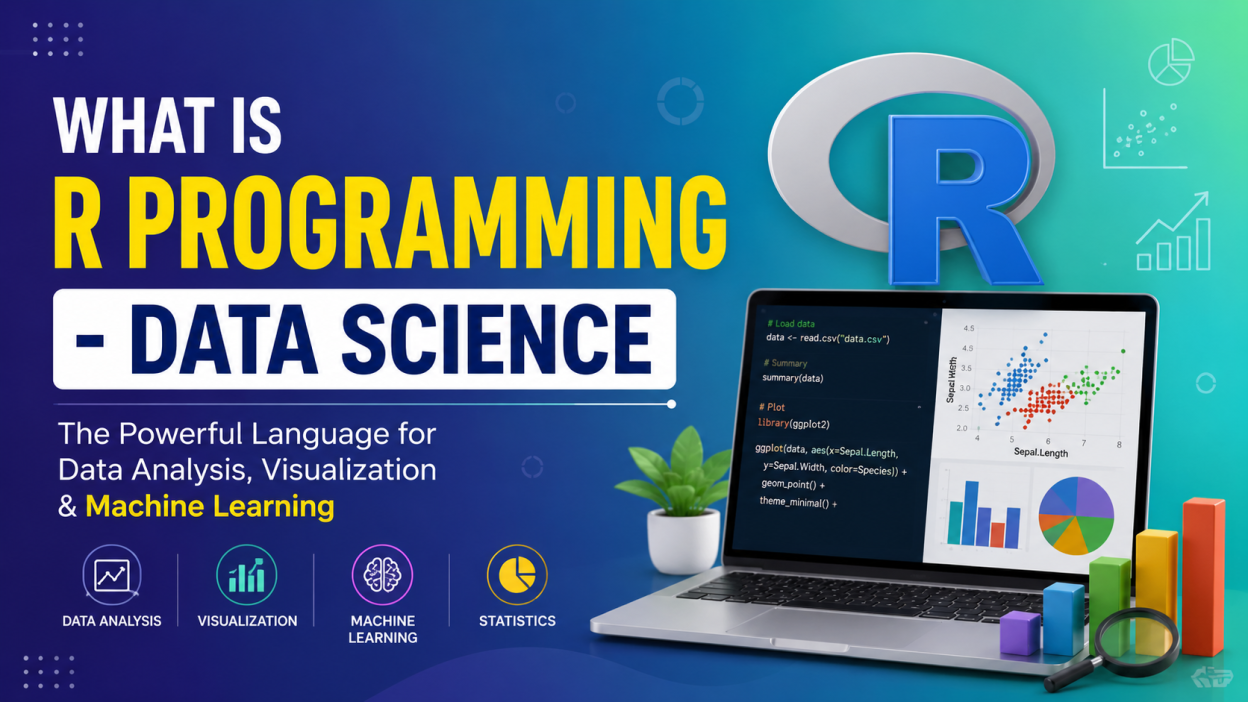
What is R Programming – Data Science? That was one of the very first questions I asked when I started exploring the world of data science. At first, I thought R was just another programming language like Java or Python. But the more I learned, the more I realized that R Programming is built specifically for statistics, data analysis, and visualization.
If you’re wondering What is R Programming – Data Science, you’re in the right place. In this guide, I’ll explain everything in simple words, share what helped me understand R, and show you why thousands of data scientists still rely on it today.
Whether you’re a beginner, a college student, or someone planning to become a Data Scientist, this guide will clear up your confusion.
📌 Key Highlights
- ✅ Understand What is R Programming – Data Science
- ✅ Learn why R is popular in Data Science
- ✅ Discover the features of R Programming
- ✅ Explore real-world applications of R
- ✅ Learn the advantages and disadvantages
- ✅ Compare R vs Python
- ✅ Find learning resources to start today
- ✅ Understand whether R is worth learning in 2026
What is R Programming in Data Science?
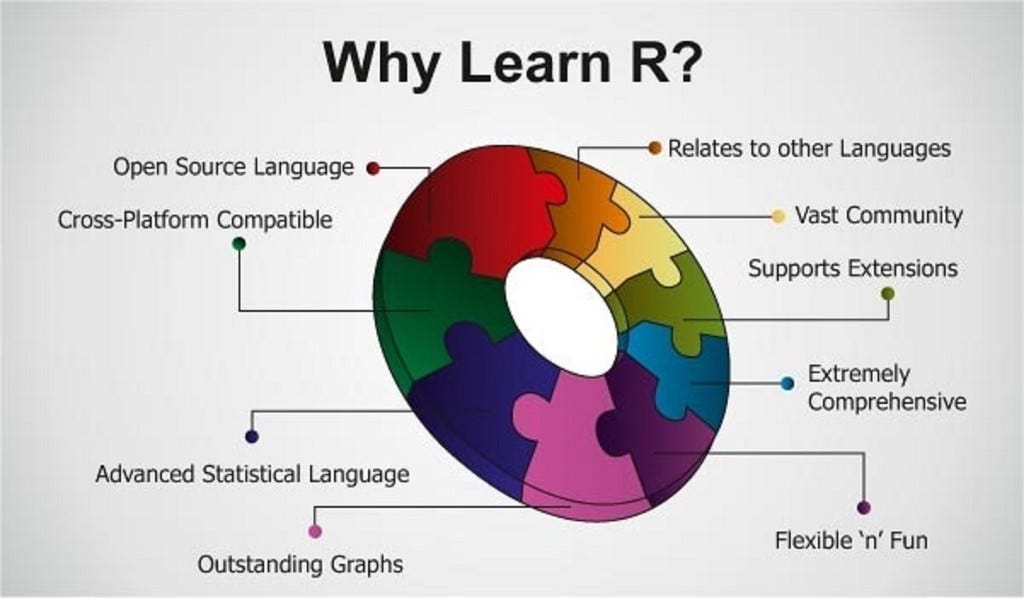
Simply put, R Programming is an open-source programming language mainly used for:
- Statistical analysis
- Data visualization
- Machine Learning
- Data mining
- Predictive analytics
- Research
When people ask me What is R Programming – Data Science, I usually answer like this:
That’s exactly why universities, researchers, healthcare companies, banks, and data scientists continue using R.
Why Was R Programming Created?
Before R existed, statistical analysis was difficult and expensive because many software tools required costly licenses.
R was developed by Ross Ihaka and Robert Gentleman in the early 1990s to make statistical computing freely available to everyone.
Today, it has grown into one of the most popular languages in Data Science.
I honestly love the fact that anyone can download it and start learning without paying anything.
Why is R Programming Important in Data Science?
Data Science is all about making sense of data.
Imagine a company has information about 10 million customers.
How would they answer questions like:
- Which products sell the most?
- Why are customers leaving?
- Which city generates the highest profit?
- Which customer is likely to buy again?
This is where R Programming in Data Science becomes incredibly useful.
R can quickly:
- Clean messy data
- Analyze patterns
- Create reports
- Build prediction models
- Generate interactive visualizations
Without programming, these tasks could take weeks.
With R, they often take minutes.
Features of R Programming
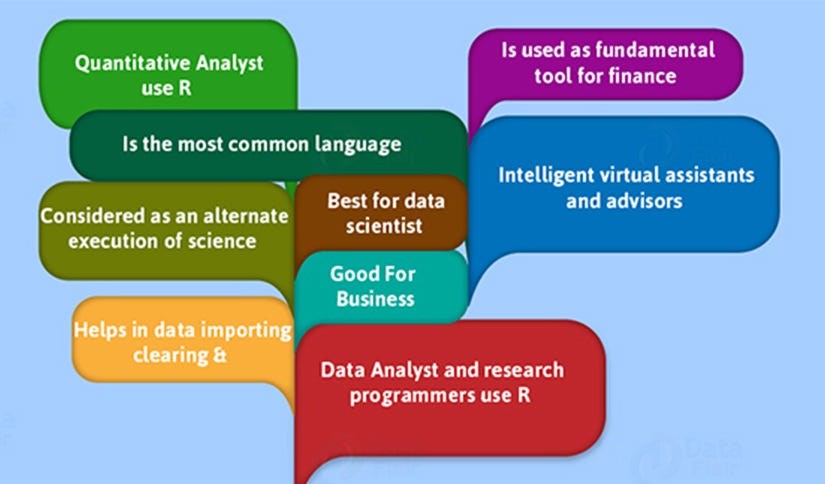
Here are my favorite features of R Programming.
📊 1. Excellent Statistical Analysis
This is where R truly shines.
It includes hundreds of built-in statistical functions that researchers and analysts use every day.
📈 2. Amazing Data Visualization
One thing that impressed me immediately was how beautiful the graphs looked.
Using packages like ggplot2, I could create:
- Bar charts
- Pie charts
- Scatter plots
- Heat maps
- Histograms
- Interactive dashboards
Good visualization helps us understand data much faster.
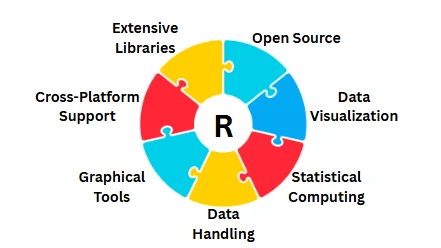
⚡ 3. Open Source
R is completely free.
Anyone can download, install, and start learning.
That’s great news if you’re a student.
🧩 4. Thousands of Packages
The R community has created thousands of packages.
Some popular ones include:
- ggplot2
- dplyr
- tidyr
- caret
- shiny
- readr
These packages save enormous amounts of time.
📂 5. Handles Large Data
R can process huge datasets efficiently.
That’s why many organizations use it for analytics.
🌐 6. Cross Platform
R works on:
- Windows
- macOS
- Linux
No matter which operating system you use, R runs smoothly.
Real-Life Uses of R Programming
One thing that made learning easier for me was connecting programming to real-life examples.
Here are a few industries using R Programming in Data Science.
🏥 Healthcare
Hospitals analyze patient records.
Researchers predict disease outbreaks.
Medical scientists perform statistical research.
💰 Banking
Banks detect fraud.
They also calculate financial risks.
🛒 E-commerce
Shopping websites analyze customer behavior.
They recommend products based on previous purchases.
📱 Social Media
Companies study user engagement.
They identify trending topics.
📊 Marketing
Businesses understand customer preferences.
Marketing teams measure campaign performance.
Advantages of R Programming
There are plenty of reasons why I recommend beginners learn R.
✔ Free to use
No license fees.
✔ Excellent for statistics
This is R’s biggest strength.
✔ Huge community support
Whenever I got stuck, I found answers quickly.
✔ Powerful visualizations
Creating charts feels surprisingly easy.
✔ Supports Machine Learning
R includes libraries for building predictive models.
✔ Regular updates
New packages are constantly released.
Disadvantages of R Programming
Of course, no programming language is perfect.
Here are a few limitations.
- Can be slower than some languages
- Memory-intensive for very large datasets
- Not ideal for mobile app development
- Slight learning curve for beginners
But honestly, these drawbacks rarely stopped me from learning.
R Programming vs Python
This is one of the most common questions beginners ask.
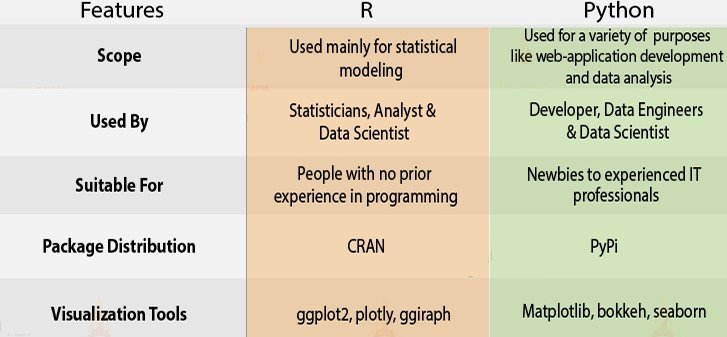
| Feature | R Programming | Python |
|---|---|---|
| Statistics | ⭐ Excellent | Very Good |
| Machine Learning | Excellent | Excellent |
| Web Development | Limited | Excellent |
| Data Visualization | Excellent | Very Good |
| Learning Curve | Moderate | Easy |
| Community | Large | Massive |
If your goal is statistics and research, I would definitely recommend R.
If you want to become a software developer alongside data science, Python may be the better starting point.
Many professionals actually learn both.
Popular R Packages Every Beginner Should Know
When I first opened R, I wondered why everyone kept talking about packages.
Think of packages as ready-made toolkits.
Some of the most useful ones are:
- ggplot2 – Data visualization
- dplyr – Data manipulation
- tidyr – Data cleaning
- caret – Machine Learning
- shiny – Interactive dashboards
- stringr – String operations
- lubridate – Date handling
Learning these packages makes working with data much easier.
How to Start Learning R Programming
If I were starting again today, this is the path I would follow.
- Learn the basics of R syntax.
- Practice variables and data types.
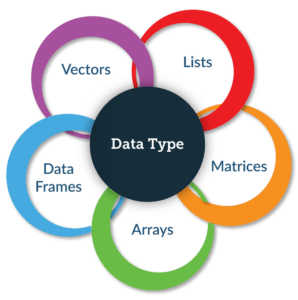
- Understand vectors, lists, and data frames.
- Learn loops and functions.
- Practice data visualization.
- Work on small datasets.
- Learn Machine Learning basics.
- Build mini projects.
Don’t try to master everything in one week.
Consistency matters much more than speed.
Is R Programming Still Worth Learning in 2026? 🤔
Absolutely.
Although Python has become extremely popular, R Programming in Data Science continues to be widely used.
Many universities teach it.
Research organizations rely on it.
Healthcare companies use it.
Financial institutions use it.
If your career involves analytics, research, or statistics, learning R is still a smart investment.
Frequently Asked Questions (FAQs)
Is R Programming easy to learn?
Yes. If you already know basic programming concepts, learning R becomes much easier.
Is R better than Python?
Neither is universally better. R excels in statistics and visualization, while Python is more versatile for software development and AI.
Can I get a job after learning R?
Yes. Many companies hire professionals with R skills for roles such as Data Analyst, Statistician, Business Analyst, and Data Scientist.
Is R Programming free?
Yes. R is completely free and open source.
Final Thoughts 💡
When someone asks me What is R Programming – Data Science, I don’t just describe it as a programming language anymore. I see it as a practical tool that helps transform raw data into meaningful insights.
One lesson I learned early is that you don’t need to memorize every function to become good at R. Start with the basics, practice with small datasets, make mistakes, and keep building. Every chart you create and every dataset you analyze will improve your confidence.
If your goal is to work with data, perform statistical analysis, or build a career in analytics, learning R Programming in Data Science is a decision you probably won’t regret. Start today, stay consistent, and enjoy the process—because every expert was once a beginner.
Want to learn more ??, Kaashiv Infotech Offers Data Analytics Course, Data Science Course, Cyber Security Course & More Visit Their Website www.kaashivinfotech.com.

