
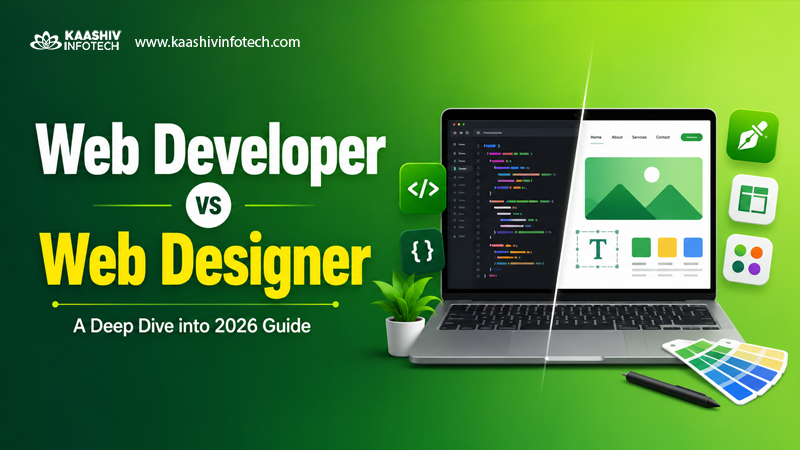
Web Developer vs Web Designer – In today’s digital-first world, websites are the backbone of businesses, personal brands, and online services. But behind every well-crafted website, there are two distinct roles working together: the web designer and the web developer. While these roles are often confused or even used interchangeably, they represent two very different approaches to building a website—one rooted in creativity and visual experience, the other in logic and technical execution.
Understanding the difference between these roles is not just important for aspiring professionals, but also for business owners, students, and anyone stepping into the digital space.
🎨 The World of Web Design: Crafting the Visual Experience

Web design is where creativity meets user psychology. A web designer is responsible for shaping the way a website looks and feels to users. But it goes far beyond simply making something “look good.” A well-designed website guides users, communicates brand identity, and creates a seamless experience that feels natural and intuitive.
When a designer begins a project, they often start with wireframes—simple structural layouts that define where elements like menus, buttons, images, and text will be placed. From there, they move into detailed mockups and prototypes, adding colors, typography, animations, and interactive elements.
A designer’s goal is to ensure that a visitor landing on a website instantly understands how to navigate it, where to focus, and what action to take next. This is where concepts like visual hierarchy, spacing, contrast, and usability become crucial.
Modern designers heavily rely on tools like Figma and Adobe XD to create interactive prototypes that simulate real user experiences. These tools allow designers to collaborate with developers and stakeholders even before a single line of code is written.
In many ways, web designers act as storytellers. Through visuals, layout, and interaction design, they guide users through a journey—whether it’s buying a product, reading an article, or signing up for a service.
💻 The World of Web Development: Building Functionality and Logic

If web designers are the architects of the experience, web developers are the engineers who bring that vision to life. A web developer takes the static designs created by designers and transforms them into a fully functional, interactive website.
Development is deeply rooted in programming and problem-solving. Developers write code that determines how a website behaves—what happens when a user clicks a button, fills out a form, or navigates between pages.
The field of web development is generally divided into three main areas. Frontend development focuses on everything users see and interact with directly in the browser. Backend development handles server-side logic, databases, and application performance. Full-stack development combines both, allowing a developer to build complete systems independently.
Frontend developers often work with technologies like HTML, CSS, and JavaScript, using frameworks such as React to create fast and dynamic interfaces. Backend developers, on the other hand, might use environments like Node.js to manage servers, APIs, and databases.
To write and manage code efficiently, developers commonly use tools such as Visual Studio Code and collaborate through platforms like GitHub. These tools enable version control, teamwork, and deployment of applications at scale.
Unlike design, which is more visual and conceptual, development is about making things work reliably, efficiently, and securely.
⚖️ Understanding the Core Difference
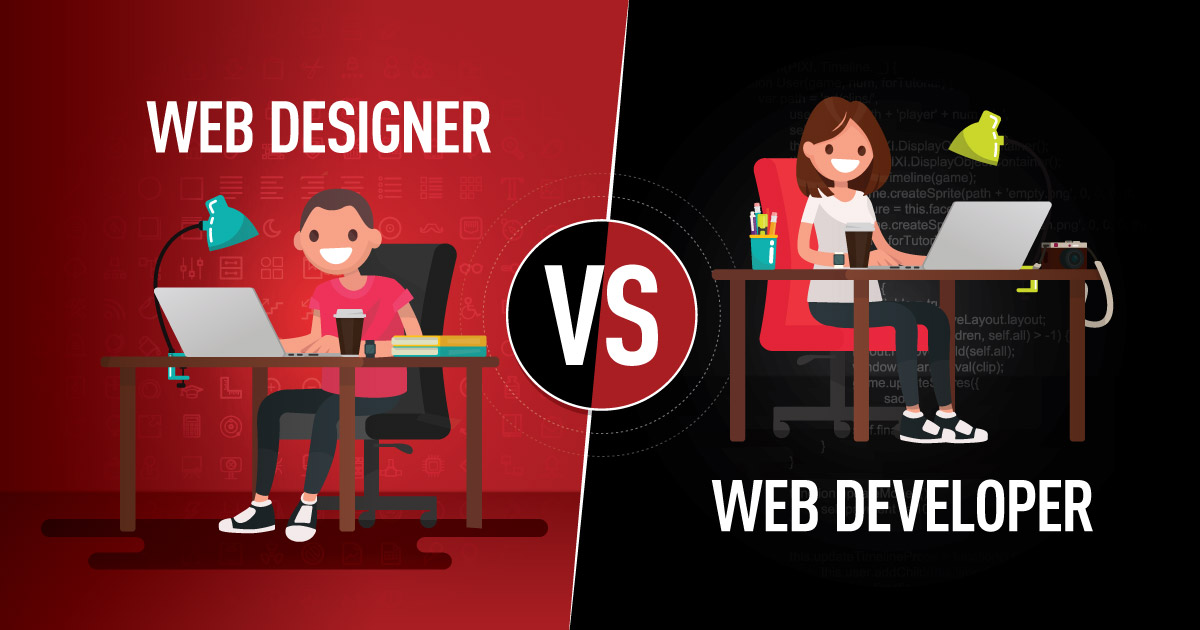
At a deeper level, the difference between web designers and web developers comes down to perspective. Designers think in terms of user experience and emotional connection, while developers think in terms of systems, logic, and performance.
A designer might ask, “Does this layout feel intuitive and engaging?” while a developer might ask, “Will this load quickly and function correctly across devices?”
This difference in thinking is what makes both roles essential. Without design, a website can feel confusing or unattractive. Without development, even the most beautiful design remains just an idea.
🤝 Collaboration: Where Design Meets Code
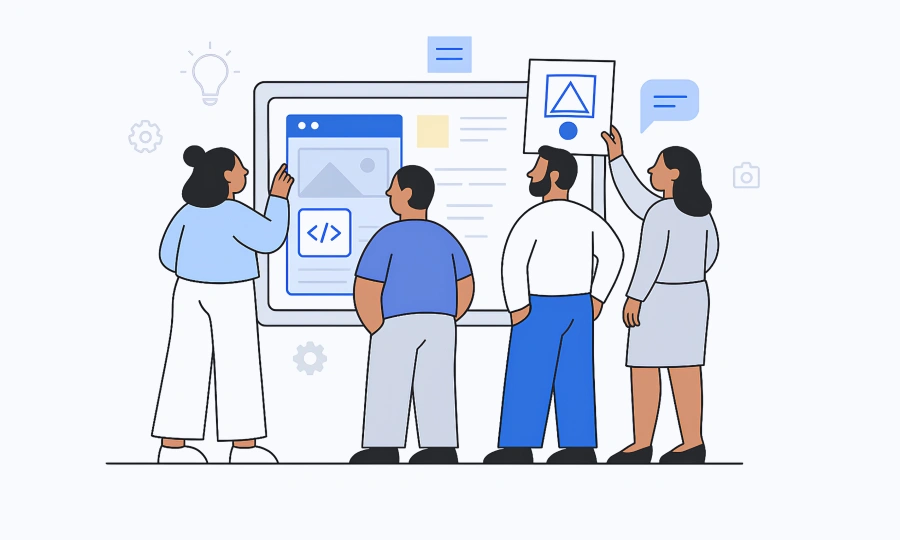
The real magic happens when designers and developers work together. A successful website is never the result of a single role—it’s a collaboration between creative vision and technical execution.
In a typical workflow, the designer creates a prototype and shares it with the developer. The developer then interprets that design and translates it into code, ensuring that every interaction behaves as intended. Throughout the process, both roles communicate constantly, refining details and solving challenges.
For example, a designer may create a visually rich animation, but the developer might suggest optimizing it for performance. Similarly, a developer might identify technical constraints that influence design decisions.
This back-and-forth process ensures that the final product is both beautiful and functional.
🚀 Choosing Your Path: Design or Development?
Deciding between web design and web development depends largely on your natural interests and strengths.
If you are someone who enjoys creativity, visual storytelling, and understanding how users think and behave, web design might be the right path for you. It allows you to explore aesthetics, branding, and user interaction in a meaningful way.
On the other hand, if you enjoy logic, coding, and solving complex problems, web development offers a more technical and structured career path. It gives you the ability to build systems, applications, and scalable digital products.
Interestingly, the line between these roles is becoming increasingly blurred. Many professionals today are expanding their skill sets to include both design and development. This hybrid approach not only increases career opportunities but also provides a deeper understanding of the entire web creation process.
📈 Future Scope: What Lies Ahead in 2026 and Beyond
The demand for both web designers and web developers continues to grow rapidly as digital transformation accelerates across industries. However, the nature of these roles is evolving.
Web designers are increasingly focusing on advanced user experience strategies, accessibility, and data-driven design decisions. Meanwhile, developers are moving toward building high-performance applications, integrating artificial intelligence, and working with modern frameworks.
Mastering tools like Figma and technologies such as React is becoming essential for staying competitive in the industry.
The future belongs to those who can adapt, learn continuously, and bridge the gap between design and development.
🧠 Final Thoughts
Web designers and web developers are not competing roles—they are complementary forces. One shapes the experience, while the other brings it to life. Together, they create the digital products we interact with every day.
Whether you choose to become a designer, a developer, or a combination of both, the most important step is to start building, experimenting, and learning. The web is constantly evolving, and those who grow with it will always stay ahead.
Kaashiv Infotech Offers Full Stack Java Developer Course, Java Internship & More Programming Courses Visit Our Website www.kaashivinfotech.com.


