
Automation testing skills has evolved far beyond writing a few scripts to validate application behavior. In 2026, it sits at the center of fast-moving development cycles where releases happen daily, sometimes even hourly. Companies expect automation testers to not only ensure quality but also accelerate delivery without compromising reliability. This shift has transformed the role into something much more dynamic—part developer, part quality engineer, and part problem solver.
If you’re aiming to build a strong career in this field, mastering the following eight skills will set you apart and help you grow into a highly valuable automation tester.
Top 8 Automation Testing Skills
1. Strong Programming Knowledge

Programming is the backbone of automation testing. Unlike manual testing, where you validate functionality through interaction, automation requires you to translate those validations into code. This means you need to be comfortable writing structured, reusable, and efficient scripts.
Languages like Java, Python, and JavaScript dominate the automation landscape, and each has its ecosystem of tools and frameworks. But beyond syntax, what truly matters is your understanding of programming principles. Concepts such as object-oriented programming, modular design, exception handling, and data structures play a major role in building scalable automation solutions.
A skilled automation tester doesn’t just write scripts—they write code that behaves like a well-engineered product. Clean code practices, readability, and maintainability are what make your automation suite reliable over time.
2. Deep Understanding of Testing Fundamentals

One of the most common mistakes beginners make is jumping straight into automation tools without understanding testing itself. Automation is only as good as the test cases behind it.
A strong foundation in testing concepts helps you decide what should be automated and what should not. You need to understand how software behaves, how defects occur, and how different types of testing contribute to overall quality. Functional testing ensures features work correctly, regression testing ensures stability after changes, and integration testing validates interactions between components.
When you understand these fundamentals deeply, your automation becomes meaningful rather than mechanical. Instead of blindly automating everything, you start designing intelligent test strategies that actually add value to the product.
3. Expertise in Automation Tools

Tools are what bring your automation knowledge to life. However, success is not about knowing many tools—it’s about mastering the right ones.
Modern tools like Selenium, Cypress, and Playwright have made automation faster and more efficient. Each tool has a different approach. Some focus on browser-level control, while others offer built-in features like automatic waits and real-time debugging.
A successful automation tester understands how these tools work internally, not just how to use them. You should know how to handle dynamic elements, synchronization issues, browser compatibility challenges, and test execution failures.
The more deeply you understand your chosen tool, the more confidently you can handle real-world scenarios, which are often far more complex than simple demo projects.
4. Knowledge of Automation Framework Design

As projects grow, simple scripts quickly become unmanageable. This is where framework design becomes essential. A framework provides structure, reusability, and scalability to your automation efforts.
Designing a good framework means organizing your code in a way that reduces duplication and improves readability. Concepts like Page Object Model help separate test logic from UI elements, making tests easier to maintain. Data-driven approaches allow you to run the same test with multiple inputs, increasing coverage without increasing code complexity.
Framework design is what transforms automation from a collection of scripts into a robust testing system. It also reflects your maturity as an automation tester, showing that you can think beyond individual test cases and design solutions at a larger scale.
5. Familiarity with CI/CD Pipelines
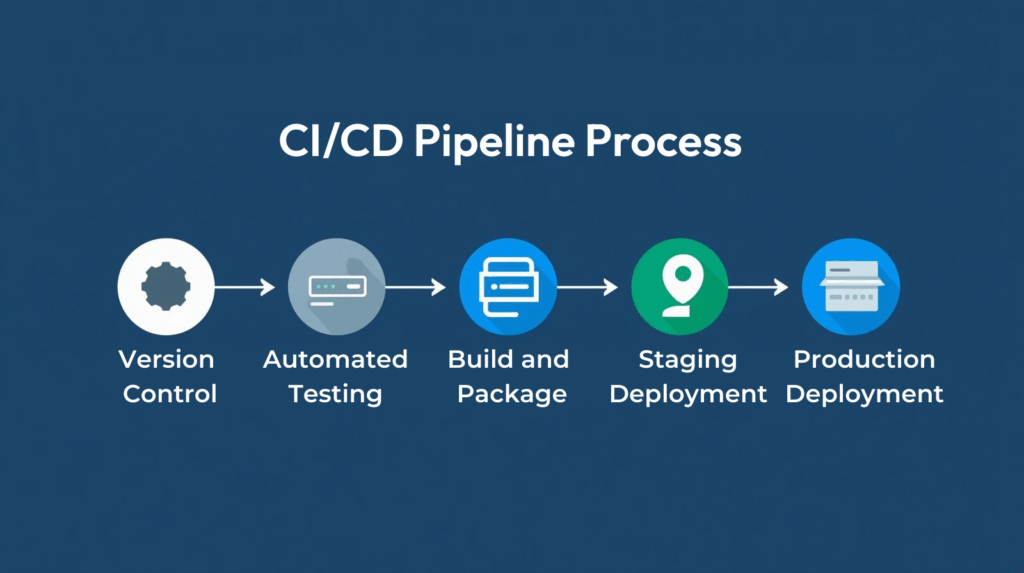
In modern software development, speed is everything. Continuous Integration and Continuous Delivery pipelines ensure that code changes are tested automatically and deployed quickly. Automation testers play a crucial role in this process.
You need to understand how your tests fit into the pipeline. This includes configuring test execution after every build, analyzing test results, and ensuring failures are reported clearly. Tools like Jenkins, GitHub Actions, and GitLab CI are commonly used to integrate automation into development workflows.
When your tests run seamlessly within a CI/CD pipeline, they provide immediate feedback to developers. This not only improves product quality but also reduces the time needed to fix defects.
6. Version Control and Collaboration Skills

Automation testing is rarely a solo activity. You work alongside developers, DevOps engineers, and other testers. This makes version control systems like Git an essential skill.
Understanding how to manage code changes, create branches, merge updates, and resolve conflicts ensures smooth collaboration. It also helps maintain a clean and organized codebase.
More importantly, version control teaches discipline. It encourages you to document changes, write meaningful commit messages, and follow structured workflows. These habits make you a better team player and a more reliable professional.
7. Knowledge of APIs and Databases

Modern applications are built on interconnected systems where the user interface is just one layer. To truly test an application, you need to go beyond the UI.
API testing allows you to validate the business logic directly by sending requests and verifying responses. This is often faster and more stable than UI testing. Similarly, database knowledge helps you validate whether the data stored in the system matches expected results.
Understanding how to work with APIs and databases enables you to perform end-to-end validation. It also helps you identify issues that might not be visible through the user interface alone.
8. Analytical Thinking and Problem-Solving

Perhaps the most underrated skill in automation testing is the ability to think critically. Automation is not just about executing steps—it’s about understanding systems, identifying risks, and solving problems.
You will encounter flaky tests, inconsistent environments, and unexpected failures. In such situations, tools and frameworks can only take you so far. Your ability to analyze the problem, identify the root cause, and implement a solution is what truly defines your expertise.
A strong problem-solving mindset also helps you improve your automation strategy over time. You begin to see patterns, optimize test coverage, and eliminate inefficiencies, making your work more impactful.
Final Thoughts
The role of an automation tester in 2026 is more exciting and challenging than ever before. It’s no longer limited to writing scripts—it involves building systems, improving processes, and contributing to the overall quality of software products.
By developing strong programming skills, mastering testing fundamentals, gaining expertise in tools and frameworks, and cultivating a problem-solving mindset, you position yourself as a complete automation professional.
The journey may take time, but each of these skills builds upon the other. As you grow, you’ll realize that automation testing is not just a career—it’s a craft that combines logic, creativity, and continuous learning.
Want to Learn More About Testing, Kaashiv Infotech Offers Software Testing Course, Internships & More, Visit Our Website www.kaashivinfotech.com.
Related Reads:
-
Regression Testing of Software – The Unsung Hero of Software Engineering
-
7 Smart Steps to Build a Testing Framework for E-Commerce Checkout and Payments