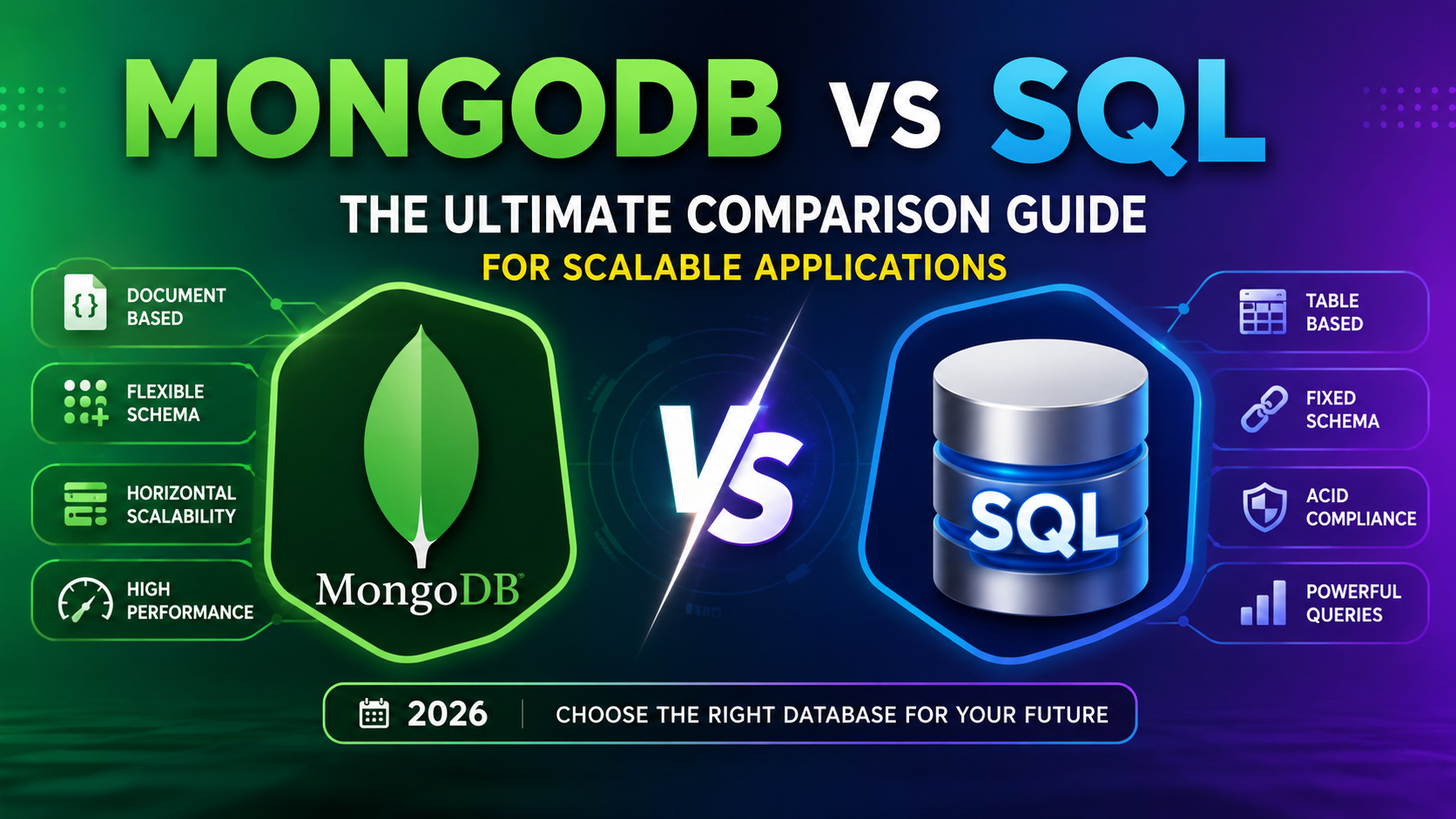
In the modern era of software engineering, data is at the heart of every application—whether it’s a social media platform, an e-commerce website, a banking system, or an AI-powered analytics tool. The way this data is stored, structured, and accessed directly impacts performance, scalability, and user experience.
Among the many database technologies available today, two major paradigms dominate the ecosystem: MongoDB (NoSQL) and SQL (Relational Databases). These systems are not just different tools—they represent fundamentally different philosophies of data modeling and application design.
This comprehensive guide takes a deep dive into MongoDB vs SQL, helping you understand not just their differences, but also when and why to use each in real-world scenarios.
What is MongoDB?

MongoDB is a NoSQL, document-oriented database designed to handle large volumes of unstructured or semi-structured data. Instead of storing data in tables like traditional databases, MongoDB uses collections and documents.
Each document in MongoDB is stored in BSON format (Binary JSON), which allows it to support complex data types such as arrays, nested objects, and even embedded documents.
Key Characteristics of MongoDB
MongoDB is known for its flexibility and developer-friendly approach. It allows applications to evolve without rigid constraints. For example, in a user profile system, one document may include social links while another may not—without breaking the database design.
Another defining feature is its ability to scale horizontally. MongoDB can distribute data across multiple servers using a technique called sharding, making it ideal for applications that handle millions of users or large-scale data streams.
What is SQL?

SQL is the standard language used for managing relational databases, which organize data into structured tables. Popular relational database systems include MySQL, PostgreSQL, Microsoft SQL Server, and Oracle Database.
SQL databases rely on a predefined schema, meaning the structure of the data must be defined before inserting records. Each table consists of rows (records) and columns (fields), and relationships between tables are established using keys.
Key Characteristics of SQL Databases
SQL databases are built around data integrity and consistency. They follow strict rules to ensure that data remains accurate and reliable, even in complex systems involving multiple operations.
They also support powerful querying capabilities. With SQL, developers can perform advanced operations like joins, aggregations, filtering, and nested queries—all within a single command.
Core Differences in Data Modeling
One of the most important distinctions between MongoDB and SQL lies in how they represent data.
MongoDB uses a denormalized data model, where related data is often stored together in a single document. This reduces the need for joins and improves read performance, especially in applications where data is frequently accessed together.
SQL databases, on the other hand, use normalization, where data is divided into multiple related tables to eliminate redundancy. While this approach ensures consistency, it often requires joins to retrieve complete information.
This difference significantly affects performance, scalability, and application design.
Schema Design and Evolution
MongoDB offers a schema-less design, which means developers can modify the structure of data at any time without affecting existing records. This is particularly useful in agile development environments where requirements change frequently.
In contrast, SQL databases enforce a fixed schema. Any changes to the database structure require migrations, which can be complex and time-consuming in large systems.
However, this rigidity ensures that all data follows a consistent format, reducing errors and improving reliability.
Query Language and Flexibility
MongoDB uses a JSON-like query syntax, making it intuitive for developers who work with JavaScript or modern web technologies. Queries can directly access nested fields, making it easy to work with hierarchical data.
SQL, being a standardized language, is one of the most powerful tools for data manipulation. It allows developers to perform complex operations involving multiple tables, conditions, and aggregations with precision.
While MongoDB queries are flexible and developer-friendly, SQL remains unmatched in complex data querying.
Performance Considerations
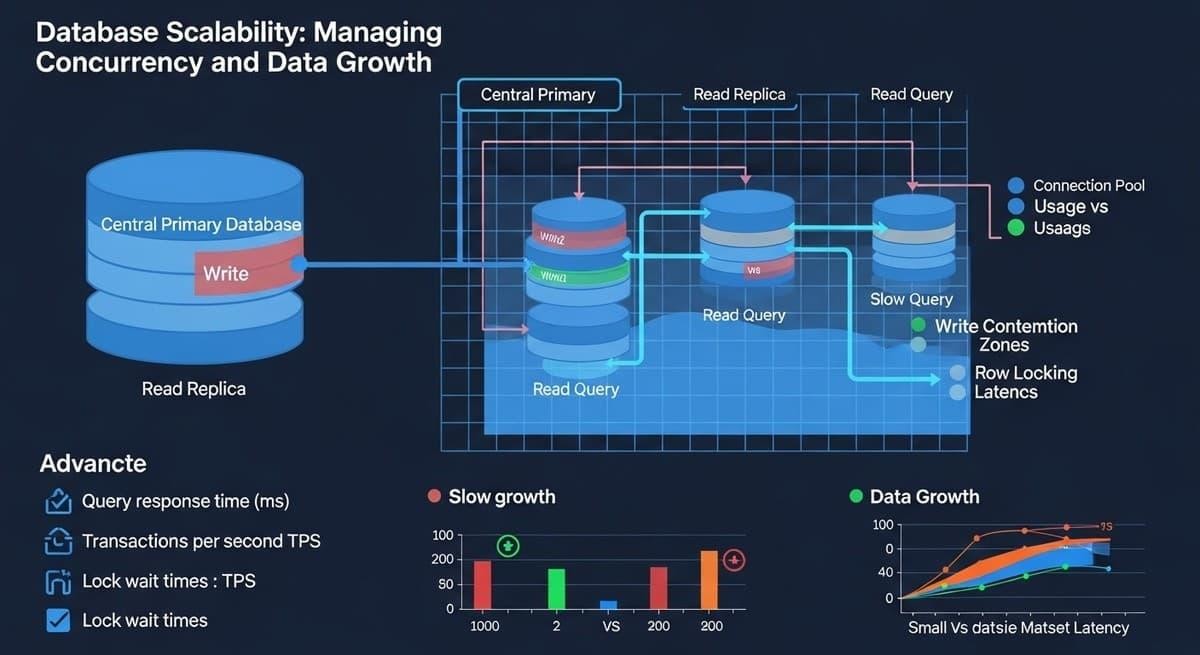
Performance depends heavily on how data is structured and accessed.
MongoDB excels in scenarios where large volumes of data need to be processed quickly, especially when the data is unstructured or semi-structured. Its ability to scale horizontally makes it suitable for high-traffic applications.
SQL databases perform exceptionally well in systems that require precise queries and structured data relationships. They are optimized for transactional workloads and ensure consistent performance even under heavy operations.
Transactions and Reliability
SQL databases are designed with ACID compliance, ensuring that all transactions are processed reliably. This makes them ideal for systems where data accuracy is critical, such as financial applications.
MongoDB has improved significantly in this area by introducing multi-document transactions. However, SQL databases still provide a more mature and robust environment for handling complex transactional workflows.
Handling Relationships and Data Integrity
SQL databases use foreign keys and joins to maintain relationships between tables. This ensures that data remains consistent across the entire system.
MongoDB avoids joins by embedding related data within documents. While this simplifies data retrieval, it may lead to duplication in some cases.
The choice between these approaches depends on whether your application prioritizes performance or data normalization.
Scalability and Modern Application Needs
MongoDB was designed with scalability in mind. Its distributed architecture allows it to handle massive datasets across multiple servers seamlessly.
SQL databases traditionally relied on vertical scaling, but modern systems now support distributed architectures as well. However, implementing such solutions often requires additional expertise and infrastructure.
For startups and rapidly growing platforms, MongoDB offers a simpler path to scaling. For established systems with structured data, SQL remains a reliable choice.

Real-World Applications
MongoDB is widely used in modern applications such as social media platforms, real-time analytics systems, IoT applications, and content management systems. Its flexibility makes it ideal for handling dynamic and evolving data.
SQL databases are commonly used in banking systems, enterprise applications, e-commerce platforms, and healthcare systems—where data integrity and consistency are essential.
Can You Use Both Together?
In today’s software architecture, it is increasingly common to use both MongoDB and SQL databases in the same application. This approach is known as polyglot persistence.
For example, an e-commerce platform might use MongoDB to store product catalogs (which are flexible and dynamic) and SQL to manage transactions and orders (which require strict consistency).
This hybrid approach allows developers to leverage the strengths of both systems.
Final Thoughts
MongoDB and SQL are not competitors in the traditional sense—they are complementary technologies designed for different use cases.
MongoDB offers flexibility, scalability, and speed, making it ideal for modern, data-intensive applications. SQL databases provide structure, reliability, and powerful querying capabilities, making them indispensable for systems that require precision and consistency.
Understanding when to use each is a critical skill for developers in 2026 and beyond. By choosing the right database for your needs—or even combining both—you can build applications that are robust, scalable, and future-ready.
Kaashiv Infotech Offers, SQL Course, SQL Internship & More Visit Our website www.kaashivinfotech.com.
Related Reads:
-
Common Table Expression (CTE) in SQL: 7 Lessons That Changed How I Write Queries
-
SQL UPDATE Query Explained (2025 Guide): Syntax, Examples, and Mistakes Developers Still Make