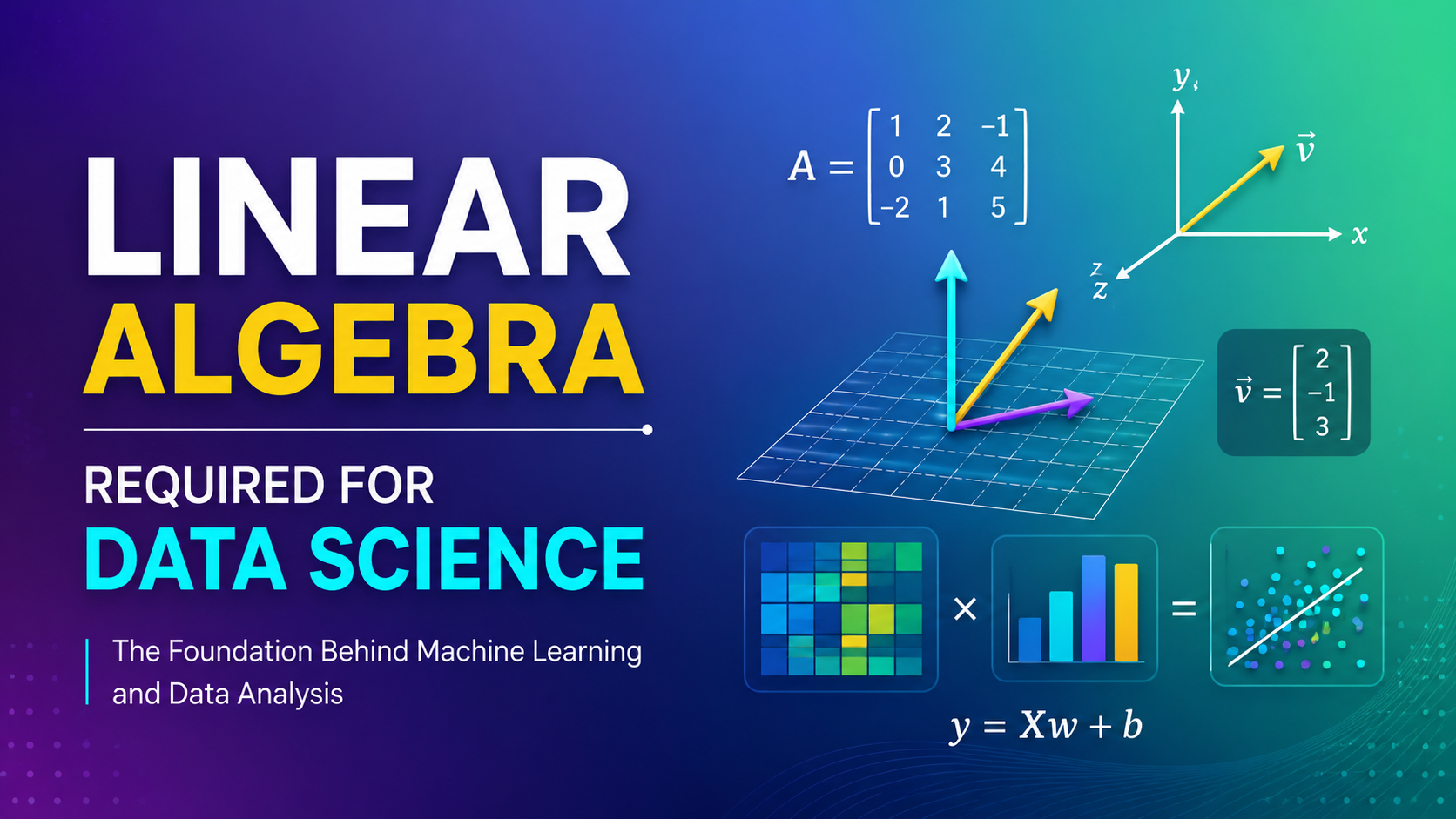
Linear Algebra Required for Data Science is one of the first topics I recommend learning if you’re serious about becoming a data scientist. When I first started exploring data science, I thought programming languages like Python and SQL would be enough. But after working on machine learning projects, I realized something important—almost every algorithm relies on linear algebra behind the scenes.
If you’ve ever wondered, “Is linear algebra really required for data science?”, the short answer is yes. The good news? You don’t need to become a mathematician. You only need to understand the concepts that help you work with data, build models, and solve real-world problems.
In this guide, I’ll explain Linear Algebra Required for Data Science in the simplest way possible. I’ll use relatable examples, avoid confusing mathematical jargon, and share what helped me understand these concepts. By the end of this article, you’ll know exactly what to learn, why it matters, and how it connects to machine learning and artificial intelligence.

📌 Key Highlights
- ✅ Understand why Linear Algebra Required for Data Science is a must-learn topic.
- ✅ Learn the basic concepts without complicated mathematics.
- ✅ Discover how vectors and matrices are used to represent data.
- ✅ See real-life examples that make learning easier.
- ✅ Understand how machine learning depends on linear algebra.
- ✅ Find out which topics you should focus on first.
- ✅ Get beginner-friendly learning tips and useful resources.
Why Is Linear Algebra Required for Data Science?
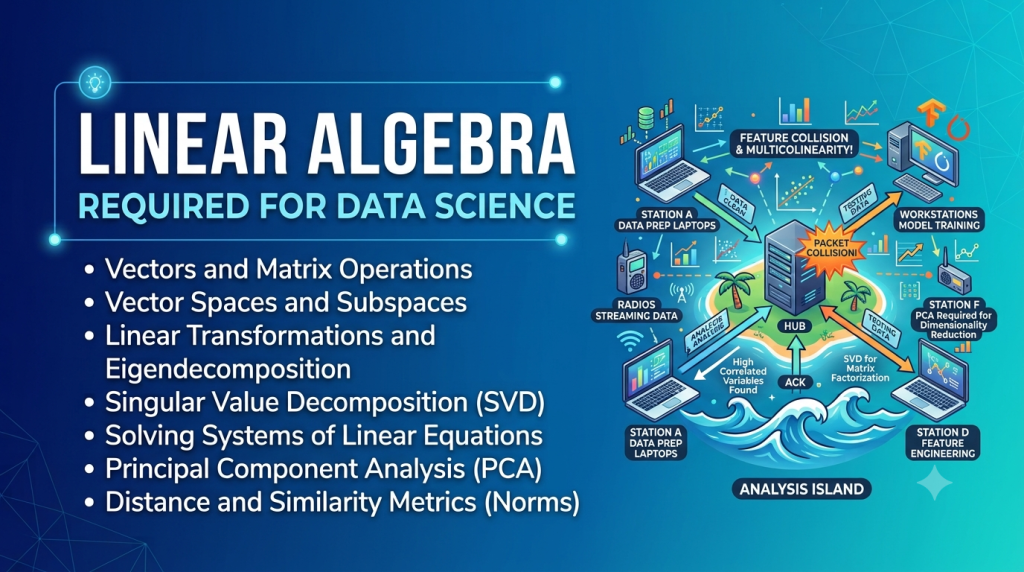
I’ll be honest—I used to think linear algebra was just another college subject that I’d never use. Whenever I saw pages full of matrices and equations, I immediately lost interest.
Then I started learning machine learning.
Suddenly, I kept hearing words like vectors, matrices, dimensions, and transformations. At first, they sounded intimidating. But once I understood what they actually meant, everything started making sense.
Here’s a simple way to think about it.
Imagine you’re managing a grocery store. Every day, you record information like this:
| Customer | Age | Items Purchased | Total Bill |
|---|---|---|---|
| Ravi | 25 | 5 | ₹450 |
| Priya | 30 | 8 | ₹780 |
| Arjun | 22 | 3 | ₹250 |
To us, this looks like a normal table.
To a computer, it’s a matrix.
That matrix becomes the foundation for analyzing customer behavior, predicting future purchases, or recommending products. Without linear algebra, handling this data efficiently would be much harder.
This is exactly why Linear Algebra Required for Data Science isn’t just a theory—it’s a practical skill you’ll use throughout your data science journey.
What Is Linear Algebra?
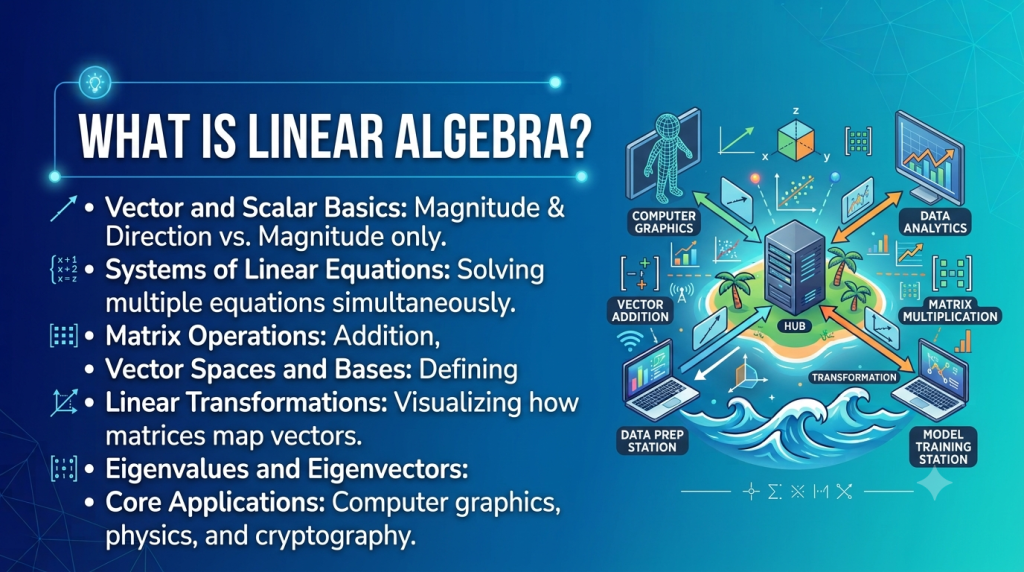
Let’s keep it simple.
Linear algebra is a branch of mathematics that helps us work with numbers arranged in rows and columns. It also helps us understand relationships between different pieces of data.
Instead of solving one number at a time, linear algebra allows us to process thousands or even millions of values together.
Think about your smartphone.
Every photo you take contains millions of tiny pixels. Each pixel stores color values.
When your phone edits an image, sharpens it, or applies a filter, it’s performing mathematical operations on huge collections of numbers.
That’s linear algebra working quietly behind the scenes.
The same idea applies to data science.
Whether we’re analyzing customer data, predicting stock prices, or recognizing faces in photos, we’re working with massive collections of numbers.
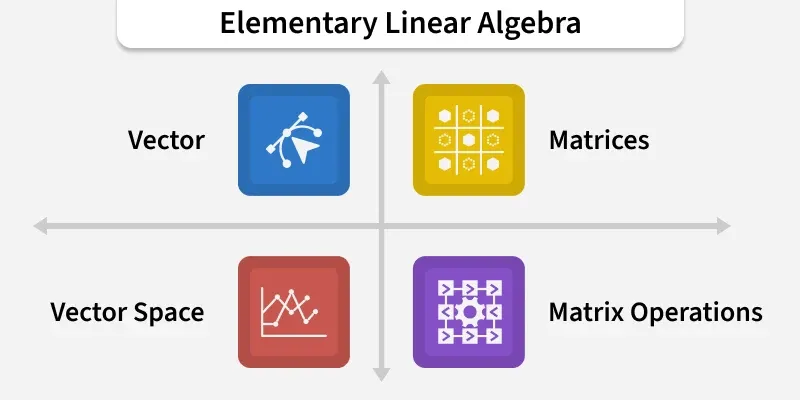
What Are Vectors?
One of the first concepts you’ll encounter while learning Linear Algebra Required for Data Science is the vector.
Don’t let the name scare you.
A vector is simply an ordered list of numbers.
For example:
[25, 180, 72]This could represent:
- Age = 25 years
- Height = 180 cm
- Weight = 72 kg
Instead of storing these values separately, we group them into a single vector.
I like to think of a vector as a person’s digital profile. Rather than describing someone with words, we describe them using numbers that a computer can understand.
In data science, every customer, student, employee, or product can be represented as a vector.
Pretty neat, right?
Real-Life Example of Vectors 🎯
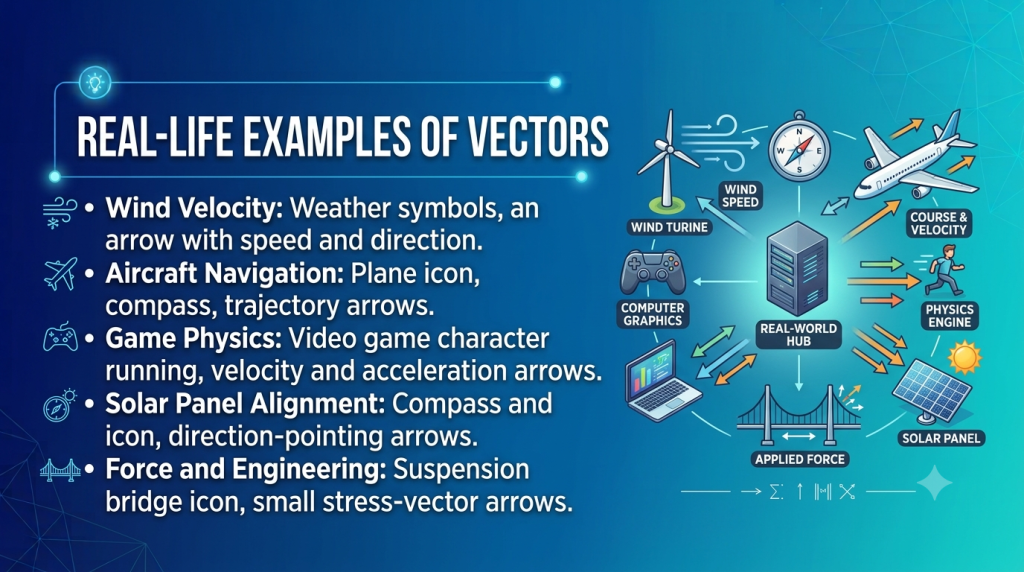
Imagine a movie recommendation app.
For each user, it stores information like:
- Action movies watched
- Comedy movies watched
- Drama movies watched
- Horror movies watched
Suppose my viewing history looks like this:
[15, 8, 20, 2]This vector tells the recommendation system that I enjoy dramas the most and horror movies the least.
When millions of users are represented as vectors, machine learning algorithms can compare them and recommend movies with surprising accuracy.
Every recommendation feels personal—but underneath it all, it’s largely powered by Linear Algebra Required for Data Science.
What Are Matrices?
Once we understand vectors, the next step is learning about matrices.
A matrix is simply a collection of vectors arranged into rows and columns.
Here’s an example:
| Student | Math | Science | English |
| Rahul | 80 | 75 | 90 |
| Sneha | 92 | 88 | 95 |
| Amit | 70 | 78 | 85 |
This entire table is called a matrix.
In real-world data science projects, datasets often contain:
- Thousands of rows
- Hundreds of columns
- Millions of values
Instead of processing one value at a time, computers perform operations on the entire matrix.
That’s why matrix operations are incredibly fast and efficient.
Without matrices, training machine learning models on huge datasets would take much longer.
Why Data Scientists Love Matrices ❤️
When I first learned about matrices, I wondered, “Why not just use Excel tables?”
The answer became obvious once I started working with larger datasets.
Imagine trying to analyze:
- 10 million customers
- 50 features for each customer
- Several years of historical data
Doing that manually would be impossible.
Matrices allow computers to perform calculations on all that data in seconds.
That’s one of the biggest reasons Linear Algebra Required for Data Science is considered a foundational skill rather than an optional one.
How Linear Algebra Connects to Machine Learning
This was the moment everything clicked for me.
Every machine learning algorithm learns by performing mathematical calculations on data.
That data is stored as:
- Vectors
- Matrices
- Arrays of numbers
Whether you’re building a spam email detector, predicting house prices, or recognizing handwritten digits, your model processes numerical data using linear algebra.
The better you understand these fundamentals, the easier it becomes to understand how machine learning models actually work—not just how to use them.
In the next part, we’ll dive deeper into concepts like matrix operations, dot products, eigenvalues, and how they power real-world data science and AI applications without making your head spin. 😊
Applications of Linear Algebra in Data Science 🌍
One thing I’ve learned during my data science journey is this: Linear Algebra Required for Data Science isn’t just another chapter in a textbook. It’s used almost everywhere.
Here are some of the most common applications.
🤖 Machine Learning
Every machine learning algorithm works with vectors and matrices.
Whether you’re predicting house prices or detecting spam emails, linear algebra is doing the heavy lifting behind the scenes.
📷 Image Processing
Every image is made up of millions of pixels.
Those pixel values form large matrices.
Linear algebra helps:
- Compress images
- Enhance image quality
- Detect objects
- Recognize faces
🗣️ Natural Language Processing (NLP)
Have you ever wondered how chatbots understand text?
Words are converted into vectors so computers can compare meanings and identify relationships between them.
This is one of the reasons modern AI tools can understand human language so effectively.
📊 Data Analysis
Data scientists constantly organize, clean, and transform datasets.
Most of these tasks involve matrix operations that make handling large amounts of information faster and more efficient.
💰 Financial Forecasting
Banks and financial institutions analyze historical market data using linear algebra to:
- Predict stock prices
- Detect fraud
- Assess financial risk
- Recommend investment strategies
🏥 Healthcare
Hospitals and researchers use linear algebra to analyze patient records, medical images, and disease patterns.
This helps doctors diagnose illnesses earlier and improve treatment decisions.
Why Linear Algebra Matters in Data Science ⭐
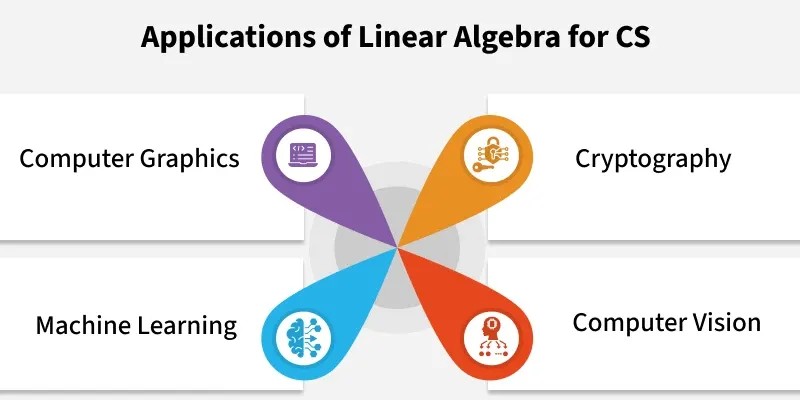
If someone asked me for one reason to learn Linear Algebra Required for Data Science, I’d say this:
It helps computers understand data.
Without linear algebra:
- Machine learning models couldn’t process large datasets efficiently.
- Recommendation systems wouldn’t work as accurately.
- Image recognition would be much slower.
- AI applications would struggle to identify patterns.
- Many modern data science techniques simply wouldn’t exist.
The more I learned about data science, the more I realized that programming tells the computer what to do, while linear algebra gives it the mathematical tools to do it efficiently.
That’s why almost every machine learning library—whether it’s NumPy, TensorFlow, or PyTorch—relies heavily on linear algebra under the hood.
If you’re beginning your data science journey, don’t worry about mastering every formula. Start with the basics, understand how vectors and matrices represent data, and build your knowledge step by step. Trust me, your future self will thank you. 😊
🎯 Final Thoughts
Learning Linear Algebra Required for Data Science may seem challenging at first, but it’s one of the best investments you can make in your data science journey. From vectors and matrices to machine learning and AI, linear algebra forms the foundation of many modern technologies. My advice is to focus on understanding the core concepts rather than memorizing formulas. With consistent practice and real-world examples, you’ll soon see how these mathematical ideas help solve practical data science problems. Keep learning, stay curious, and build your skills one step at a time. 🚀
Want to learn more ??, Kaashiv Infotech Offers Data Analytics Course, Data Science Course, Cyber Security Course & More Visit Their Website www.kaashivinfotech.com.