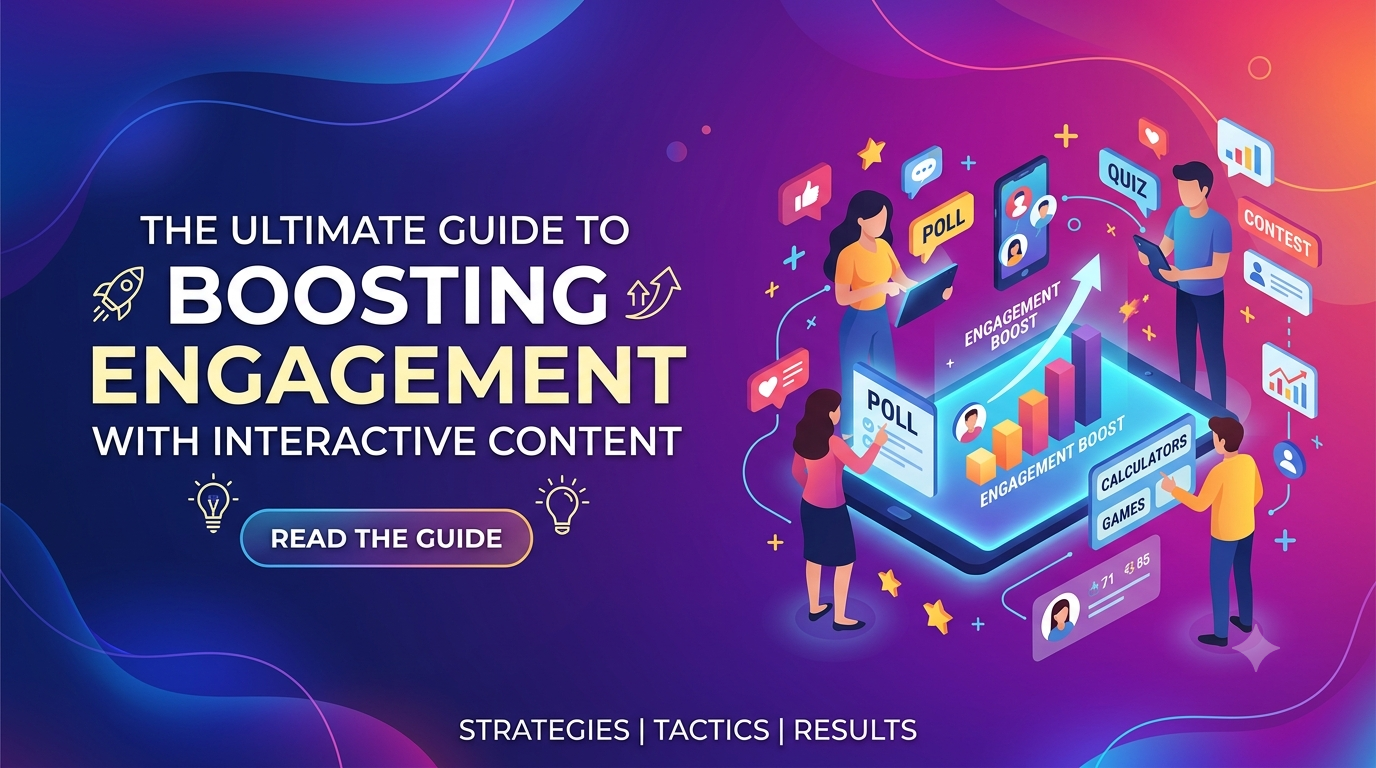
boost engagement with interactive content – In an era where users are constantly bombarded with information, capturing attention is no longer enough—you need to engage, involve, and interact. Traditional content formats like static blogs or plain visuals often struggle to hold user interest for long. Audiences today crave experiences, not just information.
This is exactly why interactive content has become one of the most powerful tools in modern digital marketing.
Interactive content transforms passive readers into active participants. Instead of simply scrolling through a page, users click, explore, answer, and engage. This shift from passive consumption to active involvement significantly increases engagement, retention, and even conversion rates.
If you’re looking to elevate your content strategy and stand out in a crowded online space, this guide will walk you through 7 powerful strategies to boost engagement with interactive content—along with practical insights to implement them effectively.
boost engagement with interactive content
What is Interactive Content?
Interactive content is any form of digital content that requires users to actively participate rather than just consume. It creates a two-way interaction between the user and the content.
Unlike traditional formats, interactive content encourages actions such as clicking, answering questions, exploring visuals, or making decisions.
Common examples include quizzes, polls, interactive videos, calculators, sliders, and clickable infographics. These formats not only make content more engaging but also provide a personalized experience for each user.
Why Interactive Content is Essential in 2026
User behavior has evolved dramatically. People now have shorter attention spans and higher expectations from digital experiences. They want content that is quick, engaging, and meaningful.
Interactive content addresses these needs by:
Increasing the time users spend on your website, which signals value to search engines and improves SEO performance. It also enhances user experience by making content more dynamic and enjoyable.
Additionally, it helps brands collect valuable data about user preferences, behaviors, and interests. This data can be used to refine marketing strategies and deliver more personalized content.
Most importantly, interactive content builds a stronger emotional connection with users, making them more likely to trust your brand and take action.
1. Create Highly Engaging and Personalized Quizzes
Quizzes are one of the most effective and widely used forms of interactive content. They tap into human curiosity and the desire for self-discovery.
When users see a quiz, they are naturally inclined to participate, especially if it promises personalized results.
You can create different types of quizzes depending on your niche. Personality quizzes work great for lifestyle and entertainment content, while knowledge-based quizzes are ideal for educational platforms.
Product recommendation quizzes are particularly powerful for businesses, as they guide users toward the right purchase decisions.
To maximize engagement, keep your quizzes short, visually appealing, and relevant. Provide instant results with a personalized touch to make users feel valued.
2. Use Polls and Surveys to Involve Your Audience
Polls and surveys are simple yet incredibly effective tools for boosting engagement. They make users feel heard and involved in the conversation.
When people are given the opportunity to share their opinions, they are more likely to interact with your content and return in the future.
Polls work especially well on social media platforms, while surveys are ideal for websites and email campaigns.
You can use them to gather feedback, understand audience preferences, or even validate new ideas before launching a product or service.
The key is to keep questions short and straightforward. Avoid overwhelming users with too many questions, as this can reduce participation rates.
3. Transform Data into Interactive Infographics
Infographics have always been a popular way to present information, but interactive infographics take engagement to the next level.
Instead of presenting all the information at once, interactive infographics allow users to explore data step by step. They can click on sections, hover over elements, or navigate through different layers of content.
This approach not only makes complex information easier to understand but also keeps users engaged for a longer time.
Interactive infographics are particularly useful for data-heavy topics, as they break down information into digestible and visually appealing segments.
4. Leverage Interactive Videos for Immersive Experiences
Video content is already highly engaging, but adding interactivity makes it even more powerful.
Interactive videos allow users to control their viewing experience. They can choose different paths, click on elements within the video, or access additional information.
This creates a more immersive and personalized experience, which significantly increases engagement and retention.
Businesses can use interactive videos for product demonstrations, tutorials, storytelling, and even e-commerce experiences where users can shop directly from the video.
5. Offer Value Through Calculators and Interactive Tools
Interactive tools like calculators provide immediate value to users, making them one of the most effective forms of engagement.
These tools solve specific problems and deliver instant results, which keeps users coming back.
For example, financial websites can offer EMI or investment calculators, while fitness platforms can provide calorie or BMI calculators.
When users find your tools useful, they are more likely to trust your brand and explore your other content or services.
The key is to create tools that are relevant to your audience and easy to use.
6. Apply Gamification to Make Content Fun and Addictive
Gamification involves adding game-like elements to your content to make it more engaging and enjoyable.
This can include points, rewards, badges, challenges, and leaderboards. These elements tap into users’ competitive instincts and motivate them to participate.
Gamified content not only increases engagement but also encourages repeat visits, as users return to improve their scores or unlock rewards.
It is especially effective in educational platforms, fitness apps, and loyalty programs.
7. Maximize Engagement with Interactive Social Media Features
Social media platforms have evolved to include a wide range of interactive features that brands can leverage.
From polls and quizzes to live sessions and Q&A stickers, these features make it easy to connect with your audience in real time.
Interactive social media content creates a sense of community and strengthens the relationship between brands and their audience.
It also increases visibility, as higher engagement often leads to better reach on social media algorithms.
Consistency is key here. Regularly engaging with your audience helps build trust and keeps your brand top of mind.
Advanced Tips to Make Your Interactive Content More Effective
Creating interactive content is not just about adding features—it’s about delivering a seamless and meaningful experience.
Start by understanding your audience and their preferences. The more relevant your content is, the higher the engagement will be.
Make sure your content is mobile-friendly, as a large portion of users access content through their smartphones. Slow-loading or poorly optimized content can drive users away.
Provide instant feedback wherever possible. Whether it’s quiz results or calculator outputs, users expect quick responses.
Also, continuously analyze performance metrics such as click rates, time spent, and interaction levels. Use these insights to refine and improve your strategy.
Common Mistakes to Avoid
While interactive content is highly effective, certain mistakes can reduce its impact.
One common mistake is overcomplicating the experience. If users find it difficult to interact with your content, they are likely to leave.
Another issue is lack of relevance. Interactive features should align with your audience’s interests and needs.
Ignoring mobile optimization is another major mistake, as it can significantly affect user experience.
Lastly, failing to provide value can make your content feel gimmicky rather than useful.
Conclusion
Interactive content is no longer just a trend—it is a necessity for brands that want to thrive in the digital landscape of 2026 and beyond.
By transforming passive users into active participants, interactive content creates memorable experiences that drive engagement, build trust, and increase conversions.
From quizzes and polls to interactive videos and gamification, the strategies discussed in this guide offer a powerful way to elevate your content marketing efforts.
Start implementing these methods today, experiment with different formats, and continuously optimize your approach based on user behavior.
The future of content is interactive—and those who embrace it will lead the way.
If you’re thinking of starting a career in digital marketing, now’s the time. There are amazing online courses from platforms like Kaashiv Infotech to get you started.