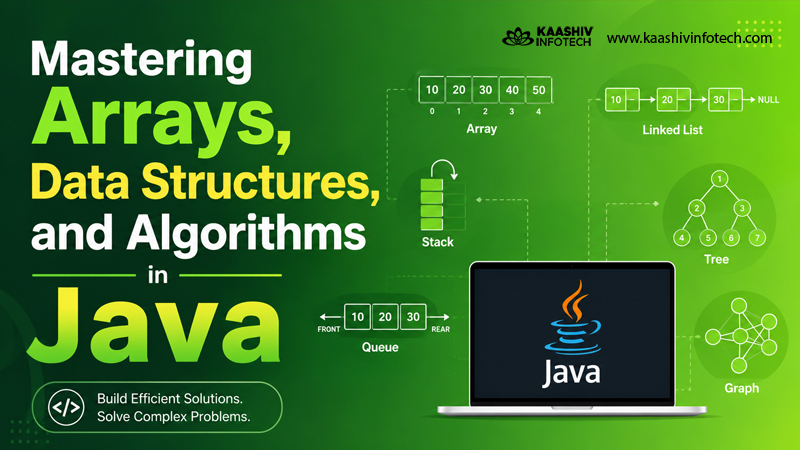
In the world of programming, especially in Java development, understanding Array Data Structures and Algorithms in Java (DSA) is not just important—it’s essential. Whether you’re building applications, preparing for technical interviews, or working on real-world systems, DSA is what separates average code from efficient, optimized solutions.
Think of programming like building a house. Java is your toolset, but data structures are your materials, and algorithms are your construction methods. Without the right structure and approach, even simple problems can become inefficient and messy.
This guide takes you through a deep and practical understanding of arrays, data structures, and algorithms in Java, in a way that’s easy to grasp and apply.
Array Data Structures and Algorithms in Java
Understanding Arrays in Java
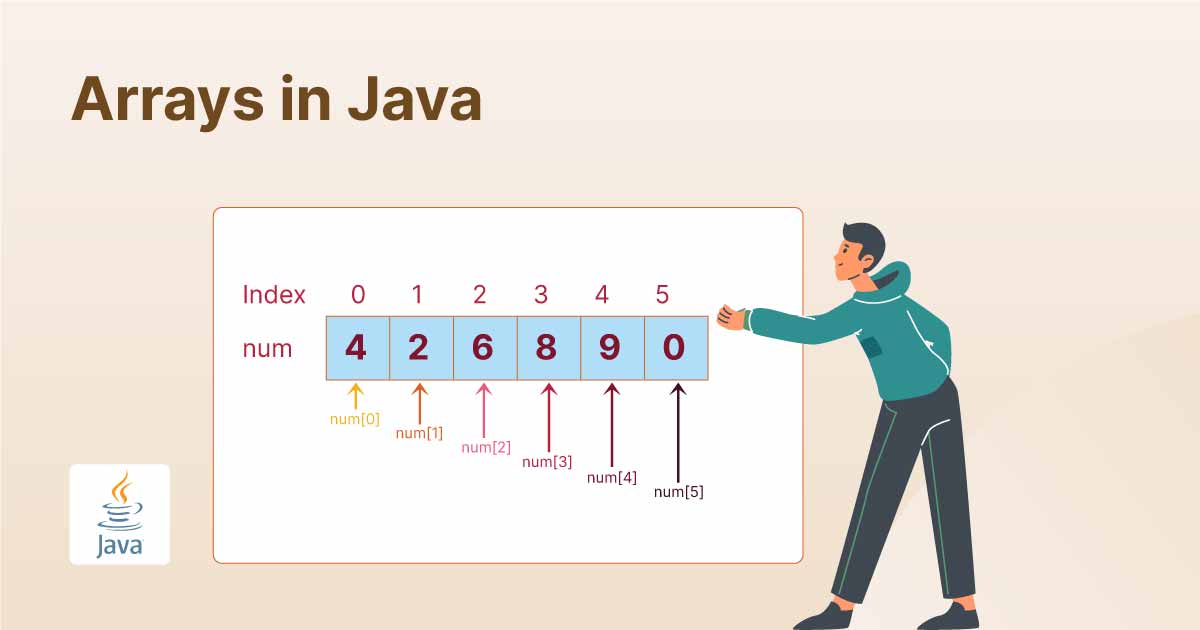
An array is the most fundamental data structure in Java. It allows you to store multiple values of the same type in a single variable, making your code cleaner and more organized.
Instead of declaring multiple variables individually, arrays let you group related data together. Each value inside an array is stored in a continuous block of memory, and every element can be accessed using an index starting from zero.
Here’s a simple Java example:
<span class="ͼ11">int</span>[] <span class="ͼ11">marks</span> <span class="ͼv">=</span> {<span class="ͼy">85</span>, <span class="ͼy">90</span>, <span class="ͼy">78</span>, <span class="ͼy">92</span>};
<span class="ͼ11">System</span><span class="ͼv">.</span><span class="ͼ11">out</span><span class="ͼv">.</span><span class="ͼ11">println</span>(<span class="ͼ11">marks</span>[<span class="ͼy">1</span>]); <span class="ͼt">// Output: 90</span>
The beauty of arrays lies in their simplicity and speed. Accessing any element is extremely fast because Java knows exactly where each element is located in memory.
However, arrays come with a limitation: their size is fixed. Once created, you cannot dynamically resize them, which is why more advanced data structures are often used in real-world applications.
How Arrays Work Internally
When you create an array in Java, memory is allocated in a continuous block. Each element is stored next to the other, which allows very fast access using index-based calculation.
The formula used internally is something like:
Address = Base Address + (Index × Size of Element)
This is why accessing an element in an array takes constant time, also known as O(1) complexity.
Types of Arrays in Java
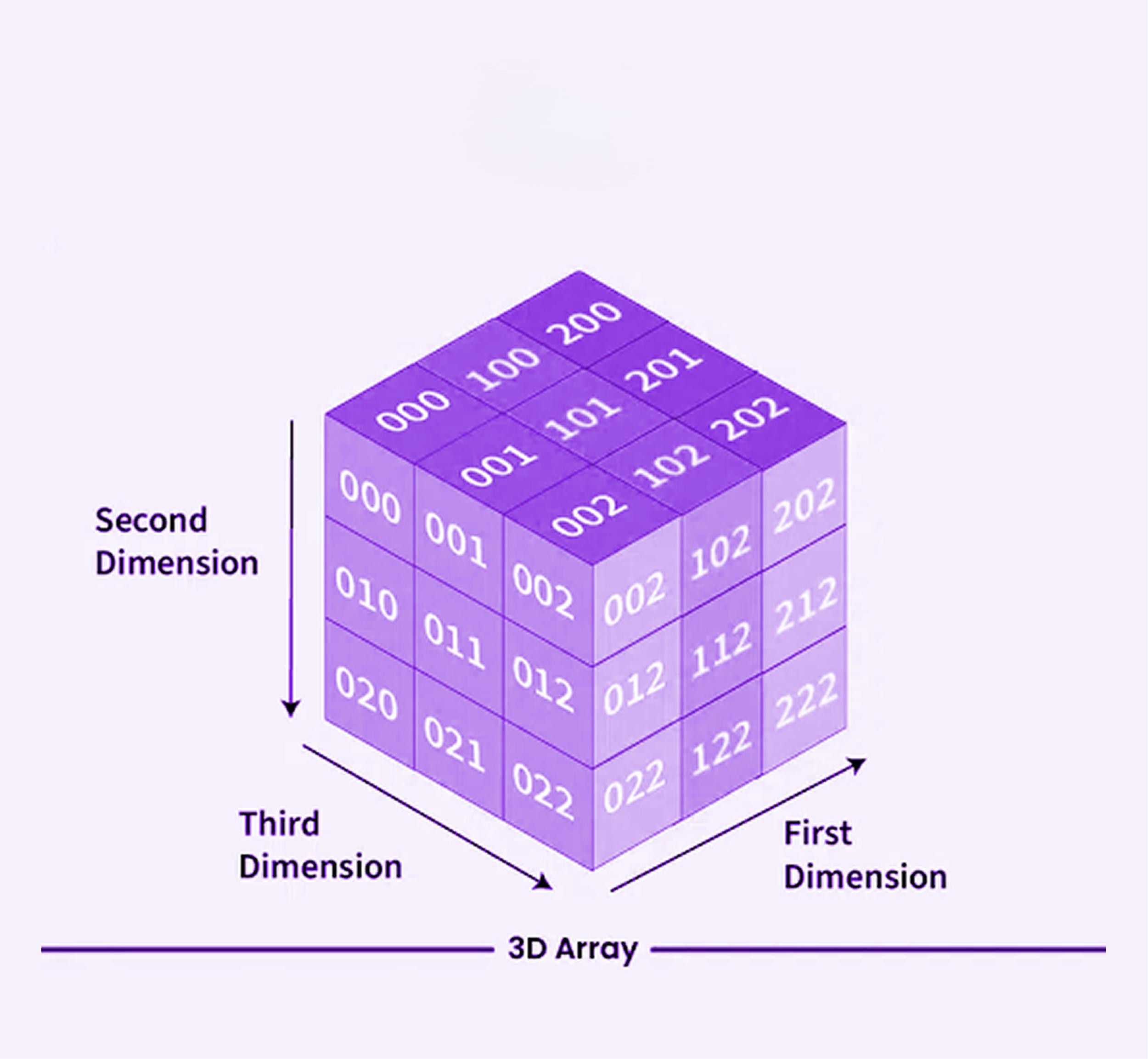
Arrays in Java are not limited to a single dimension. Depending on how data is structured, you can use different types of arrays.
A one-dimensional array is the simplest form and behaves like a list. A two-dimensional array is more like a table with rows and columns, often used for matrices or grid-based problems. Multi-dimensional arrays extend this idea further and are used in advanced scenarios like 3D modeling or simulations.
Example of a 2D array:
<span class="ͼ11">int</span>[][] <span class="ͼ11">matrix</span> <span class="ͼv">=</span> {
    {<span class="ͼy">1</span>, <span class="ͼy">2</span>, <span class="ͼy">3</span>},
    {<span class="ͼy">4</span>, <span class="ͼy">5</span>, <span class="ͼy">6</span>}
};
This structure is especially useful when dealing with problems like image processing, games, or mathematical computations.
Common Operations on Arrays
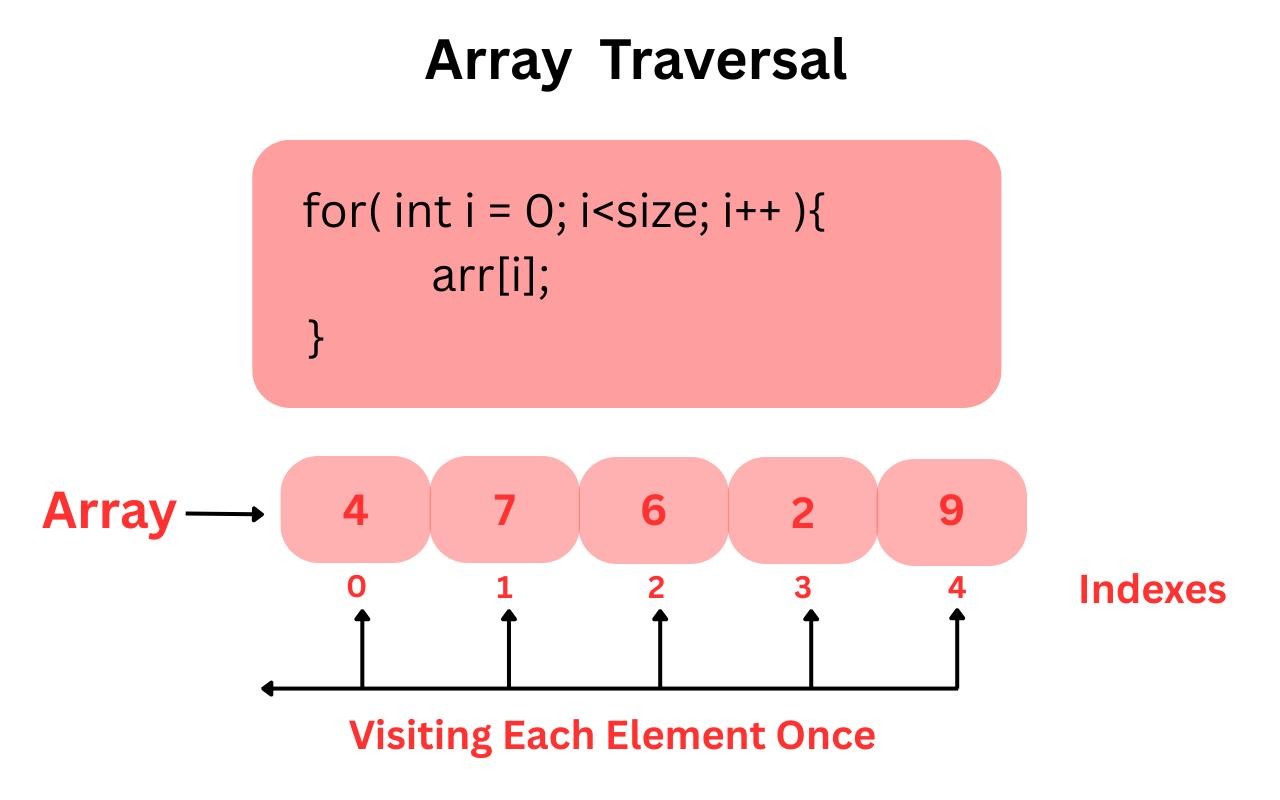
Arrays support several important operations, and understanding these is crucial for mastering DSA.
Traversal is the process of visiting each element in the array. This is typically done using loops and is the most common operation.
Searching involves finding a particular element. A simple approach is linear search, where you check each element one by one. For sorted arrays, binary search provides a much faster solution.
Insertion and deletion are slightly more complex because arrays have fixed sizes. To insert or remove elements, you often need to shift existing values, which makes these operations less efficient compared to dynamic structures.
Here’s a simple traversal example:
<span class="ͼv">for</span>(<span class="ͼ11">int</span> <span class="ͼ11">i</span> <span class="ͼv">=</span> <span class="ͼy">0</span>; <span class="ͼ11">i</span> <span class="ͼv"><</span> <span class="ͼ11">marks</span><span class="ͼv">.</span><span class="ͼ11">length</span>; <span class="ͼ11">i</span><span class="ͼv">++</span>){
    <span class="ͼ11">System</span><span class="ͼv">.</span><span class="ͼ11">out</span><span class="ͼv">.</span><span class="ͼ11">println</span>(<span class="ͼ11">marks</span>[<span class="ͼ11">i</span>]);
}
Introduction to Data Structures
While arrays are powerful, they are just the starting point. Data structures provide more flexible and efficient ways to store and manage data.
A data structure defines how data is organized, accessed, and modified. Choosing the right data structure can drastically improve performance and simplify problem-solving.
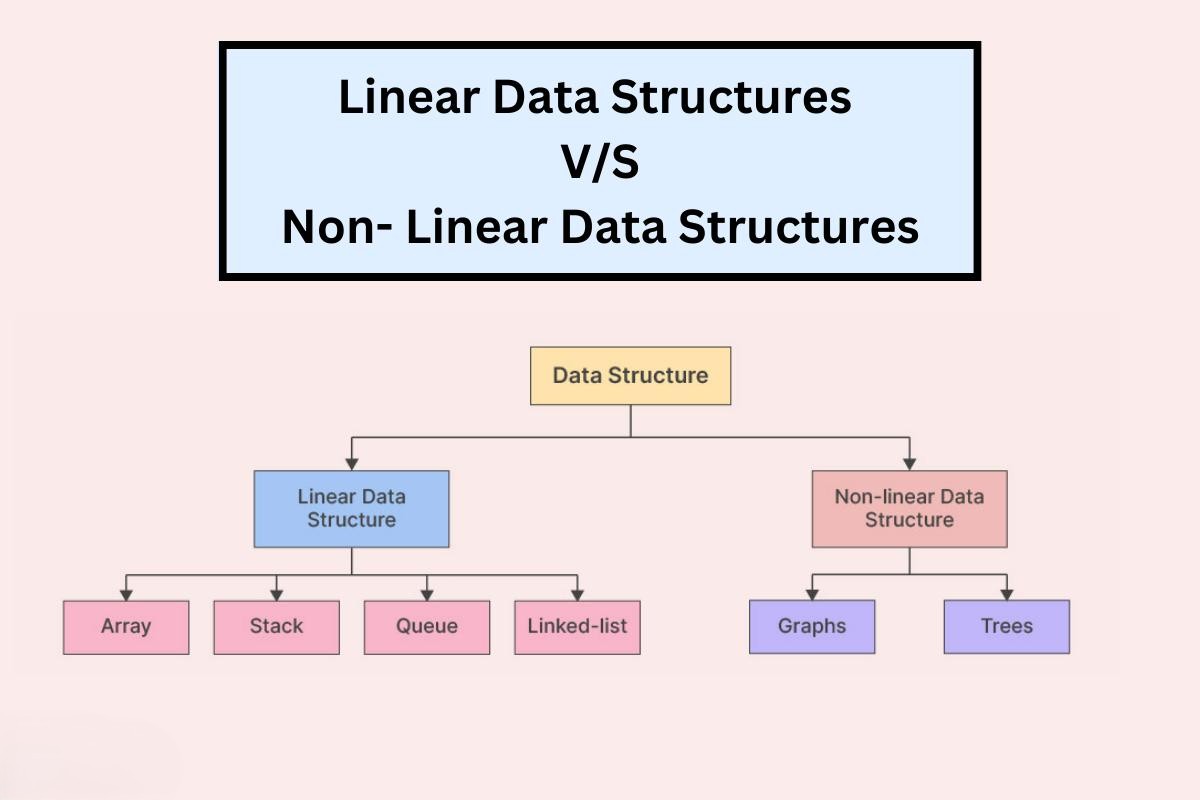
Data structures are broadly classified into linear and non-linear types. Linear structures, such as arrays and linked lists, store data sequentially. Non-linear structures like trees and graphs represent hierarchical or network relationships.
Exploring Important Data Structures in Java
As you move beyond arrays, you encounter more advanced data structures that solve real-world problems efficiently.
A linked list, for example, allows dynamic memory allocation. Unlike arrays, it doesn’t require contiguous memory, making insertion and deletion easier.
Stacks operate on a Last-In-First-Out principle. They are commonly used in recursion, undo operations, and expression evaluation.
Queues follow a First-In-First-Out approach and are widely used in scheduling systems and buffering tasks.
HashMaps store data in key-value pairs and provide extremely fast access using hashing techniques.
Trees are used to represent hierarchical data such as file systems or organizational structures. Graphs go even further by representing complex relationships like social networks or maps.
Understanding Algorithms
An algorithm is simply a step-by-step method to solve a problem. In Java, algorithms are implemented using logic and data structures.
For example, if you want to sort a list of numbers, you can use different algorithms like bubble sort, merge sort, or quick sort. Each has its own advantages and efficiency levels.
The goal of learning algorithms is not just to solve problems, but to solve them efficiently.
Searching Algorithms in Java
Searching is one of the most common operations in programming.
Linear search is straightforward and works on any array, but it can be slow for large datasets. Binary search, on the other hand, is much faster but requires the array to be sorted.
Here’s a Java implementation of binary search:
<span class="ͼ11">int</span> <span class="ͼ11">binarySearch</span>(<span class="ͼ11">int</span>[] <span class="ͼ11">arr</span>, <span class="ͼ11">int</span> <span class="ͼ11">key</span>){
    <span class="ͼ11">int</span> <span class="ͼ11">left</span> <span class="ͼv">=</span> <span class="ͼy">0</span>, <span class="ͼ11">right</span> <span class="ͼv">=</span> <span class="ͼ11">arr</span><span class="ͼv">.</span><span class="ͼ11">length</span> <span class="ͼv">-</span> <span class="ͼy">1</span>;

    <span class="ͼv">while</span>(<span class="ͼ11">left</span> <span class="ͼv"><=</span> <span class="ͼ11">right</span>){
        <span class="ͼ11">int</span> <span class="ͼ11">mid</span> <span class="ͼv">=</span> (<span class="ͼ11">left</span> <span class="ͼv">+</span> <span class="ͼ11">right</span>) <span class="ͼv">/</span> <span class="ͼy">2</span>;

        <span class="ͼv">if</span>(<span class="ͼ11">arr</span>[<span class="ͼ11">mid</span>] <span class="ͼv">==</span> <span class="ͼ11">key</span>) <span class="ͼv">return</span> <span class="ͼ11">mid</span>;
        <span class="ͼv">else</span> <span class="ͼv">if</span>(<span class="ͼ11">arr</span>[<span class="ͼ11">mid</span>] <span class="ͼv"><</span> <span class="ͼ11">key</span>) <span class="ͼ11">left</span> <span class="ͼv">=</span> <span class="ͼ11">mid</span> <span class="ͼv">+</span> <span class="ͼy">1</span>;
        <span class="ͼv">else</span> <span class="ͼ11">right</span> <span class="ͼv">=</span> <span class="ͼ11">mid</span> <span class="ͼv">-</span> <span class="ͼy">1</span>;
    }
    <span class="ͼv">return</span> <span class="ͼv">-</span><span class="ͼy">1</span>;
}
Sorting Algorithms Explained
Sorting is another critical concept in DSA. It involves arranging data in a specific order, usually ascending or descending.
Bubble sort is easy to understand but inefficient for large data. Merge sort uses a divide-and-conquer strategy and is much faster. Quick sort is widely used because of its efficiency in most real-world cases.
Here’s a simple bubble sort example:
<span class="ͼv">for</span>(<span class="ͼ11">int</span> <span class="ͼ11">i</span> <span class="ͼv">=</span> <span class="ͼy">0</span>; <span class="ͼ11">i</span> <span class="ͼv"><</span> <span class="ͼ11">arr</span><span class="ͼv">.</span><span class="ͼ11">length</span><span class="ͼv">-</span><span class="ͼy">1</span>; <span class="ͼ11">i</span><span class="ͼv">++</span>){
    <span class="ͼv">for</span>(<span class="ͼ11">int</span> <span class="ͼ11">j</span> <span class="ͼv">=</span> <span class="ͼy">0</span>; <span class="ͼ11">j</span> <span class="ͼv"><</span> <span class="ͼ11">arr</span><span class="ͼv">.</span><span class="ͼ11">length</span><span class="ͼv">-</span><span class="ͼ11">i</span><span class="ͼv">-</span><span class="ͼy">1</span>; <span class="ͼ11">j</span><span class="ͼv">++</span>){
        <span class="ͼv">if</span>(<span class="ͼ11">arr</span>[<span class="ͼ11">j</span>] <span class="ͼv">></span> <span class="ͼ11">arr</span>[<span class="ͼ11">j</span><span class="ͼv">+</span><span class="ͼy">1</span>]){
            <span class="ͼ11">int</span> <span class="ͼ11">temp</span> <span class="ͼv">=</span> <span class="ͼ11">arr</span>[<span class="ͼ11">j</span>];
            <span class="ͼ11">arr</span>[<span class="ͼ11">j</span>] <span class="ͼv">=</span> <span class="ͼ11">arr</span>[<span class="ͼ11">j</span><span class="ͼv">+</span><span class="ͼy">1</span>];
            <span class="ͼ11">arr</span>[<span class="ͼ11">j</span><span class="ͼv">+</span><span class="ͼy">1</span>] <span class="ͼv">=</span> <span class="ͼ11">temp</span>;
        }
    }
}
Time and Space Complexity
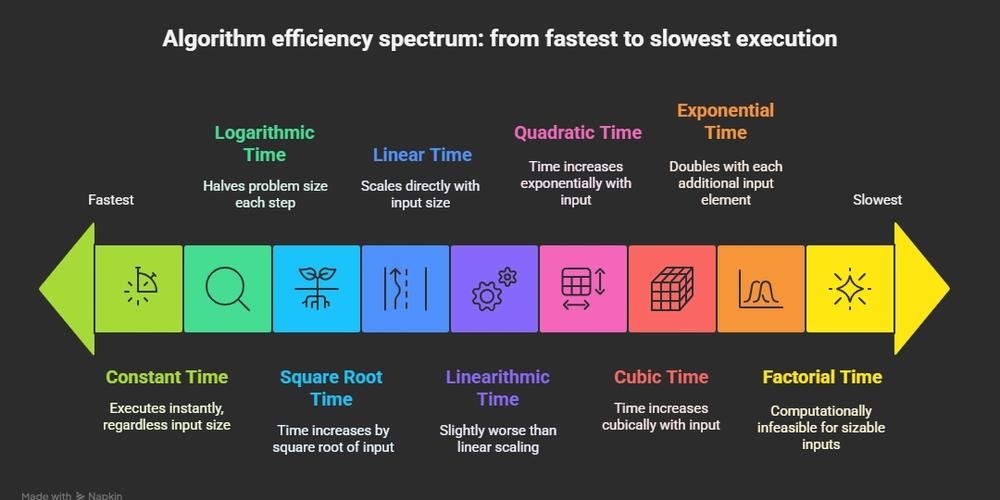
Efficiency is everything in programming. Time complexity measures how fast an algorithm runs, while space complexity measures how much memory it uses.
Common complexities include constant time, linear time, logarithmic time, and quadratic time. Understanding these helps you choose the best approach for solving a problem.
For example, binary search runs in logarithmic time, making it much faster than linear search for large datasets.
Real-World Importance of DSA
In real-world applications, DSA is everywhere. From search engines to social media platforms, efficient data handling is crucial.
When you search something online, algorithms quickly fetch relevant results. When you use maps, graph algorithms calculate the shortest path. Even simple features like autocomplete rely on advanced data structures.
For developers, mastering DSA improves coding efficiency, enhances problem-solving skills, and increases chances of cracking technical interviews.
Best Way to Learn DSA in Java
The best approach is to start with arrays and gradually move to advanced data structures. Practice consistently by solving problems and implementing algorithms from scratch.
Avoid memorizing solutions. Instead, focus on understanding the logic behind each concept. Over time, you will develop the ability to solve complex problems naturally.
Conclusion
Arrays are the foundation of data structures, and data structures are the foundation of efficient programming. When combined with powerful algorithms, they enable you to build fast, scalable, and reliable applications.
Mastering Arrays, Data Structures, and Algorithms in Java is not just about learning concepts—it’s about transforming the way you think and solve problems.
Kaashiv Infotech Offers Full Stack Java Developer Course, Java Internship & More Programming Courses Visit Our Website www.kaashivinfotech.com.
Related Reads:
-
7 Powerful Spring Boot – Annotations (A Developer’s Real Experience)
-
Mastering Java APIs: The Complete Developer Guide from Basics to Advanced Concepts