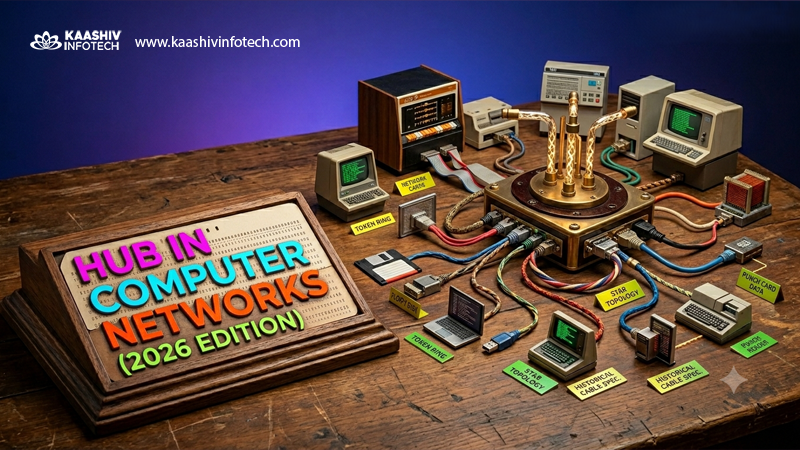
Before modern high-speed networking devices became the norm, simple hardware played a major role in connecting computers. One such foundational device is the hub. Although it is now considered outdated, the hub is still one of the best tools to understand how data travels across a network at its most basic level.
If you’re just starting out in networking, learning about hubs will help you clearly understand concepts like data transmission, collisions, and network structure. This guide explains everything in detail—from how hubs function to why they were replaced.
What is a Hub in Computer Networks?
A hub is a basic networking device that connects multiple computers within a Local Area Network (LAN). It acts as a central connection point where all devices communicate through a single medium.
Technically, a hub operates at the Physical Layer (Layer 1) of the OSI Model. This means it does not understand data in terms of addresses or destinations. Instead, it simply deals with electrical signals or bits.
When data enters a hub, the device does not inspect or process it. It blindly forwards the data to every connected device, making it one of the simplest networking devices ever created.
How Does a Hub Work?
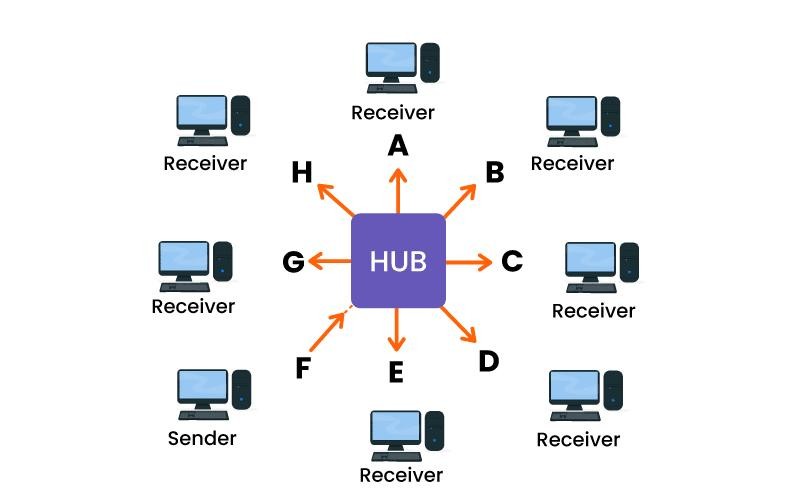
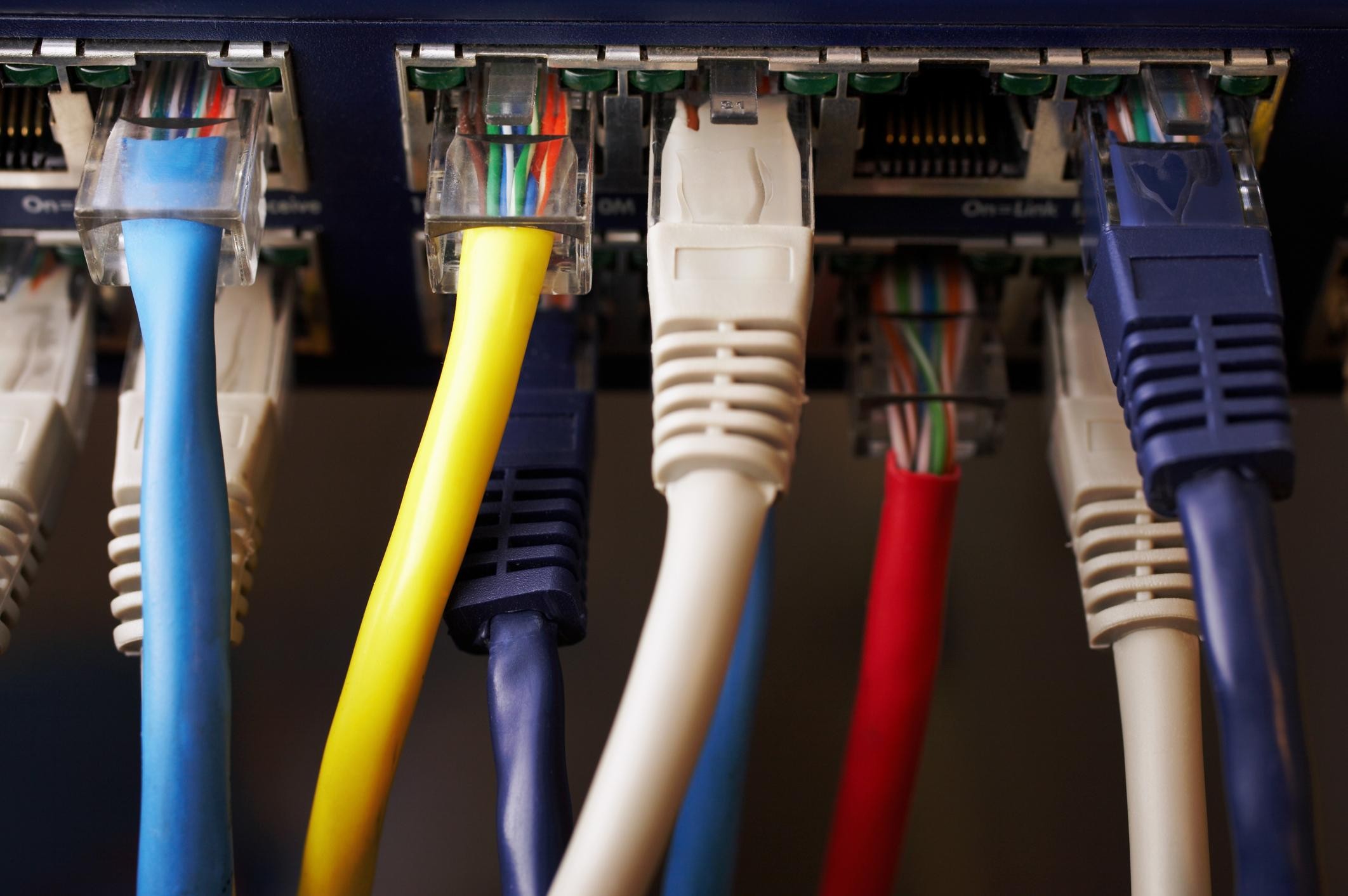
To understand how a hub works, imagine a central box with multiple ports where computers are connected using Ethernet cables.
When one computer sends data:
The hub receives the electrical signal through one of its ports. Instead of identifying the destination device, it immediately repeats the signal and transmits it to all other ports. Every connected computer receives the same data, but only the intended recipient processes it, while others ignore it.
This process is known as broadcasting.
However, this simplicity creates a major issue. If two devices send data at the same time, their signals collide. This leads to what is called a collision, forcing the devices to resend data, which slows down the entire network.
Types of Hubs
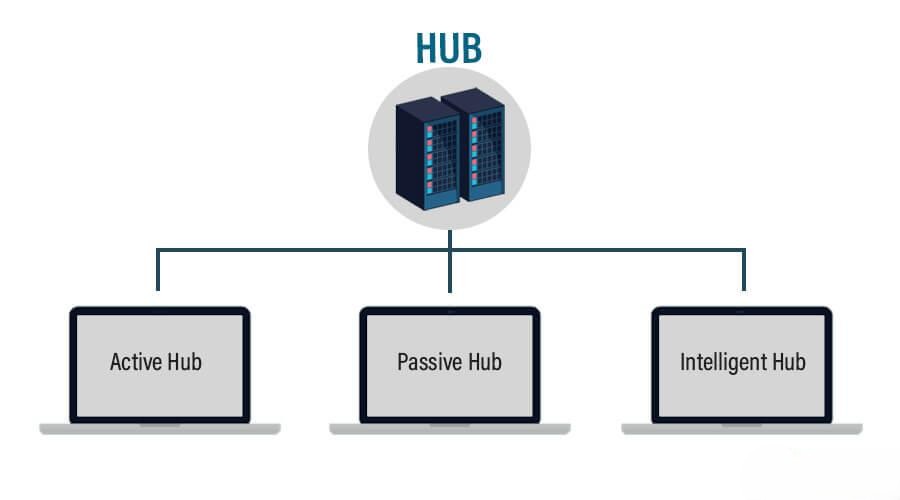
Hubs were developed in a few variations depending on their functionality.
An active hub is the most common type. It not only forwards data but also strengthens the signal before sending it out again. This makes it useful in slightly larger networks where signal degradation might occur.
A passive hub, on the other hand, is extremely simple. It does not amplify signals and simply acts as a connector between devices. Because of its limitations, it is rarely used.
Then came the intelligent hub, which introduced basic management capabilities. These hubs could monitor network traffic, detect faults, and provide minimal control. Even though they were more advanced than basic hubs, they still lacked the efficiency of modern switches.
Key Characteristics of a Hub
A hub’s design reflects its simplicity. It does not store or process data and has no ability to make decisions about where data should go. Every device connected to a hub shares the same bandwidth, which means performance decreases as more devices are added.
Communication in a hub-based network is half-duplex, meaning a device can either send or receive data at a time, but not both simultaneously. This further limits efficiency compared to modern full-duplex systems.
Because all devices receive all data, there is no privacy or security. Any system connected to the hub can potentially read transmitted data.
Advantages of a Hub
The biggest reason hubs became popular was their simplicity. Setting up a hub required no configuration, making it accessible even for beginners. It was also significantly cheaper than other networking devices available at the time.
For small environments like classrooms or labs, hubs provided a quick way to connect multiple computers without worrying about complex settings. Even today, they are sometimes used in educational scenarios to demonstrate how networks function at a fundamental level.
Limitations of a Hub
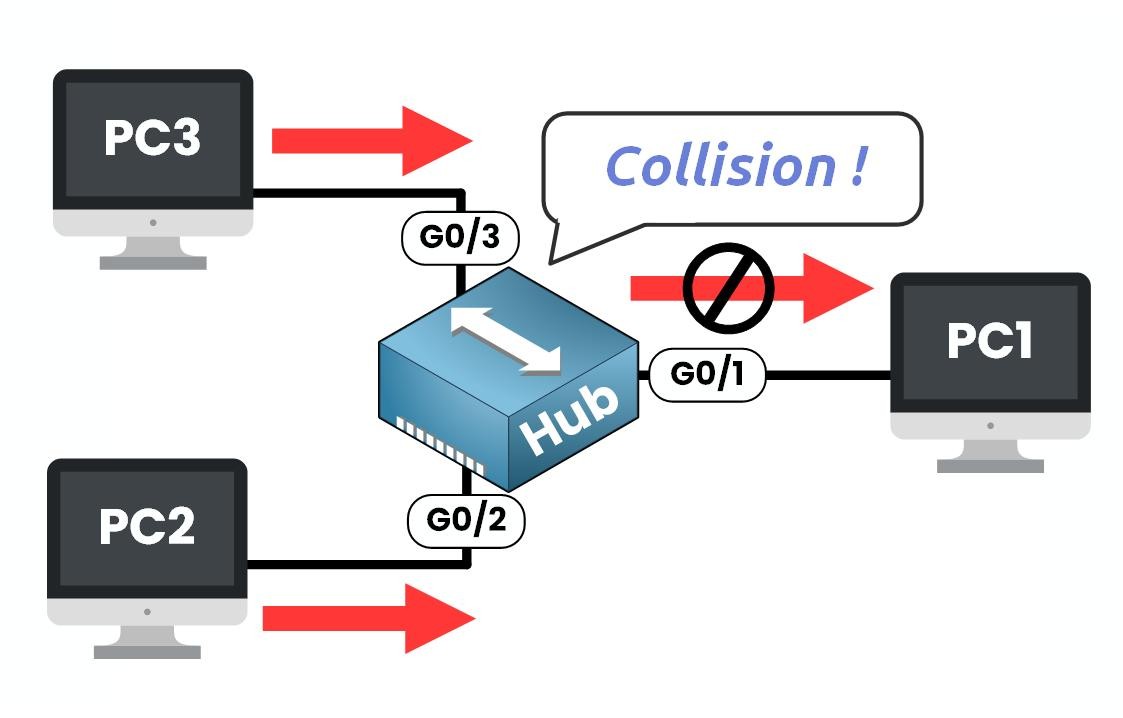
Despite their usefulness in early networking, hubs come with serious drawbacks.
The most critical issue is network collisions. Since all devices share the same communication channel, simultaneous transmissions interfere with each other. As the number of devices increases, collisions become more frequent, drastically reducing network performance.
Another major limitation is inefficiency. Because data is sent to all devices regardless of the intended recipient, bandwidth is wasted. This leads to slower communication and unnecessary network load.
Security is also a concern. Since every device receives all data, sensitive information can be intercepted easily. This makes hubs unsuitable for modern secure environments.
Finally, hubs lack intelligence. They cannot prioritize traffic, filter data, or learn device addresses, which are essential features in today’s networks.
Hub vs Switch vs Router
To fully understand the role of a hub, it helps to compare it with modern networking devices.
A hub simply broadcasts everything to everyone. A switch improves upon this by learning device addresses and sending data only to the intended recipient. A router goes even further by connecting different networks and directing traffic efficiently between them.
In practical terms, using a hub today would be like using a loudspeaker to communicate in a crowded office, while switches and routers function more like targeted messaging systems.
Real-World Analogy
Imagine you are in a room full of people.
Using a hub is like shouting a message loudly so that everyone hears it, even though only one person needs it. This creates noise and confusion.
A switch is like speaking directly to a specific person, ensuring only they receive the message.
A router is like sending a message to someone in another building entirely, making sure it reaches the correct destination through the best path.
Are Hubs Still Relevant Today?
In modern networking, hubs are largely obsolete. Devices like switches have replaced them because they offer better speed, efficiency, and security.
However, hubs still have educational value. They are often used to demonstrate how early networks operated and to explain concepts like collision domains and broadcasting in a simple way.
In rare cases, they may still be found in legacy systems where upgrading hardware is not feasible.
Conclusion
A hub is one of the most basic networking devices, yet it plays a crucial role in understanding how computer networks evolved. By simply broadcasting data to all connected devices, it demonstrates both the simplicity and the limitations of early network design.
While hubs are no longer used in modern infrastructure, they remain an important learning tool. Once you understand how a hub works, it becomes much easier to appreciate the efficiency and intelligence of advanced devices like switches and routers.
Want to learn about ethical hacker skills, Cyber Security?, Kaashiv Infotech Offers, Cyber Security Course, or Networking Course & More, Visit www.kaashivinfotech.com.