For decades, the global tech landscape has run on a simple assumption: American software rules the world. From the operating system on your computer to the cloud servers that host your data, US tech giants have been the default choice. That assumption just got shattered.
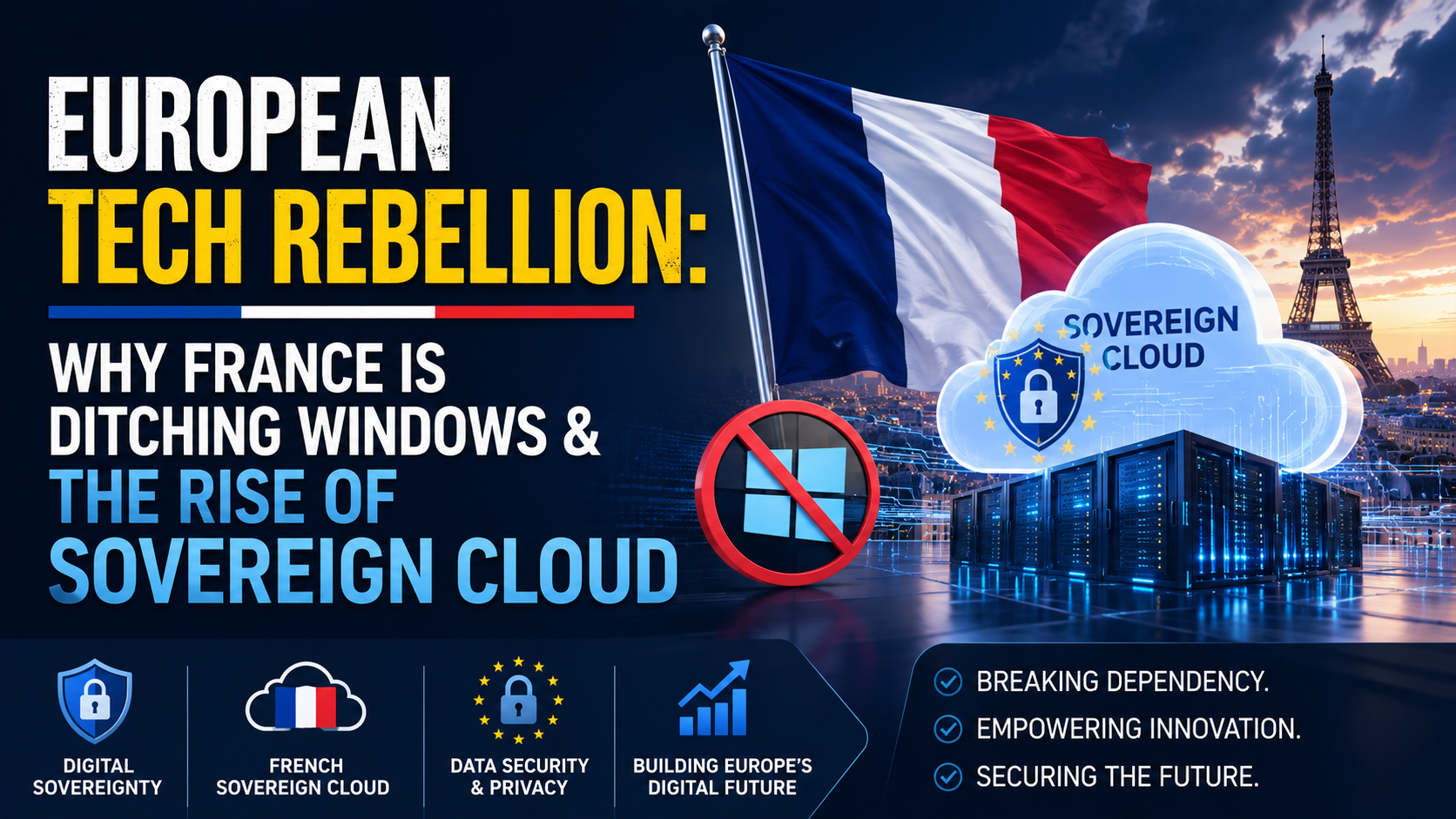
A massive tech rebellion is quietly brewing across Europe Tech, and it just exploded into public view. In a bombshell announcement, the French government declared it is officially kicking Microsoft Windows to the curb in favor of open-source Linux. But this isn’t just about one country or one piece of software. It’s the most visible sign of a powerful movement called European Digital Sovereignty, a trend that is forcing a complete overhaul of the entire tech industry.
This is the story of why Europe is breaking up with American tech, and what it means for every single IT professional in India working with European clients.
European Tech News : France’s Big Move: Saying ‘Non’ to Microsoft
The first shot was fired by French minister David Amiel. In a statement that has sent shockwaves through the tech world, he announced that France is moving its government computer systems away from Windows. Why?
To “regain control of our digital destiny,” Amiel said. He stated that the French government can “no longer accept that our data, our infrastructure, and our strategic decisions depend on solutions whose rules… and risks we do not control.”
The plan is to begin migrating government workstations to open-source **Linux**, starting with the country’s digital agency, DINUM. This move follows similar announcements from Denmark and parts of Germany, signaling a clear, continent-wide shift.

What is European Digital Sovereignty? (The Real Reason Behind the Drama)
So, why is this happening now? The answer lies in two words: Digital Sovereignty.
This is Europe’s official strategy to reduce its heavy reliance on foreign technology, particularly from the US and China, for its critical infrastructure. European leaders like Commission President Ursula von der Leyen are deeply concerned that their citizens’ data, government operations, and economic futures are controlled by American corporations. They believe that to be truly independent, they must have control over their own digital tools and data.
This isn’t just talk. The European Parliament has already voted to direct the Commission to identify ways to become more independent in key areas like cloud infrastructure, software, and AI systems.

The Corporate Response: OpenText’s Big Bet on Sovereign Cloud
While governments are busy ditching software, a parallel drama is unfolding in the corporate world. How can a global tech company continue to do business in Europe if the rules demand that all data stays within EU borders?

The answer is the “Sovereign Cloud,” and enterprise software giant OpenText just bet its entire European strategy on it. In a massive dual announcement, OpenText revealed partnerships with both **AWS** and **S3NS (a French alliance of Thales and Google Cloud)** to offer its AI and data tools on special, “sovereign” cloud platforms.
A Developer’s Guide to Sovereign Cloud
So, what exactly is a sovereign cloud? Think of it as a high-tech data fortress built specifically for one country or region. It solves the Digital Sovereignty problem by guaranteeing three things:
- Data Residency: All of the data is physically stored on servers located exclusively within the European Union.
- Operational Control: The cloud infrastructure is operated and managed by EU-based personnel, independent of the US parent company.
- Legal Compliance: It is governed strictly by EU laws (like GDPR), not American laws, ensuring European authorities have the final say.
By using the **AWS European Sovereign Cloud** or the **S3NS/Google Cloud** platform in France, OpenText can now offer its powerful American-made AI tools to European banks and governments without breaking a single data sovereignty rule.
The Impact on Indian IT Professionals & Tech Careers
If you are a developer, project manager, or cybersecurity expert working at an Indian IT company like TCS, Infosys, or Wipro, this isn’t just foreign news—it’s a critical career update.
Millions of Indian IT professionals work on projects for major European clients in highly regulated industries like banking, healthcare, and government. From now on, understanding the rules of Digital Sovereignty, data residency, and sovereign cloud deployments is no longer optional. It is a mandatory skill.
Your European clients will now demand that you know how to build and deploy applications that are compliant with these strict new rules. The developers who understand how to work within these sovereign environments will be the most valuable assets to their companies.
Conclusion: The New Rules of Global Tech
The message from Europe is loud and clear: the era of US tech dominance is being challenged. The future of technology in the EU will be local, legally compliant, and increasingly open-source. For tech companies, adapting is not a choice; it is a matter of survival. For tech professionals, it is a massive opportunity.
The skills required to navigate this new, regulated world—cloud architecture, data governance, cybersecurity, and Linux administration—are now in higher demand than ever before.
At Kaashiv Infotech, we provide industry-leading courses and internship programs like Cloud Computing Course in Chennai (AWS & Google Cloud), Cybersecurity Course in Chennai, and Ethical Hacking Internship In Chennai Our programs are designed to give you the practical, real-world skills you need to become an expert in building the secure, compliant, and sovereign systems that global companies are now desperately seeking.
The rules of the game have changed. Visit kaashivinfotech.com to get the skills you need to win, or read more deep-dives on the future of global tech at wikitechy.com today!
Frequently Asked Questions (FAQs)
1. Why is France ditching Microsoft Windows?
France is switching its government computers to Linux as part of a broader “Digital Sovereignty” movement across Europe to reduce its reliance on American technology and regain control over its digital infrastructure and data.
2. What is European Digital Sovereignty?
It is a political and technological strategy by the European Union to become more independent from foreign tech companies (primarily from the US and China) in critical areas like cloud computing, software, and AI.
3. What is a Sovereign Cloud?
A Sovereign Cloud is a cloud computing environment that is physically located, operated, and legally governed within a specific country or region (like the EU). It ensures that all data and operations comply with local data residency and sovereignty laws.
4. What are the AWS European Sovereign Cloud and S3NS?
These are two examples of sovereign clouds. The AWS European Sovereign Cloud is Amazon’s independent cloud for the EU. S3NS is a French company, formed by an alliance between Thales and Google Cloud, that offers a trusted cloud platform compliant with French law.
5. How does this affect Indian IT companies?
Indian IT professionals working for European clients in regulated industries (like banking or healthcare) must now understand and comply with strict data sovereignty rules. Expertise in sovereign cloud, data governance, and open-source systems is becoming a critical and highly valuable career skill.