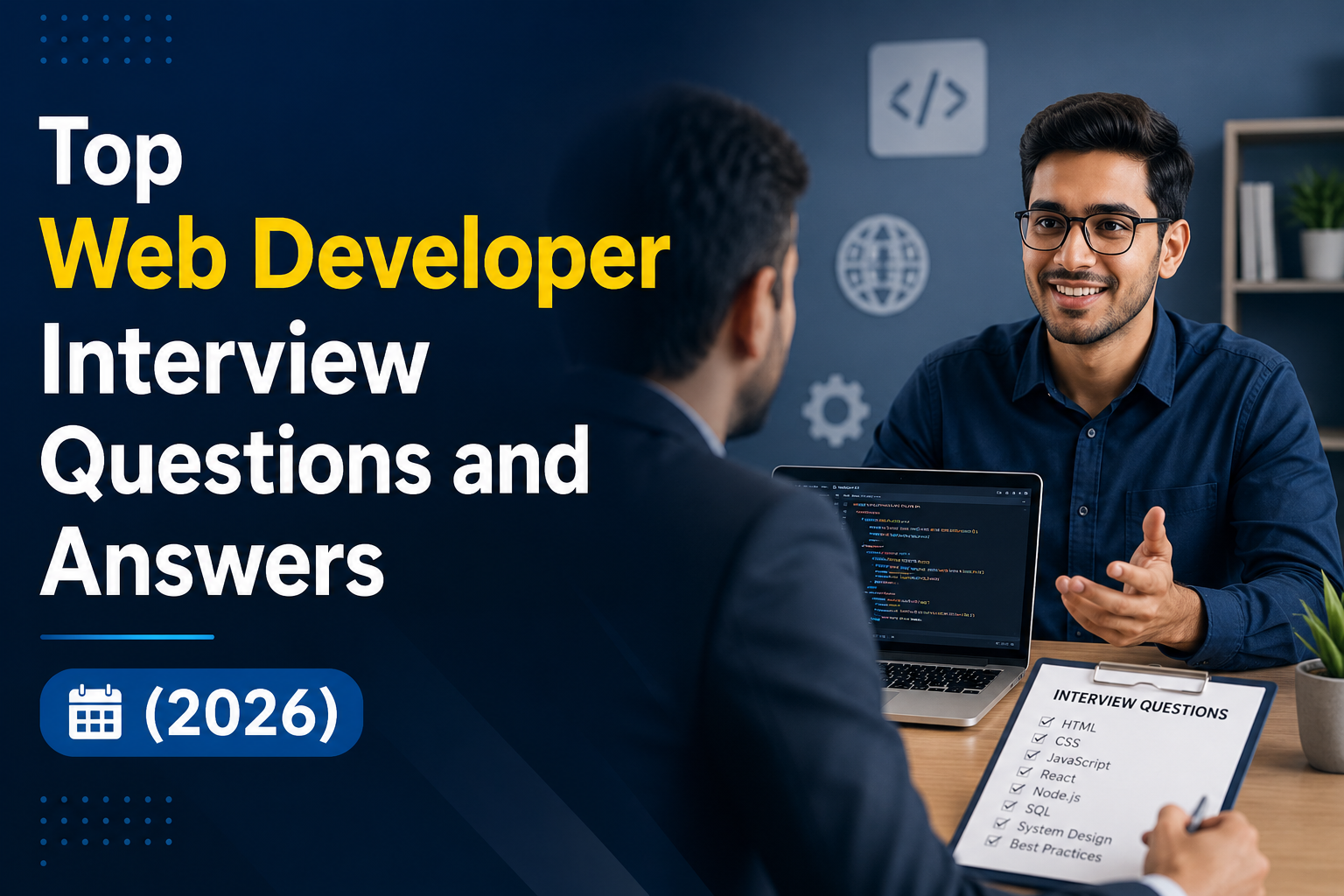
Web development continues to evolve rapidly in 2026, with new frameworks, tools, and best practices shaping the way developers build modern applications. Whether you’re a fresher or an experienced developer, preparing for interviews requires a strong understanding of both fundamental and advanced concepts.
This guide covers top web development interview questions and answers, designed to help you confidently crack interviews and demonstrate your technical expertise.
top web developer interview questions and answers
1. What is Web Development?
Web development refers to the process of building websites and web applications that run on browsers. It includes:
- Frontend Development – User interface (UI) using HTML, CSS, JavaScript
- Backend Development – Server-side logic, databases, APIs
- Full Stack Development – Combination of frontend and backend
2. What are the Core Technologies of Web Development?
The three fundamental technologies are:
- HTML (HyperText Markup Language) – Structure of web pages
- CSS (Cascading Style Sheets) – Styling and layout
- JavaScript – Interactivity and dynamic behavior
These form the backbone of any web application.
3. What is the Difference Between Frontend and Backend?
Frontend:
Handles what users see and interact with.
Technologies: HTML, CSS, JavaScript, React, Angular
Backend:
Handles server logic, databases, authentication.
Technologies: Node.js, Python, Java, PHP
4. What is Responsive Web Design?
Responsive design ensures that a website works well across all devices like mobiles, tablets, and desktops.
It uses:
- Flexible layouts
- Media queries
- Fluid images
5. What is the DOM (Document Object Model)?
The DOM is a programming interface for web documents. It represents HTML elements as objects, allowing JavaScript to manipulate content, structure, and styles dynamically.
6. What is the Difference Between == and === in JavaScript?
==→ Compares values after type conversion===→ Strict comparison (value + type must match)
Example:5 == "5" → true5 === "5" → false
7. What are JavaScript Closures?
A closure is a function that remembers variables from its outer scope even after the outer function has executed.
It is commonly used for:
- Data privacy
- Function factories
- Maintaining state
8. What is Event Delegation?
Event delegation is a technique where a parent element handles events for its child elements using event bubbling.
Benefits:
- Improves performance
- Reduces memory usage
- Handles dynamic elements
9. What is REST API?
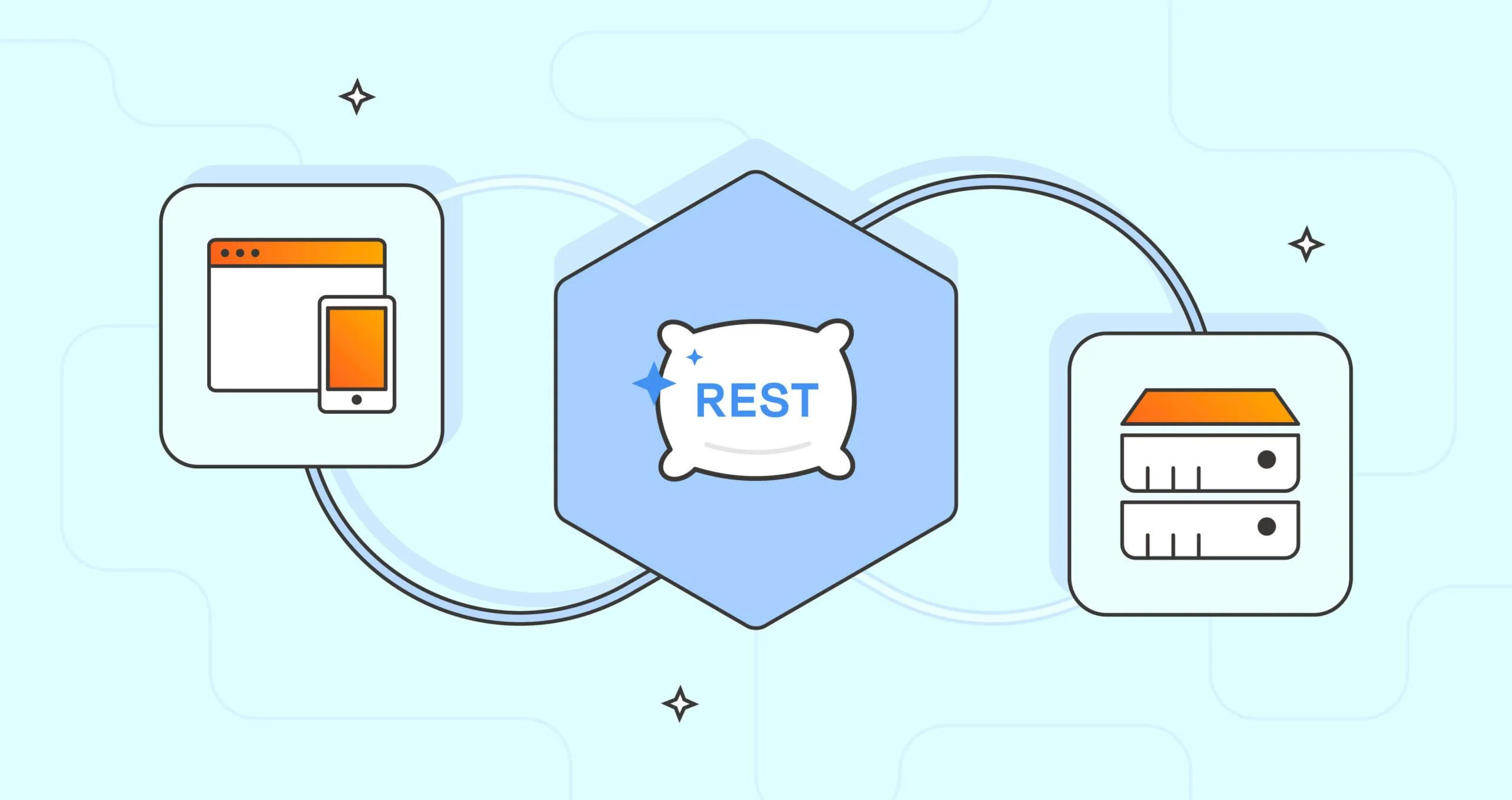
REST (Representational State Transfer) is an architectural style for designing APIs.
Key methods:
- GET
- POST
- PUT
- DELETE
Used for communication between frontend and backend.
10. What is CORS?
CORS (Cross-Origin Resource Sharing) is a security feature that restricts resources on a web page from being requested from another domain unless permitted.
11. What is the Difference Between Cookies, Session, and Local Storage?
- Cookies – Small data stored in browser, sent with every request
- Session – Stored on server, temporary
- Local Storage – Stored in browser, persists even after closing
12. What is Version Control?
Version control systems help track code changes and collaborate with teams.
Popular tool:
- Git
13. What is Git and GitHub?
- Git – Version control system
- GitHub – Platform to host and manage Git repositories
14. What is the Box Model in CSS?
The CSS box model consists of:
- Content
- Padding
- Border
- Margin
It defines the layout and spacing of elements.
15. What is Flexbox?
Flexbox is a layout module that makes it easier to design flexible and responsive layouts.
Key properties:
display: flexjustify-contentalign-items
16. What is CSS Grid?
CSS Grid is a powerful layout system for designing complex 2D layouts with rows and columns.
17. What is a Single Page Application (SPA)?
A SPA loads a single HTML page and dynamically updates content without reloading the page.
Examples:
- Gmail
18. What is Web Security?
Web security involves protecting websites from threats like:
- XSS (Cross-Site Scripting)
- CSRF (Cross-Site Request Forgery)
- SQL Injection
19. What is SEO in Web Development?
SEO (Search Engine Optimization) improves website visibility on search engines.
Techniques include:
- Proper HTML structure
- Meta tags
- Fast loading speed
- Mobile optimization
20. What are Web Performance Optimization Techniques?
To improve performance:
- Minify CSS/JS
- Use CDN
- Lazy loading images
- Optimize images
- Reduce HTTP requests
21. What is Web Accessibility?
Accessibility ensures websites are usable by people with disabilities.
Includes:
- Screen reader support
- Keyboard navigation
- Proper contrast
22. What is a Framework vs Library?
- Library → Collection of functions (e.g., React)
- Framework → Complete structure for development (e.g., Angular)
23. What is Node.js?
Node.js is a runtime environment that allows JavaScript to run on the server side.
24. What is Middleware?
Middleware functions execute during request-response cycles in backend frameworks.
Used for:
- Authentication
- Logging
- Error handling
25. What is an API Endpoint?
An endpoint is a specific URL where an API can be accessed to perform operations.
26. What is JSON?
JSON (JavaScript Object Notation) is a lightweight data format used for data exchange.
27. What is Asynchronous Programming?
Async programming allows tasks to run without blocking execution.
Examples:
- Callbacks
- Promises
- Async/Await
28. What is Web Hosting?
Web hosting is a service that stores website files and makes them accessible on the internet.
29. What is Deployment?
Deployment is the process of making your web application live.
Tools:
- Netlify
- Vercel
- AWS
30. What is Progressive Web App (PWA)?
PWA is a web application that behaves like a mobile app.
Features:
- Offline access
- Push notifications
- Fast loading
Final Thoughts
Preparing for web developer interviews in 2026 requires a mix of strong fundamentals, practical experience, and awareness of modern tools and trends. By understanding these commonly asked questions and practicing real-world scenarios, you can significantly improve your chances of success.
Focus on building projects, mastering core concepts, and staying updated with the latest technologies to stand out in competitive interviews.
Kaashiv Infotech Offers Full Stack Java Developer Course, Java Internship & More Programming Courses Visit Our Website www.kaashivinfotech.com.
![Basic SQL Interview Questions & Answers [Updated]](https://www.kaashivinfotech.com/blog/wp-content/uploads/2023/12/basic-sql-interview-questions-Answers.webp)