7 Best Unique Ethical Hacking Project Ideas (Detailed Guide for 2026)

Ethical hacking has evolved far beyond running automated tools and scanning for vulnerabilities. In today’s cybersecurity landscape, organizations are looking for professionals who can think like attackers, build defensive systems, and solve real-world security challenges. That’s why working on meaningful, unique projects is one of the most effective ways to grow your skills and stand out.
Table Of Content
- 7 Unique Ethical Hacking Project Ideas
- 1. AI-Powered Phishing Detection System
- 2. Custom Web Application Vulnerability Scanner
- 3. Password Strength Analyzer and Attack Simulator
- 4. Network Intrusion Detection System (NIDS)
- 5. Secure File Transfer System with End-to-End Encryption
- 6. Social Media Security Analyzer
- 7. Digital Forensics Investigation Toolkit
- Final Thoughts
- Related Reads
This guide explores seven powerful ethical hacking project ideas, each explained in depth with concepts, implementation approaches, and real-world relevance. These are not basic beginner tasks—they are designed to help you build a strong portfolio and practical expertise.
7 Unique Ethical Hacking Project Ideas
1. AI-Powered Phishing Detection System

Phishing attacks have become increasingly advanced, often bypassing traditional filters by mimicking legitimate communication almost perfectly. This makes them an ideal target for an intelligent, adaptive security solution.
In this project, you will design a system that uses machine learning to identify phishing emails. The idea is to train a model using a dataset of both legitimate and malicious emails, allowing it to recognize patterns such as suspicious URLs, unusual sender domains, misleading subject lines, and deceptive content structures.
The real value of this project lies in building a complete pipeline. You can start with data collection and preprocessing, then move into feature extraction—analyzing elements like link structure, keyword frequency, and header anomalies. After training your model, you can integrate it into a simple dashboard where users can input emails and receive real-time risk analysis.
To make the project more advanced, consider adding continuous learning, where the system improves over time based on new data. This reflects how modern security systems operate in real-world environments.
This project demonstrates a strong combination of cybersecurity awareness and AI-driven threat detection, which is highly valued in today’s job market.
2. Custom Web Application Vulnerability Scanner

Most beginners rely on tools like OWASP ZAP without fully understanding how they work. This project challenges you to build your own simplified vulnerability scanner from scratch.
The goal is to create a tool that can test websites for common vulnerabilities such as SQL injection, cross-site scripting (XSS), and insecure authentication mechanisms. Instead of focusing only on detection, you should aim to understand the logic behind each vulnerability and replicate the testing process programmatically.
You can begin by designing a crawler that navigates through a website and identifies input fields. Then, implement payload injection techniques to test how the application responds. For example, inserting SQL queries into form fields and analyzing the output can help detect injection flaws.
To elevate the project, include a reporting system that clearly explains each vulnerability, its severity, and possible remediation steps. This makes your tool not just functional, but also practical for real-world use.
By completing this project, you demonstrate that you don’t just use tools—you understand how they are built and how vulnerabilities are discovered at a deeper level.
3. Password Strength Analyzer and Attack Simulator
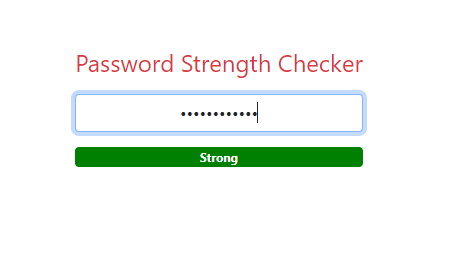
Passwords remain one of the weakest links in cybersecurity, despite years of awareness campaigns. This project focuses on both analyzing password strength and demonstrating how weak passwords can be compromised.
The idea is to build a tool that evaluates password security based on multiple factors such as length, complexity, unpredictability, and entropy. Instead of simply labeling passwords as “weak” or “strong,” your system should explain why a password is vulnerable.
To make the project more engaging and educational, you can simulate different types of attacks. For instance, a brute-force simulation can estimate how long it would take to crack a password, while a dictionary attack module can test passwords against common wordlists.
Adding visualizations—such as time-to-crack graphs—can make your project more interactive and easier to understand for users. This transforms your tool into both a security analyzer and an educational platform.
This project highlights your understanding of authentication systems and demonstrates your ability to communicate complex security concepts effectively.
4. Network Intrusion Detection System (NIDS)
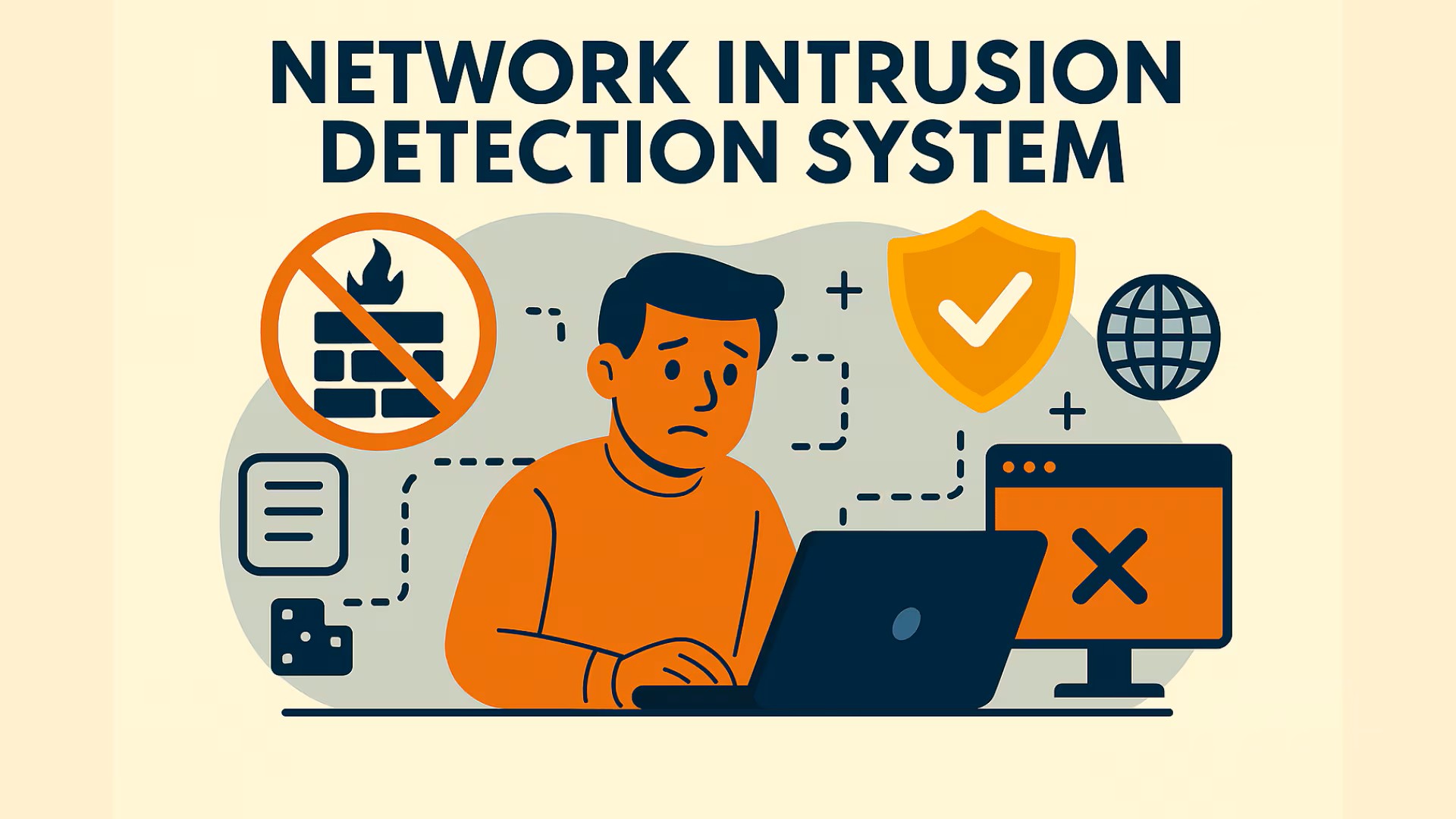
A Network Intrusion Detection System is a critical component in modern cybersecurity infrastructure. It monitors network traffic and identifies suspicious activities that could indicate an attack.
In this project, you will build a system capable of capturing and analyzing packets in real time. Using tools and libraries such as packet sniffers, you can monitor incoming and outgoing traffic and look for unusual patterns.
The challenge lies in defining what constitutes “suspicious behavior.” This could include repeated connection attempts to multiple ports, unusually high traffic volumes, or communication with known malicious IP addresses.
To enhance your project, you can integrate alert mechanisms such as notifications or logs that trigger when a threat is detected. A dashboard displaying live traffic data and alerts will make your system more user-friendly and visually impressive.
This project provides deep insights into networking and real-time threat detection, making it highly valuable for roles in security operations and monitoring.
5. Secure File Transfer System with End-to-End Encryption

Data security during transmission is a major concern for individuals and organizations alike. This project focuses on building a system that ensures files are transferred securely using encryption techniques.
You can design a platform where users upload files, which are then encrypted before being transmitted. The receiving end should be able to decrypt the files using a secure key exchange mechanism.
To make the project more robust, consider implementing both symmetric and asymmetric encryption methods. For example, you can use asymmetric encryption for key exchange and symmetric encryption for faster data transfer.
Authentication is another important aspect. Adding login systems and access controls ensures that only authorized users can send and receive files.
This project demonstrates your understanding of secure communication protocols and encryption techniques, which are essential skills in cybersecurity.
6. Social Media Security Analyzer

With billions of users worldwide, social media platforms are prime targets for cyberattacks. This project aims to help users identify and fix vulnerabilities in their accounts.
You can build a tool that evaluates various aspects of account security, such as password strength, privacy settings, and third-party app permissions. While direct integration with real platforms may be limited, you can simulate account data to demonstrate how the analysis works.
The strength of this project lies in its user-centric approach. Instead of focusing only on technical vulnerabilities, it also considers user behavior and awareness.
You can enhance the project by providing personalized recommendations, such as enabling two-factor authentication or removing risky app permissions. A clean and intuitive interface will make the tool accessible even to non-technical users.
This project showcases your ability to bridge the gap between cybersecurity and everyday users, which is an increasingly important skill.
7. Digital Forensics Investigation Toolkit

Ethical hacking doesn’t end with identifying vulnerabilities—it also involves investigating and understanding cyber incidents. This is where digital forensics comes into play.
In this project, you will create a toolkit that helps analyze compromised systems and uncover evidence of attacks. The toolkit can include features such as log analysis, file recovery simulations, and metadata extraction.
For example, you can design a module that scans system logs to identify suspicious activities, such as unauthorized logins or unusual file access patterns. Another module can focus on recovering deleted files or analyzing file metadata to trace their origin.
You can choose to build the toolkit as a command-line interface for simplicity or a graphical interface for better usability. Either approach will demonstrate your technical capabilities.
This project is particularly valuable for roles in incident response and cyber forensics, as it highlights your ability to investigate and analyze security breaches.
Final Thoughts
Building ethical hacking projects is one of the most effective ways to transition from theory to real-world expertise. While certifications and courses provide foundational knowledge, projects like these allow you to apply, experiment, and innovate.
Instead of trying to complete all seven projects at once, focus on one or two that align with your interests. Go deep into the implementation, understand the underlying concepts, and continuously improve your work.
In the field of cybersecurity, what truly sets you apart is not just what you know—but what you can build, analyze, and defend.
Want to learn about ethical hacker skills, Cyber Security?, Kaashiv Infotech Offers, Cyber Security Course, or Networking Course & More, Visit www.kaashivinfotech.com.
Related Reads:
-
Cyber Security Jobs Without Coding: Top Roles You Can Land Today
-
The Future of Cybersecurity in 2025 and Beyond: 7 Shocking Trends You Can’t Ignore