Introduction to DBMS: Features of Database & DBMS
Understanding the features of database and features of DBMS (Database Management System) is essential in today’s data-driven world. A DBMS is a software application designed to create, manage, and operate databases efficiently. It acts as an interface between users and the database, providing tools for data organization, access, security, and scalability. The characteristics of DBMS include improved data integrity, high availability, concurrent access, and secure data handling — making it a cornerstone of modern data management.
Top Features of Database Management System (DBMS)

1.Data Management
DBMS helps in efficiently storing, managing, and organizing data. It provides a structured way to store both structured and unstructured data.
2.Data Integrity
DBMS ensures data accuracy and consistency by enforcing data constraints, such as data types, relationships, and uniqueness constraints.
3.Data Security
DBMS offers access control mechanisms to protect data from unauthorized access. It allows defining user roles and permissions.
4.Data Retrieval
DBMS provides query languages (like SQL) to retrieve specific data from the database quickly and accurately.
5.Concurrent Access
DBMS manages concurrent access to the database, preventing data corruption or conflicts when multiple users or applications access the data simultaneously.
Benefits Of Database Management Systems (DBMS)
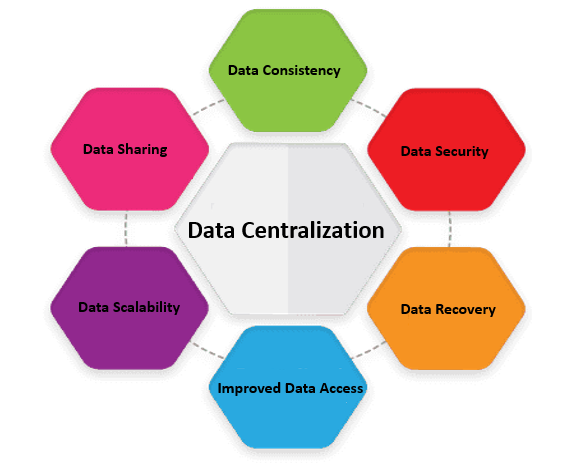
Implementing a DBMS offers numerous advantages for businesses and organizations. Here are some key benefits
1.Data Centralization
All data is stored in one central location, making it easier to manage and reducing data duplication.
2.Data Consistency
DBMS enforces data integrity constraints, ensuring that data remains accurate and consistent.
3.Data Security
Access control and encryption features protect sensitive data from unauthorized access.
4.Data Recovery
DBMS provides mechanisms for data backup and recovery, reducing the risk of data loss.
5. Improved Data Access
Users can retrieve and manipulate data efficiently through query languages and user-friendly interfaces.
6.Data Scalability
DBMS can handle large datasets, and as data grows, it can scale to accommodate increased data volume.
7.Data Sharing
Multiple users and applications can access the same data concurrently, facilitating collaboration.
Essential Features of DBMS You Should Know

DBMS offers a wide range of features to manage data effectively
1.Data Definition Language (DDL)
Allows users to define the database structure, including tables, indexes, and constraints.
2.Data Manipulation Language (DML)
Provides commands for adding, updating, deleting, and retrieving data from the database.
3.Query Optimization
Optimizes the execution of queries to retrieve data as efficiently as possible.
4.Transaction Management
Ensures that multiple operations on the database are treated as a single unit, either all succeeding or all failing (ACID properties).
5. Concurrency Control
Manages simultaneous access to the database to prevent data inconsistencies.
6.Data Recovery and Backup
Provides tools and mechanisms to recover data in case of failures and allows for regular data backups.
7. Security and Authentication
Enforces user authentication and access control to protect data from unauthorized access.
8.Data Dictionary and Metadata
Maintains information about the structure and organization of the database, making it easier to manage and query.
9. Replication and Redundancy
Offers features for creating backup copies of the database to ensure high availability and fault tolerance.
10. Scalability
Allows for the scaling of the database to handle increased data volume and user loads.
Conclusion
In summary, the features of DBMS, such as query optimization, security, scalability, and concurrency, offer immense value to businesses and developers alike. As databases grow in complexity and size, understanding the features of database systems becomes essential for any modern IT infrastructure. Whether you’re a developer, data analyst, or business professional, leveraging these DBMS features ensures better data control, access, and performance.
Final Thoughts: Learn Oracle SQL and SQL Developer Course
If you’re interested in mastering the features of DBMS and taking your database skills to the next level, consider learning Oracle and enrolling in a SQL Developer Course. These courses cover the practical applications of features of database systems, teach you how to write efficient SQL queries, optimize performance, manage transactions, and understand advanced characteristics.
FAQs on Features of DBMS and Database
1. What is a Database Management System (DBMS)?
A DBMS is a software tool that facilitates creating, managing, and retrieving data. It provides essential features of database access and control.
2. What are the primary functions or features of DBMS?
The key DBMS features include data storage, retrieval, manipulation, integrity enforcement, and secure access management.
3. What is Data Definition Language (DDL)?
DDL is a feature of DBMS that lets users define the structure of the database — including tables, columns, and relationships.
4. What is Data Manipulation Language (DML)?
DML allows for direct interaction with the data, such as adding, editing, deleting, or querying it.
5. How does a DBMS ensure data integrity?
Through rules, constraints, and referential integrity enforcement, DBMS maintains consistent and reliable data — a hallmark characteristic of DBMS.