
Python has evolved from a simple scripting language into one of the most dominant forces in modern software development. It powers everything from small automation scripts to massive platforms in artificial intelligence, fintech, healthcare, and cloud computing. Because of this wide reach, the expectations from a Python developer have also grown significantly.
Today, companies don’t just look for someone who can write Python code—they look for professionals who can design systems, solve complex problems, and build scalable applications. To succeed in this environment, you need a combination of technical depth, practical experience, and strong thinking skills.
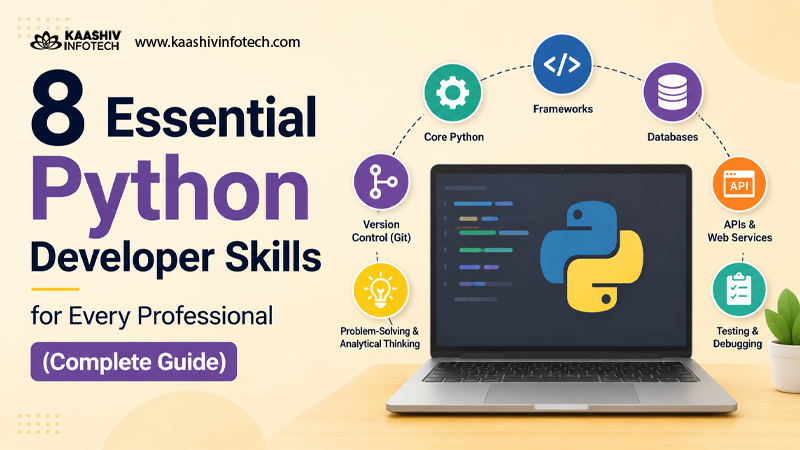
In this comprehensive guide, we’ll explore the 8 essential Python developer skills that every professional must master to stay relevant and competitive.
8 essential Python developer skills
1. Deep Understanding of Core Python
Everything begins with fundamentals. A strong grasp of core Python is what separates a confident developer from someone who constantly struggles with basic logic.
Understanding Python goes far beyond knowing syntax. It involves writing clean, readable, and efficient code while fully understanding how the language behaves under the hood. Concepts like data types, loops, functions, and object-oriented programming form the backbone of every application you build.
A professional Python developer knows how to structure code properly, reuse logic through functions and modules, and handle errors gracefully using exception handling. They also understand Pythonic practices—writing code in a way that is simple, elegant, and easy to maintain.
When your fundamentals are strong, learning advanced tools and frameworks becomes much easier, and your confidence in solving real-world problems increases significantly.
2. Strong Knowledge of Data Structures and Algorithms
Writing working code is not enough. Writing efficient code is what truly matters in professional environments.
Data structures and algorithms help you think about performance. They teach you how to handle large amounts of data, reduce execution time, and optimize memory usage. Whether you are building a backend service or solving a coding problem, these concepts play a critical role.
A skilled developer understands how different data structures behave and when to use them. They can analyze a problem and choose the most efficient approach instead of relying on brute force solutions. Over time, this ability to think in terms of optimization becomes second nature.
This skill is also highly valuable during technical interviews, where problem-solving and efficiency are often tested.
3. Experience with Python Frameworks
In real-world development, you rarely build everything from scratch. Frameworks provide structure, reduce development time, and enforce best practices.
For web development, frameworks like Django and Flask are widely used. Django offers a full-featured environment suitable for large-scale applications, while Flask provides flexibility for smaller or custom solutions. In recent years, FastAPI has gained popularity for building high-performance APIs with modern features.
Understanding how frameworks work helps you build scalable and production-ready applications. It also teaches you about routing, middleware, request handling, and application architecture.
A professional developer doesn’t just use frameworks—they understand how to customize and extend them based on project requirements.
4. Version Control and Collaboration Skills
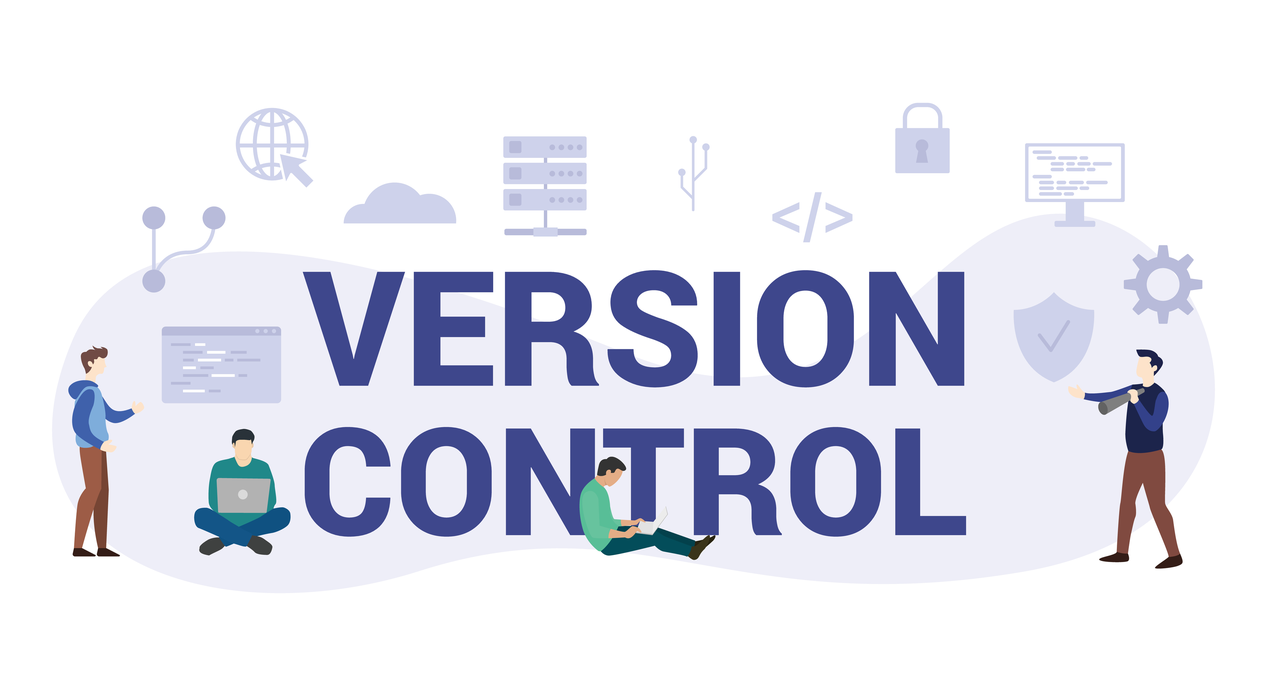
Software development is rarely a solo activity. Most projects involve teams working together, and this is where version control becomes essential.
Git is the industry standard for managing code changes. It allows developers to track modifications, collaborate without conflicts, and maintain a history of the project. Knowing how to use Git effectively is a basic expectation in any professional environment.
But beyond commands, collaboration is the real skill. Understanding branching strategies, resolving merge conflicts, and contributing to shared repositories are part of daily development work.
Platforms like GitHub and GitLab have made collaboration even more seamless, enabling code reviews, issue tracking, and continuous integration workflows.
5. Database Management and Data Handling
Almost every application interacts with data. Whether it’s a user profile, transaction record, or analytics data, managing this information efficiently is crucial.
A Python developer should understand how databases work and how to design them properly. This includes writing queries, structuring tables, and ensuring data consistency. Knowledge of relational databases like MySQL or PostgreSQL is often required, along with familiarity with NoSQL databases such as MongoDB.
In addition to databases, developers often work with ORMs (Object Relational Mappers) like SQLAlchemy or Django ORM. These tools simplify database interactions by allowing you to work with Python objects instead of raw SQL.
Understanding data handling ensures that your applications are not only functional but also reliable and scalable.
6. Working with APIs and Web Services
Modern software systems are highly interconnected. Applications communicate with each other through APIs, making this skill indispensable for Python developers.
Knowing how to build and consume APIs allows you to integrate third-party services, connect frontend and backend systems, and create microservices architectures.
A professional developer understands how data flows between systems, how to structure API endpoints, and how to handle requests and responses efficiently. They are also familiar with authentication methods and security practices used in API development.
Frameworks like Flask and FastAPI are commonly used for building APIs, but the real value lies in understanding the underlying concepts rather than just the tools.
7. Testing, Debugging, and Code Quality

Writing code is only part of the job—ensuring that it works correctly and consistently is equally important.
Testing helps catch bugs early and improves the overall reliability of your application. A professional developer writes code with testing in mind, ensuring that each component can be validated independently.
Debugging is another critical skill. Being able to quickly identify and fix issues saves time and prevents larger problems down the line. Logging, tracing, and using debugging tools are part of everyday development practices.
Over time, experienced developers develop an instinct for spotting potential issues before they even occur. This focus on quality is what makes software stable and trustworthy.
8. Problem-Solving and Analytical Thinking

At its core, programming is about solving problems. Tools and technologies may change, but the ability to think logically and break down complex challenges remains constant.
A strong problem-solver approaches tasks methodically. They analyze requirements, consider different approaches, and choose the most effective solution. Instead of jumping straight into coding, they spend time understanding the problem deeply.
This mindset not only improves code quality but also makes you more adaptable. Whether you’re working on a new framework or an unfamiliar project, strong analytical thinking helps you navigate challenges with confidence.
Practicing coding challenges, working on real-world projects, and learning from mistakes are some of the best ways to strengthen this skill.
Final Thoughts
Becoming a successful Python developer is a journey that goes far beyond learning syntax. It requires continuous learning, hands-on experience, and the ability to adapt to new technologies.
The skills discussed in this guide—core Python knowledge, data structures, frameworks, version control, databases, APIs, testing, and problem-solving—form the foundation of a strong professional profile.
If you invest time in mastering these areas, you won’t just become a Python developer—you’ll become a well-rounded software professional capable of building impactful and scalable solutions.
If you want to dive deeper, kaashiv Infotech Offers, Django, Python Course, Full Stack Python Course & More, Visit Our Website www.kaashivinfotech.com.
Related Reads:
-
15 Famous Websites Built with Python in 2026: Real-World Examples Powering the Internet
-
Top 10 Python Collections in 2025 You Must Master to Level Up Your Code


