
Artificial Intelligence
The Future of Farming: Fruit Picking Robots and Mobile Robot Platforms


Introduction
Farming has historically been critical to all people, and with farming undergoing considerable change in recent decades, that importance has grown significantly. Modern agriculture is becoming increasingly high-tech as farmers transition away from traditional methods for planting, growing, harvesting, and managing their crops toward more modern and efficient techniques.
Farmers today focus not only on producing food but also on producing it more quickly and with less manual labour. The robotics created specifically for agricultural applications that aid the farmer in the operations of his/her farm (e.g., robotic fruit harvesting system or mobile robot) are among the most significant technological advancements of contemporary farming. Robot-based technologies are transforming the operations of agricultural businesses by providing a high level of efficiency while increasing speed and improving accuracy through technological and innovative means.
The Changing Landscape of Agriculture
Traditionally, farms used to rely on a lot of manual labour force during the time of harvest. With large amounts of people needed to pick fruit, it could take a long time to pick the fruit and a great amount of effort. Farmers are now faced with a problem of having chronic labour shortages and a high cost of labour so that is why farmers are looking for smarter solutions to their labour needs in the automation of farming. The automation of farming through robotics will provide farmers with reliable and efficient solutions to the problems they face due to the absence of a labour force.
Farmers are employing the various technologies available today to automate every step of the production process. From planting to harvesting machinery is becoming an integral part of farming. The move toward automated farming is not just for the sake of being convenient, but also to promote sustainability and satisfy the increased food demand created by a rapidly growing global population.
Understanding Mobile Robot Platforms
The creation of fruit picking robots is among the most important advancements in modern agriculture. Fruit-picking robots can accurately locate, collect, and move fruit using advanced cameras, sensors, and automated systems that will detect when fruit is ripe and pick the fruit from the tree without causing any harm to the fruit or tree.
Farmers can take advantage of fruit-picking robots as they require fewer workers and complete the harvesting process much more quickly than if done manually. A fruit-picking robot is not fatigued and can harvest crops as soon as they are ready to be harvested, which improves productivity and maintains the quality of produce. Therefore, farmers will be able to produce higher quality products for the marketplace with less waste.
Understanding Mobile Robot Platforms
A big part of the success of agricultural robots is due to the mobile robot platform. The mobile robot platform is a key component of the robot’s ability to navigate terrain and provide an efficient way to move around. Farms have many different types of terrain such as hills, flat areas, and various obstacles that make it hard to move on the farm; mobile robot platforms were created to allow robots to navigate through all of those different types of terrain.
Mobile robot platforms enable robots to do things like travel through fields and orchards, as well as greenhouses with ease. They also allow robots to carry tools, sensors, and items necessary to harvest crops, while also being able to maintain their balance and perform their function accurately. Mobile robots have the ability to do multiple types of duties on the farm due to their versatility; that makes them an extremely useful tool in today’s farming operations.
Benefits of Robotic Farming
Robotics offers many advantages in agriculture today. One of the most significant advantages of using robotic technology is that farmers will be less reliant upon manual labor. Manual labor is in short supply as populations continue to move to urban areas.
The use of robots leads to better quality and higher accuracy of work because robots will perform most of their work consistently. Farmers can rely on robots to be consistent with the work they perform so farmers will not be as concerned with the reliability of their workers or how many workers they will have available, giving farmers the ability to manage their farms more effectively.
Using robots in agriculture also enables farmers to be more efficient with the use of time. They can work long hours without the need for breaks, which allows for much faster completion times for many tasks than would be possible without robots. Farmers will also be able to complete work within a particular timeframe, which is especially important during the harvesting season when harvesting must occur on time.
Farmers will benefit significantly from the use of robotics in farming, as modern agricultural robotic technologies are being developed to be more environmentally sustainable. Many of today’s robotic technologies are designed to operate at high energy efficiencies and to minimize waste by applying nutrients and water with greater precision. Therefore, not only will robotics allow for greater productivity in agriculture, but they will also make agriculture more sustainable.
Challenges and Future Potential
There are already many benefits that agricultural robots provide; however, there are also several challenges associated with agricultural robotics. The first challenge is that the initial cost for farmers to implement agricultural robots can be very high and therefore may be prohibitive for small farmers looking to use agricultural robotics. A second challenge is that operating and maintaining agricultural robot systems require technical knowledge and training.
Regardless of the challenges that agricultural robotics present, the overall future of agriculture appears bright. Continued advances in technology should lead to decreasing costs and ease of use of rubbery agricultural robots. In addition, further developments in Artificial Intelligence (AI) and Machine Learning (ML) technology will enhance the operational efficiencies and reliability of agricultural robots.
Conclusion
Innovation and technology are changing the future of farming. The development of new technologies, including mobile robotic platforms and fruit-picking robots, will result in farmers growing food more efficiently and sustainably than before. As innovation continues in agriculture, farmers are able to use these new tools to address traditional agricultural production problems while increasing quality and yield. The trend toward automation means that adopting robots and other technologies will be necessary as we try to meet the increased demand for food around the world. Farming is no longer only about hard work; it is also about finding ways to work smarter, with robotics leading the way to a brighter agricultural future.
Artificial Intelligence
How to Use Runway AI for Video Creation: Tools, Tips, and Smarter Alternatives
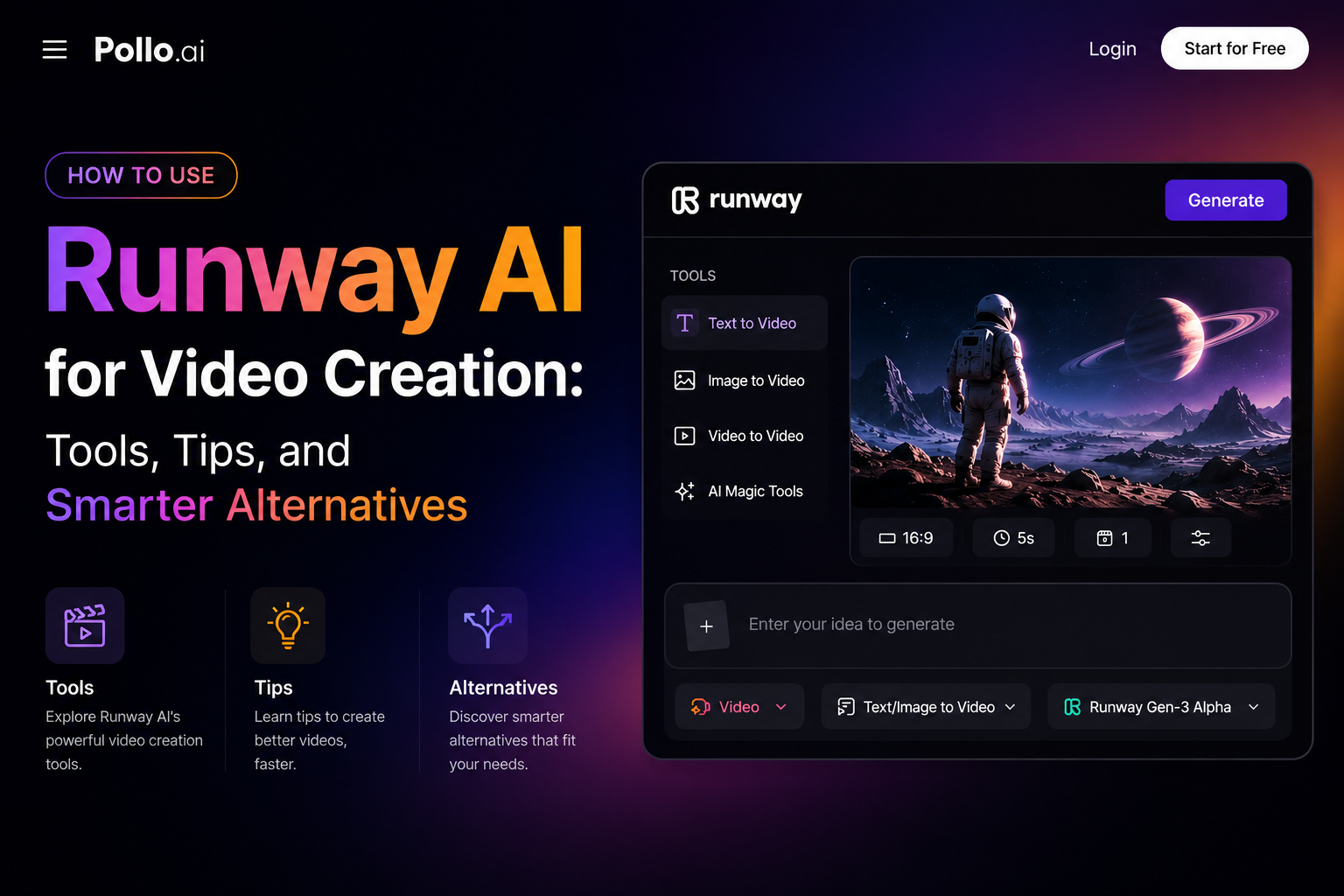
The way creative professionals produce video content has changed dramatically over the past two years. What used to require a full production setup — cameras, lighting rigs, editing suites, motion graphics teams — can now be prototyped or even fully produced using AI video generation tools. For independent creators, marketing teams, and small agencies, this isn’t just convenient. It’s a genuine structural shift in how visual storytelling gets made.
The challenge now isn’t access to AI video tools — it’s knowing which ones are worth your time, and how to fit them into a workflow that actually produces results. That’s where understanding the landscape properly makes a real difference.
What Runway AI Brings to the Table
Runway has become one of the most recognized names in AI video generation, and for good reason. The platform offers a range of generation and editing capabilities that have made it a go-to for filmmakers, motion designers, and creative experimenters. Its text-to-video and image-to-video features have been widely used for everything from music video production to brand content.
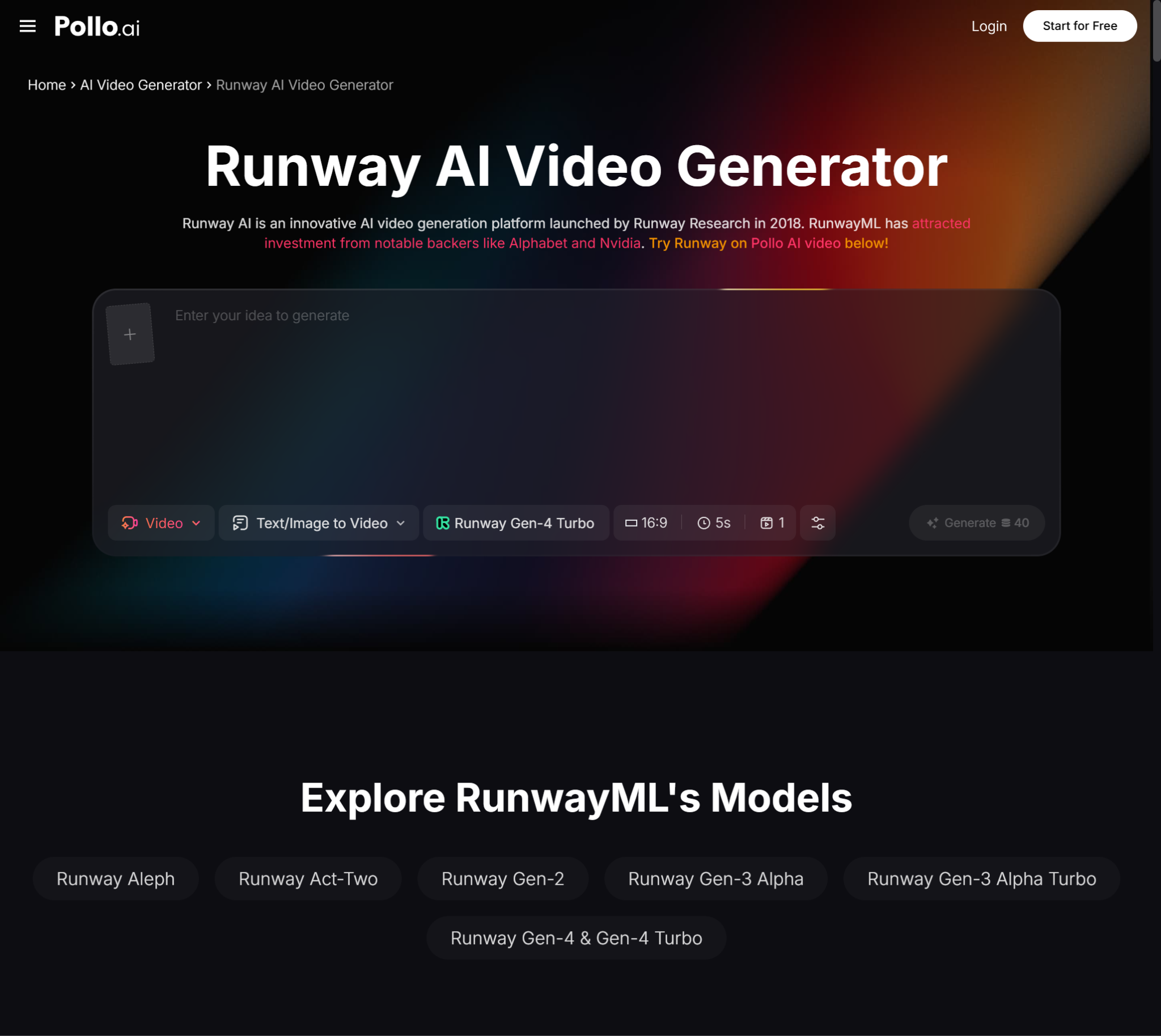
If you want to explore Runway’s capabilities alongside other leading video models in a single workspace, Pollo AI gives you access to Runway AI through its Creative Studio — a multi-model environment where you can switch between generation tools without managing separate subscriptions. Pollo AI’s shared credit system means you’re not locked into one model when a different one might serve your project better. For creators who work across different content formats and styles, that flexibility matters.
Understanding Where Runway Fits in a Broader Workflow
Runway is strong for experimental and cinematic work — the kind of output that prioritizes visual texture, motion quality, and artistic range. But professional video production rarely lives in a single tool. You might generate a raw clip with one model, refine motion with another, layer in audio separately, and then bring it into a traditional editor for final assembly.
This is why platform-level thinking matters more than model-level thinking. A creator or marketer who understands how to combine tools effectively will consistently outperform someone who’s optimized around just one. The best AI video workflows tend to be modular — picking the right model for the right task rather than forcing one tool to do everything.
Marketing Studio: When Video Needs to Perform, Not Just Look Good
There’s a distinction worth drawing between creative video and marketing video. Creative video — the kind Runway is often associated with — prioritizes visual ambition and artistic expression. Marketing video has a different job: it needs to drive action, fit platform specs, communicate a value proposition quickly, and hold attention in a crowded feed.
Pollo AI’s Marketing Studio is built specifically for the marketing side of that equation. It’s designed for marketers, brand teams, and creative agencies that need to produce advertising content at volume — product demos, social ads, promotional clips — without a full production pipeline. The studio is positioned alongside tools like Higgsfield’s marketing-focused offering, but sits inside an integrated platform where your image, video, and audio workflows all connect.
For small and medium businesses running paid social campaigns, the ability to produce ad-ready video content quickly — without agency fees or lengthy production cycles — changes what’s actually achievable on a given budget.
Higgsfield AI and the Competitive Landscape
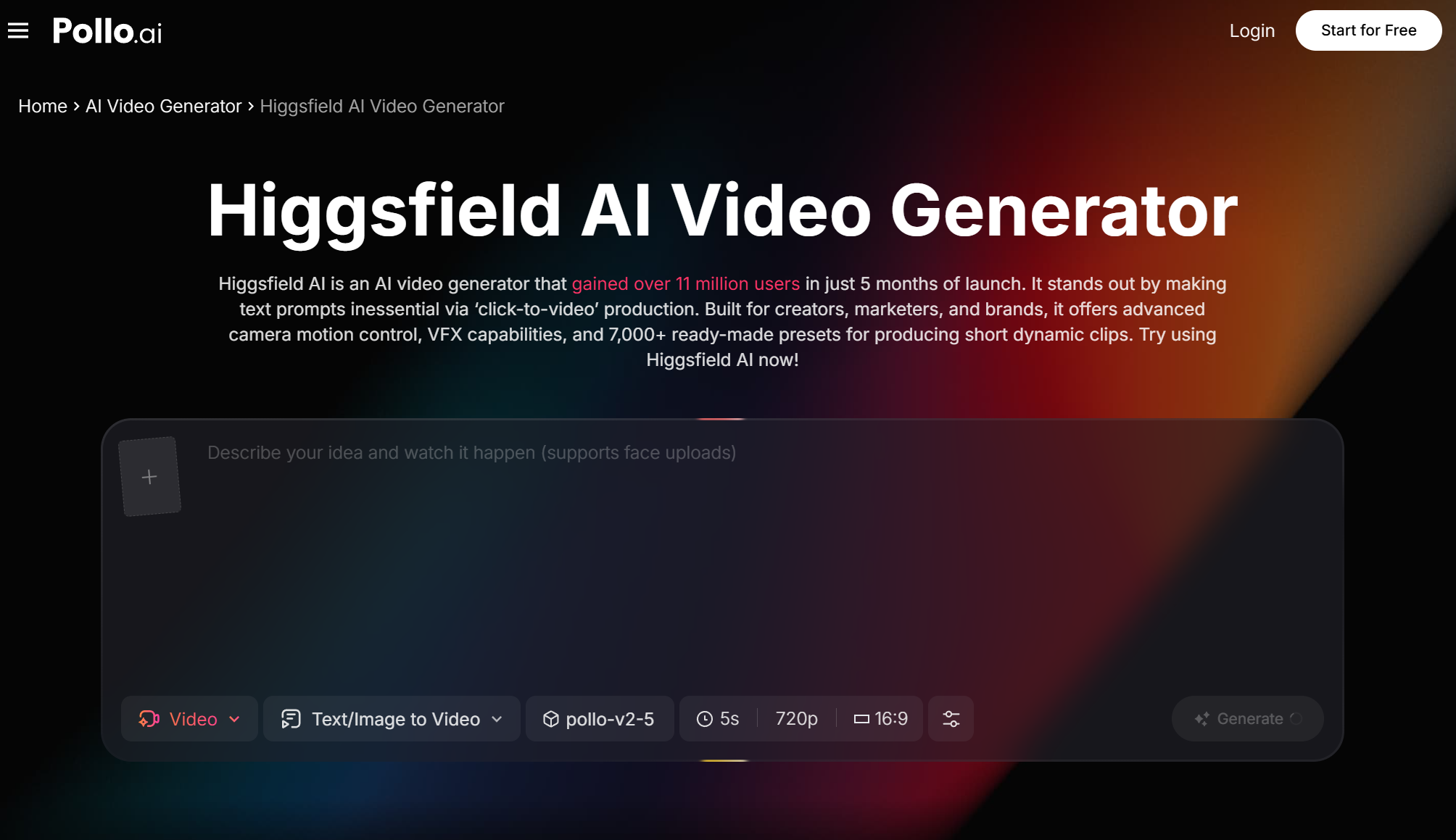
It’s worth understanding what else is out there. Higgsfield AI has built a focused product around marketing and advertising video generation, and it’s a legitimate option for teams whose primary output is ad content. The platform has gotten attention for its emphasis on human motion and realistic character animation in commercial contexts.
Where Pollo AI takes a different approach is in scope. Rather than optimizing for a single use case, the platform organizes its capabilities into dedicated studios — Creative Studio for content creators, Marketing Studio for advertising and brand work, Commerce Studio for e-commerce product imagery — all accessible under one account. For teams whose needs span more than one of those categories, the consolidation has real practical value.
Choosing the Right Tool for Your Video Goals
The right AI video tool depends entirely on what you’re trying to produce. If your work is cinematic, experimental, or artistically driven, models like Runway offer the range and quality that kind of work demands. If your primary output is marketing and advertising content, a studio environment built around performance and ad formats will serve you better than a general-purpose generation tool.
What’s clear across the board is that AI video generation has moved well past the novelty stage. The creators and teams who treat it as a serious production tool — learning its strengths, building workflows around it, and combining models intelligently — are producing work that competes with traditional production at a fraction of the cost and time. Getting familiar with the landscape now, rather than waiting, is the practical move.
Artificial Intelligence
Lip Sync Intros: How Synced Dialogue Turns Characters, Mascots, and Even Objects into Living Performers

When characters “talk,” imagination explodes: why synced dialogue is so powerful
-
A plush toy becomes an emotional narrator.
-
The figure of clay becomes comic sarcástico
-
A mascot becomes a teacher for kids’ videos
-
A simple drawing becomes a chaotic gamer commentator
-
A common household item becomes an unexpected joke delivery machine.
Worlds built from movement: how creators design personality through synced dialogue
The gentle narrator
The hyperactive comedian
The wise mentor
The dramatic character actor
The chaotic object
The new wave of creator mascots: when avatars and props become the stars
-
2-D animation
-
3D avatars
-
Pixel art characters
-
Anime-style mascots
-
Claymation-inspired figures
-
Puppets
-
Even pets
-
Product explainers
-
Social media campaigns
-
Friendly announcements
-
Animated customer support
-
Mascot-delivered tutorials
Lip-sync storytelling creates emotional connections – fast
-
Visual performance reinforces meaning
-
Timing enhances humor.
-
Expression enhances empathy.
-
Personification increases attention.
-
Characters build identities over time.
Where lip-sync storytelling meets professional intros: elevating your channel’s first impression
Step 1: Upload media for intro

Step 2: Refining the YouTube intro

Step 3: Download or publish the YouTube intro

Your next character is waiting—and Pippit brings them to life
Artificial Intelligence
Mastering Scientific Referencing: A Deep Dive into Koke AI’s ACS Citation Generator

Academic writing in the sciences demands meticulous attention to detail, especially when it comes to referencing. For chemists and related scientific disciplines, the American Chemical Society (ACS) style is the gold standard. It requires precise formatting that can often feel like deciphering a complex chemical equation. This challenge frequently consumes valuable research time.
Fortunately, innovative digital solutions are emerging to simplify this intricate process. Koke AI stands out as a leading platform, promising to transform how we approach scientific documentation. This article will provide an in-depth look at Koke AI, focusing on its exceptional ACS Citation Generator and its broader suite of AI-powered features designed to elevate your scientific output.
Koke AI: Your Intelligent Lab Partner for Referencing
Koke AI is more than just a tool; it’s an intelligent partner crafted for the modern scientific journey. Its core mission is to streamline the often-tedious aspects of scholarly work. The platform aims to empower users, from students to seasoned researchers, with efficiency and precision. By leveraging advanced artificial intelligence, Koke AI promises to make scientific writing less stressful and more productive.
My first impression of Koke AI was its clean, intuitive interface. It immediately conveyed a sense of professionalism and user-friendliness. This design philosophy underpins its commitment to providing a seamless experience for all academic endeavors. Koke AI truly positions itself as a comprehensive solution for today’s scholars.
Precision in Every Formula: Koke AI’s ACS Citation Generator
For those navigating the specific requirements of the ACS referencing style, Koke AI offers an unparalleled solution. Its dedicated ACS citation generator is a true game-changer. This feature meticulously handles the intricacies of ACS formatting, ensuring every reference meets rigorous scientific standards. It transforms a time-consuming task into a quick and accurate process.
Koke AI’s “smart citation” capability is particularly impressive. You simply input the core details of your source—whether it’s a journal article, patent, or book chapter. The system then intelligently processes this information. It instantly generates both the correct in-text citations and the corresponding reference list entries. This eliminates the need for manual formatting and reduces the risk of errors significantly.
Hands-On with Koke AI: My Journey to Flawless ACS Referencing
My hands-on experience with Koke AI proved remarkably intuitive and efficient. The user interface is clean, modern, and logically structured. This made it incredibly easy to locate and utilize specific tools. When testing the ACS citation generator, I found the input fields clear and straightforward. They guided me precisely through the necessary information for various scientific source types.
Generating an ACS citation was surprisingly quick and effortless. I simply entered the author, title, journal, volume, page numbers, and other relevant details. Koke AI instantly produced the correct format, ready for immediate use. This speed and accuracy were consistent across all the different source materials I tested. The ability to then save these citations into a project-specific bibliography further enhanced the overall user experience. It truly felt like having an expert assistant by my side.
Who’s Koke AI’s Perfect Match? From Undergrads to P.h.D.s
Koke AI is ideally suited for a broad spectrum of academic users in the scientific community. Students, ranging from undergraduates in chemistry to doctoral candidates in biochemistry, will find its tools invaluable for managing lab reports, research papers, and theses. The ease of generating accurate ACS citations can be a transformative experience for those new to scientific writing. It helps to instill excellent referencing habits from the very beginning of their scholarly careers.
Researchers and seasoned academics can also benefit immensely from Koke AI’s robust organizational capabilities. Its reliable ACS citation generator frees up precious time that would otherwise be spent on tedious formatting. This allows them to concentrate on their core research, analysis, and writing. Essentially, anyone who regularly engages with scientific writing and ACS referencing will discover Koke AI to be an indispensable asset.
Impact on the Scientific Community: Koke AI’s Vision
In the increasingly competitive landscape of academic tools, Koke AI carves out a significant niche. It achieves this through its intelligent integration of AI across various functionalities. Its emphasis on a holistic academic support system, rather than just isolated features, positions it as a forward-thinking solution. This comprehensive approach contributes to a higher standard of academic output across the board.
Koke AI’s commitment to simplifying complex tasks like ACS referencing helps democratize access to high-quality academic practices. By reducing barriers related to formatting, it enables more individuals to produce polished, professional scientific work. This innovative platform is well-positioned to play a crucial role in shaping the future of academic productivity and integrity. It empowers users to achieve their full scholarly potential.
The Final Synthesis: My Verdict on Koke AI
My exploration of Koke AI has left me thoroughly impressed with its potential to revolutionize scientific workflows. The platform’s intelligent design and comprehensive features make it a powerful ally for students and researchers alike. Its standout ACS citation generator alone justifies its consideration for anyone seeking precision and efficiency in their scientific referencing.
Koke AI represents a significant leap forward in academic assistance. It offers a unique blend of accuracy, convenience, and intelligent support. It’s more than just a tool; it’s a strategic partner that empowers you to navigate the complexities of scientific writing with confidence and ease. Embrace Koke AI and elevate your scholarly endeavors to new heights.

Pokémon GO Hack Guide: How to Join Mega Mewtwo Y Raids Without Traveling

How to Change GPS Location on iPhone Without Jailbreak

MetaTrader 4 or 5: Which Trading Platform Is Right for You?

Why Modern Web Applications Are Moving Beyond Basic Dashboards
YouTube Offline: What Is It, and How to Save and Watch a Video Offline?

How to Download a Copy of Your Aadhaar Card

How to Book an Ola or Uber Using Google Maps

WhatsApp Web: Everything You Need to Know

The Surge of Mobile Betting Apps in India

In-depth Review of Parimatch: A Top Choice for Indian Punters
-
 Internet6 years ago
How to Download a Copy of Your Aadhaar Card
-
 Apps6 years ago
How to Book an Ola or Uber Using Google Maps
-
 How to6 years ago
WhatsApp Web: Everything You Need to Know
-
 Betting2 years ago
The Surge of Mobile Betting Apps in India
-
 Casino2 years ago
In-depth Review of Parimatch: A Top Choice for Indian Punters
-

 Apps6 years ago
How to Install WhatsApp Beta for Windows Mobile or Windows Phone
-
Sports4 years ago
10Cric India Bookmaker Review for Betting on Sports Online in 2022
-
Android Games6 years ago
LDPlayer vs Nox Player: Powerful Android Emulator for Gaming