Introduction
Imagine taking on what you thought was a short-term IT contract—just a week-long deployment to troubleshoot a new system—only to find yourself stuck for nearly a year—except your “workplace” is 400 kilometers above Earth and your commute depends on a spaceship that’s too broken to bring you back. This is the reality for NASA astronauts Sunita Williams and Barry Wilmore, whose mission aboard the International Space Station (ISS) has stretched far beyond its planned duration. The saga involves a mix of technical glitches, political finger-pointing, and an aerospace industry that occasionally seems like it’s auditioning for a comedy of errors.
Sunita Williams and Barry Wilmore: Who Are They?
Sunita Williams
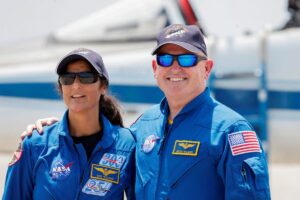
Sunita Williams is a decorated NASA astronaut with a distinguished career in space exploration. Born in 1965 in Ohio, she graduated from the United States Naval Academy and became a naval aviator before joining NASA in 1998. Williams has spent a total of 322 days in space, earning her a spot among the astronauts with the most time in orbit. She holds the record for the longest single spaceflight by a woman and has completed seven spacewalks, totaling over 50 hours outside the ISS. Her contributions to science, engineering, and space exploration have earned her numerous awards, including the Padma Bhushan, India’s third-highest civilian honor.
Barry “Butch” Wilmore
Barry Wilmore, commonly known as “Butch,” is a veteran NASA astronaut and United States Navy captain. Born in 1962 in Tennessee, Wilmore became a naval aviator and test pilot before being selected as an astronaut in 2000. He has logged 178 days in space across two missions, including time as commander of the ISS during Expedition 42. Known for his technical expertise and leadership skills, Wilmore has conducted four spacewalks, demonstrating his proficiency in maintaining and upgrading the ISS. His calm demeanor and problem-solving abilities have made him a trusted figure in the astronaut corps.
Sunita Williams and Barry Wilmore: Timeline of Events
June 5, 2024: Sunita Williams and Barry Wilmore launch to the ISS aboard Boeing’s Starliner spacecraft. The mission is expected to last eight days.
June 13, 2024: Technical issues with Starliner’s propulsion system and helium leaks are detected, delaying the astronauts’ return.
July 2024: NASA announces the astronauts’ stay will be extended indefinitely while solutions are sought for Starliner’s technical problems. Public and media interest in the situation begins to grow.
September 2024: NASA decides to send the Starliner capsule back to Earth without its crew, citing safety concerns. A backup plan involving SpaceX’s Crew Dragon is proposed.
November 2024: Sunita Williams and Barry Wilmore celebrate Thanksgiving aboard the ISS, maintaining high morale and sharing holiday traditions. NASA assures the public that progress is being made on their return plan.
February 2025: NASA announces a Crew Dragon mission scheduled for March 12, 2025, to bring Sunita Williams and Barry Wilmore back home. Media attention peaks, with political and industry figures weighing in on the situation.
Technical Challenges Faced by Sunita Williams and Barry Wilmore
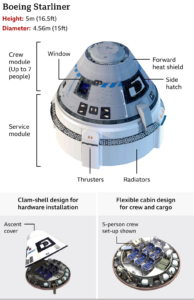
The culprit behind this extended space vacation is Boeing’s Starliner spacecraft. The Boeing Starliner, the spacecraft they arrived on, ran into serious technical issues that made it unsafe for their return journey. Initial assessments revealed the biggest problem was with the Starliner’s propulsion system—essentially its ability to steer and control movement in space. Engineers discovered leaks in the helium tanks, which play a critical role in powering the thrusters. Without properly functioning thrusters, the spacecraft couldn’t safely navigate back to Earth.
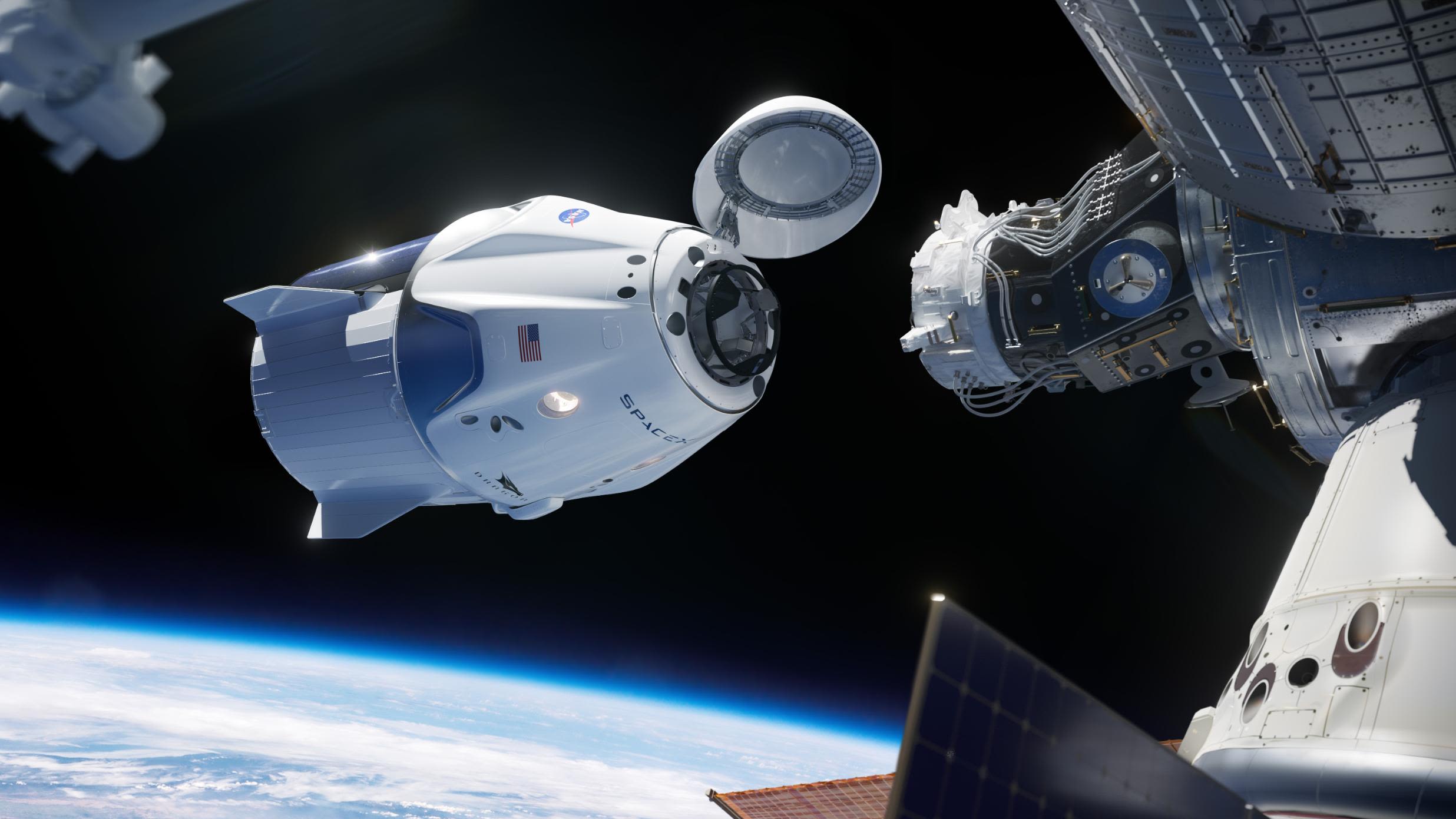
NASA’s team considered different solutions, hoping for a quick fix, but the risks were too high. Instead of bringing Sunita Williams and Barry Wilmore back on a faulty spacecraft, they decided to send Starliner home without any crew on board, operating it remotely. This way, they could study and fix the issues without putting anyone’s life in danger. In the meantime, NASA turned to a more reliable option—SpaceX was brought in as the rescue team. Their Crew Dragon spacecraft, which has a proven track record, was chosen to ferry Sunita Williams and Barry Wilmore back. This decision highlights the growing reliance on SpaceX’s technology in moments when other industry players fall short.
Political and Economic Impact of Sunita Williams and Barry Wilmore’s Mission
As with anything involving taxpayer money, delays and mishaps in space missions rarely escape political scrutiny. Elon Musk, never one to miss a public jab, criticized Boeing’s handling of the situation while highlighting SpaceX’s reliability. Then Former now present President Donald Trump and others accused the Biden administration of neglecting the astronauts, turning the situation into a partisan talking point.
The controversy also touched on economic concerns. Boeing’s repeated failures with the Starliner program have raised questions about the company’s ability to compete in the commercial space sector. NASA’s increased dependence on SpaceX may signal a shift in funding priorities, potentially impacting Boeing’s future in space exploration.
The Return Plan for Sunita Williams and Barry Wilmore
- Expected Return: March 2025
- Organization Responsible: SpaceX, under NASA’s coordination
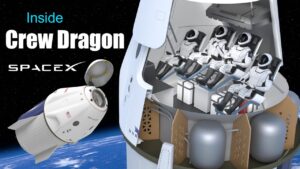
- Return Vehicle: SpaceX’s Crew Dragon spacecraft SpaceX’s Crew Dragon is a reusable spacecraft designed to carry astronauts to and from the International Space Station (ISS). Developed under NASA’s Commercial Crew Program, it features advanced automation, a sleek touchscreen interface, and a proven track record of safe missions. Equipped with powerful thrusters, life support systems, and emergency abort capabilities, Crew Dragon has become NASA’s most reliable option for human spaceflight.
- Backup Vehicles (Not Used): Boeing’s Starliner (grounded), Russian Soyuz (not involved in this mission)
The Crew Dragon spacecraft will also bring a new team of astronauts to the ISS, ensuring continuity of operations aboard the station.
For live updates on Sunita Williams’ mission and the Crew-10 launch, readers can watch NASA’s live stream on NASA Live or follow real-time mission updates on NASA+ and NASA’s Commercial Crew Program on X (Twitter).
Conclusion
For astronauts Sunita Williams and Barry Wilmore, their unplanned extended stay in orbit has been a testament to professionalism and adaptability under unusual circumstances. While Boeing’s Starliner has become a symbol of what can go wrong, SpaceX’s Crew Dragon has emerged as the reliable hero of this story. With a March 2025 return date in sight, Sunita Williams and Barry Wilmore’s long journey underscores both the promise and pitfalls of modern space exploration. Let’s hope the next time someone heads to space, their return ticket is a little more reliable.