Introduction – Understanding the Features of JavaScript
In the ever-evolving landscape of frontend development, one programming language consistently stands out: JavaScript. Whether you’re a beginner stepping into web development or a professional fine-tuning web applications, understanding the features of JavaScript is crucial to mastering interactive and dynamic websites.
Table Of Content
- Introduction – Understanding the Features of JavaScript
- What is JavaScript?
- JavaScript Characteristics
- Client-Side Scripting
- Dynamic and Interactivity
- Cross-Platform Compatibility
- ECMAScript Standard
- Object-Oriented
- Top JavaScript Features Explained
- 1.General Language Features
- Dynamic Typing
- First-class Functions
- Closures
- Garbage Collection
- Data Structures
- 2.JavaScript Features for Web Development
- Event Handling
- DOM Manipulation
- Asynchronous Programming
- Error Handling
- Module System
- 3.Prototype-Based JavaScript Characteristics
- Prototype Inheritance
- Object Creation
- 4.JavaScript New Features (ES6 and Beyond)
- ES6+ Features
- Asynchronous Programming Enhancements
- Module System (ES6 Modules)
- New Data Structures
- Conclusion – Why Learning JavaScript Features Matters
- Final Thoughts
- FAQs – Features of JavaScript
- 1. What is JavaScript, and why is it important?
- 2. What are the core JavaScript features?
- 3. How does JavaScript manage asynchronous tasks?
- 4. What is DOM, and how does JavaScript use it?
- 5. How is prototype-based inheritance different?
Often referred to as JS, JavaScript is a powerful, high-level programming language that enables developers to craft rich user experiences. From form validation and real-time data updates to asynchronous processing, JavaScript plays a central role in the frontend development ecosystem.

What is JavaScript?
JavaScript is a dynamic, high-level, and interpreted programming language widely used for web development. It enables the creation of interactive, real-time web pages and allows manipulation of HTML/CSS, event handling, and communication with servers—all in the browser.
JavaScript Characteristics
Here are the most essential JavaScript characteristics that make it a foundational web language:
Client-Side Scripting
JavaScript is primarily used on the client side of web development, which means it runs in a user’s web browser. This allows it to enhance the user experience by enabling features like form validation, animations, and dynamic content updates without the need to reload the entire web page.
Dynamic and Interactivity
JavaScript makes web pages dynamic by allowing developers to modify the Document Object Model (DOM), which represents the structure of a web page. This enables the creation of interactive elements, such as dropdown menus, image sliders, and real-time data updates.
Cross-Platform Compatibility
JavaScript is supported by all major web browsers, making it a cross-platform language. This means that code written in JavaScript will work consistently across different browsers and operating systems.
ECMAScript Standard
JavaScript is often referred to as ECMAScript (or ES) because it is standardized by the ECMAScript International organization. ECMAScript defines the syntax and core features of the language. JavaScript engines in web browsers implement the ECMAScript standard.
Object-Oriented
JavaScript is an object-oriented language, which means it uses objects to represent data and behavior. Developers can create their own objects and define methods and properties for those objects.
Top JavaScript Features Explained
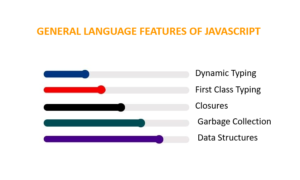
1.General Language Features
Dynamic Typing
JavaScript is dynamically typed, meaning variable types are determined at runtime. You can change the type of a variable on the fly.
First-class Functions
Functions in JavaScript are first-class citizens, which means they can be assigned to variables, passed as arguments to other functions, and returned from functions.
Closures
JavaScript supports closures, allowing functions to “remember” and access variables from their outer scope even after that scope has exited.
Garbage Collection
JavaScript automatically handles memory management through garbage collection, freeing developers from managing memory explicitly.
Data Structures
JavaScript provides built-in data structures such as arrays and objects for storing and manipulating data.
2.JavaScript Features for Web Development
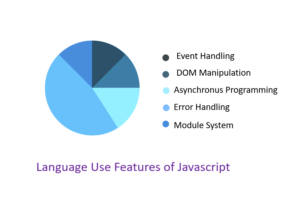
Event Handling
JavaScript is commonly used for event handling in web development, enabling responses to user interactions like clicks, mouse movements, and keyboard input.
DOM Manipulation
JavaScript allows for dynamic manipulation of the Document Object Model (DOM), which represents the structure of a web page, enabling changes to web page content and structure.
Asynchronous Programming
JavaScript uses callbacks, promises, and async/await to handle asynchronous operations, making it suitable for tasks like fetching data from APIs without blocking the user interface.
Error Handling
JavaScript provides try…catch statements for handling and managing errors in code execution.
Module System
JavaScript supports modular programming with the import and export keywords, allowing code organization and reuse.
3.Prototype-Based JavaScript Characteristics
Prototype Inheritance
JavaScript uses a prototype-based inheritance model where objects can inherit properties and methods from other objects. This is distinct from classical inheritance
found in languages like Java or C++.
Object Creation
In JavaScript, objects can be created directly from other objects, and there is no concept of classes (though ES6 introduced class syntax for syntactical similarity).
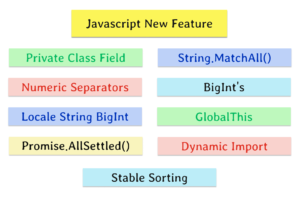
4.JavaScript New Features (ES6 and Beyond)
ES6+ Features
JavaScript has been evolving with new features introduced in ECMAScript standards. Some popular ES6+ features include arrow functions, destructuring, template literals, and the spread/rest operator.
Asynchronous Programming Enhancements
Promises and async/await are newer features that simplify asynchronous code, making it more readable and maintainable.
Module System (ES6 Modules)
ES6 introduced a standardized module system, allowing for a more organized and reusable code structure.
New Data Structures
JavaScript has introduced new data structures like Sets and Maps for improved data organization and manipulation.
Conclusion – Why Learning JavaScript Features Matters
In today’s fast-paced digital world, JavaScript features empower developers to create seamless, interactive, and dynamic web applications. From its dynamic typing and event handling to new ES6+ features, JavaScript continues to be a cornerstone of modern frontend development.
Whether you’re building a portfolio, a SaaS platform, or a responsive UI, understanding these JavaScript characteristics is essential to writing optimized and maintainable code.
Final Thoughts
If you’re excited to learn more about JavaScript and want hands-on experience with its practical applications, check out our Frontend Development Course at Kaashiv Infotech. It’s the perfect place to start mastering the features of JS, dive into modern frameworks, and become a job-ready frontend developer.
FAQs – Features of JavaScript
1. What is JavaScript, and why is it important?
JavaScript is a scripting language for creating dynamic and interactive web pages. It’s vital in web development for enhancing the user experience.
2. What are the core JavaScript features?
Key features include dynamic typing, event handling, prototype-based inheritance, first-class functions, and modular support.
3. How does JavaScript manage asynchronous tasks?
JavaScript handles asynchronous programming through callbacks, promises, and async/await, preventing the browser from freezing during background operations.
4. What is DOM, and how does JavaScript use it?
The DOM (Document Object Model) is a structured representation of a web page. JavaScript can modify it in real-time to create dynamic content.
5. How is prototype-based inheritance different?
Unlike class-based languages like Java, JavaScript allows objects to inherit directly from other objects through prototypes.