

If you are learning programming, you will definitely come across type casting. Whether it’s Java, Python, C, C++, or C#, understanding type casting is essential for writing clean and error-free code.
In this detailed guide, you’ll learn:
- What is type casting
- Implicit type casting
- Explicit type casting
- Difference between type casting and type conversion
- Type casting in Java, Python, C, C++, and C#
- Real-world examples for beginners
Let’s start from the basics.
What Is Type Casting?
Type casting is the process of converting one data type into another data type.
For example:
- Converting an
inttodouble - Converting
floattoint - Converting
stringtointeger
It is mainly used when:
- Performing mathematical operations
- Assigning values to different data types
- Avoiding data loss errors
- Working with user inputs
There are two types of type casting:
- Implicit Type Casting
- Explicit Type Casting

Implicit Type Casting
What Is Implicit Type Casting?
Implicit type casting (also called automatic type conversion) happens automatically by the compiler.
It occurs when:
- Converting a smaller data type to a larger data type
- There is no risk of data loss
Example:
int a = 10;
double b = a;   // int automatically converted to double
Here:
int→double- No data loss
- No manual conversion needed
This is called implicit type casting.
Implicit Type Casting in Java
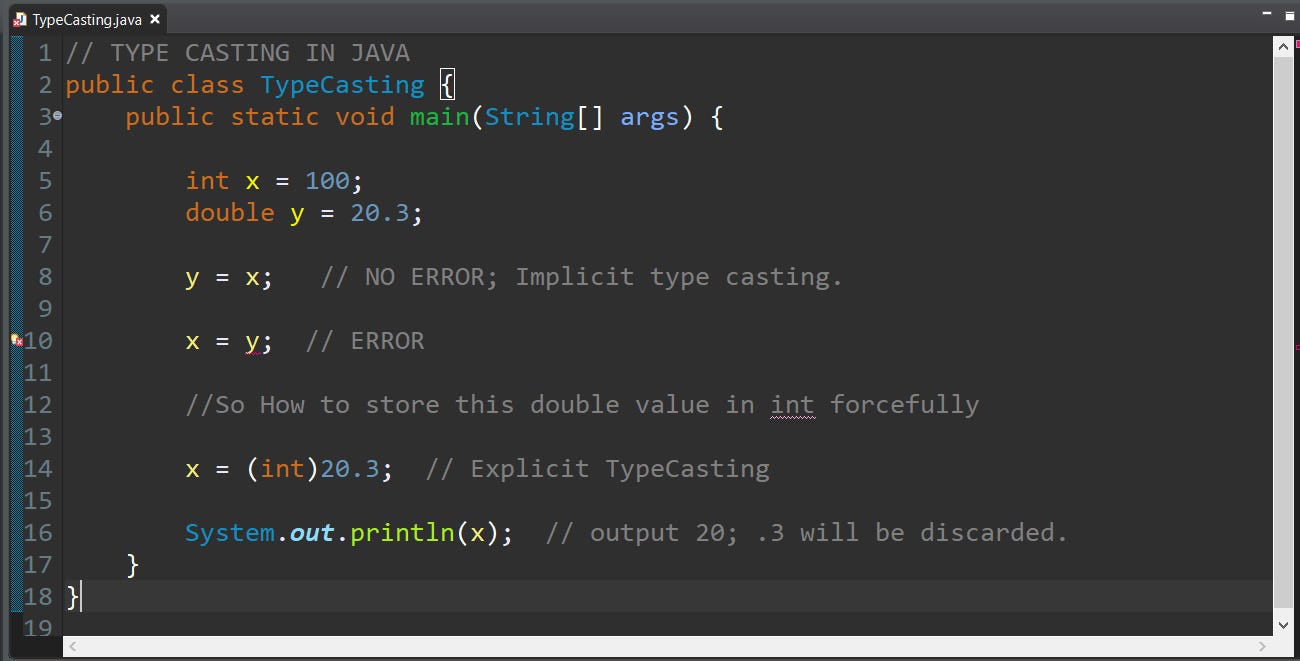
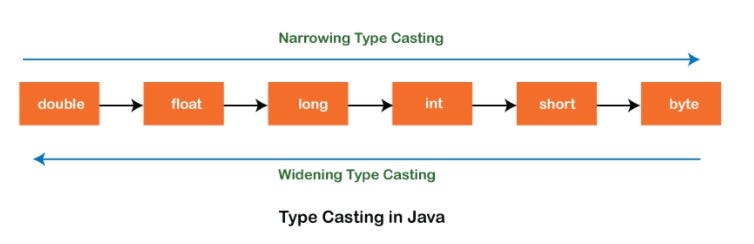
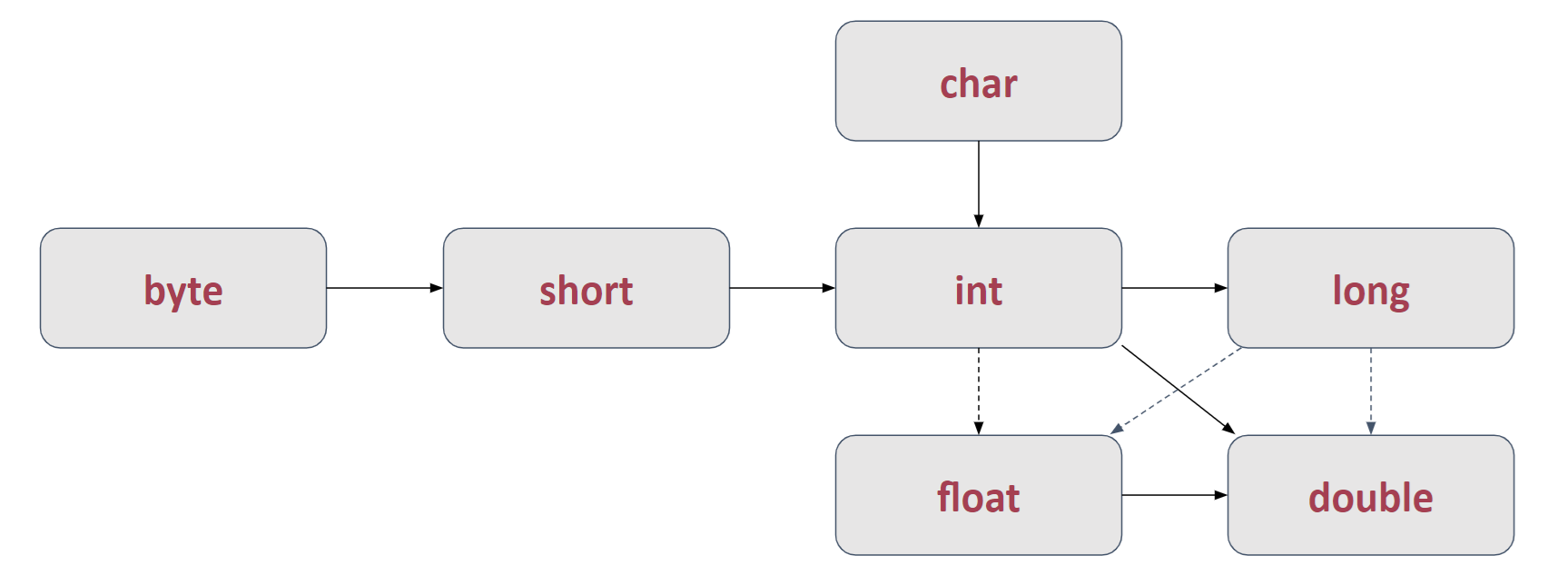
In Java, implicit casting is also called Widening Casting.
Example:
int num = 100;
double result = num;  // automatic conversion
System.out.println(result);
Output:
100.0
Smaller → Larger:
- byte → short → int → long → float → double
This is safe and automatic.
Implicit Type Casting in Python
In Python, implicit casting happens during arithmetic operations.
a = 10
b = 5.5
c = a + b
print(c)
Output:
15.5
Python automatically converts int to float.
Implicit Type Casting in C
int a = 5;
float b = a;
printf("%f", b);
The integer is automatically converted into float.
Explicit Type Casting
What Is Explicit Type Casting?
Explicit type casting (also called manual type casting) is when the programmer manually converts one data type into another.
It is required when:
- Converting larger data type to smaller data type
- There is risk of data loss
Example:
double a = 10.75;
int b = (int)a;   // manual conversion
Here:
- decimal part is removed
- possible data loss
- programmer forces conversion
Explicit Type Casting in Java

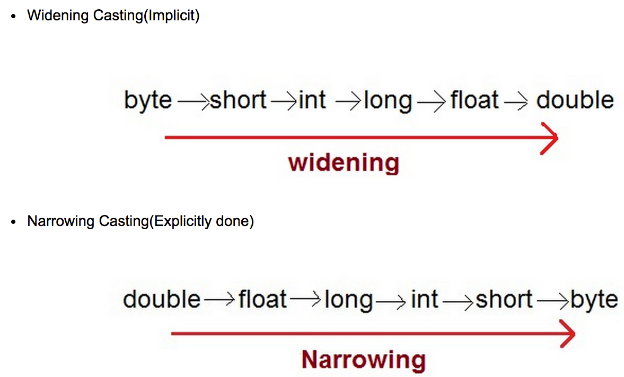
In Java, explicit casting is also called Narrowing Casting.
Example:
double num = 9.78;
int result = (int) num;
System.out.println(result);
Output:
9
Large → Smaller:
- double → float → long → int → short → byte
Data loss may happen.
Explicit Type Casting in Python
Python uses built-in functions.
a = 10.8
b = int(a)
print(b)
Output:
10
Other functions:
- int()
- float()
- str()
- bool()
Explicit Type Casting in C++
double x = 5.7;
int y = (int)x;
cout << y;
Output:
5
Type Casting in C#
double a = 15.9;
int b = (int)a;
Console.WriteLine(b);
Difference Between Implicit and Explicit Type Casting
| Feature | Implicit Type Casting | Explicit Type Casting |
|---|---|---|
| Also Called | Automatic Conversion | Manual Conversion |
| Performed By | Compiler | Programmer |
| Data Loss | No | Possible |
| Example | int → double | double → int |
| Safe | Yes | Risky |
Difference Between Type Casting and Type Conversion
Many beginners get confused between:
- Type Casting
- Type Conversion
Type Conversion
General process of converting one data type to another (automatic or manual).
Type Casting
Usually refers to manual (explicit) conversion.
In simple words:
All type casting is type conversion, but not all type conversion is explicit type casting.
Type Casting in Java Complete Overview
Java supports:
- Implicit Type Casting (Widening)
- Explicit Type Casting (Narrowing)
Widening Example:
int a = 50;
double b = a;
Narrowing Example:
double a = 50.99;
int b = (int)a;
Java follows strict rules for casting.
What Is Implicit and Explicit Type Casting?
To summarize:
Implicit Type Casting:
- Automatic
- Safe
- Smaller → Larger
Explicit Type Casting:
- Manual
- Risk of data loss
- Larger → Smaller
Real-Life Example to Understand Easily
Imagine:
Small bottle → Big bottle
Easy transfer → No loss
= Implicit
Big bottle → Small bottle
Some liquid may spill
= Explicit
That’s exactly how type casting works in programming.
🔴 Common Errors in Type Casting
Understanding mistakes is just as important as understanding concepts. Many runtime errors and logic bugs happen due to incorrect type casting.
1️⃣ Data Loss During Explicit Casting
When converting a larger data type to a smaller one, precision may be lost.
Example (Java)
double num = 9.78;
int result = (int) num;
System.out.println(result);
Output:
9
The decimal .78 is permanently removed.
⚠ Problem: Precision loss
✅ Solution: Avoid narrowing unless necessary.
2️⃣ Overflow Error
Overflow happens when a value exceeds the storage capacity of the target data type.
Example (C)
int a = 130;
char b = (char)a;
printf("%d", b);
Since char stores smaller values, the result may wrap around unexpectedly.
⚠ Problem: Unexpected values
✅ Solution: Always check value ranges before casting.
3️⃣ ClassCastException in Java
Occurs when casting incompatible object types.
Object obj = new Integer(10);
String str = (String) obj;  // Runtime error
Error:
ClassCastException
⚠ Problem: Invalid object casting
✅ Solution: Use instanceof before casting.
4️⃣ Invalid Literal Conversion in Python
a = "hello"
b = int(a)
Error:
ValueError: invalid literal for int()
⚠ Problem: Cannot convert non-numeric string
✅ Solution: Validate input before casting.
5️⃣ Loss of Precision – Float Issues
Floating-point numbers may not store exact values.
a = 0.1 + 0.2
print(a)
Output:
0.30000000000000004
⚠ Problem: Precision mismatch
✅ Solution: Use decimal libraries when needed.
🎯 Real Interview Questions on Type Casting
Beginner Level
- What is type casting?
- What is the difference between implicit and explicit type casting?
- What is widening and narrowing casting in Java?
- Can implicit casting cause data loss?
- What happens when double is cast to int?
Intermediate Level
- Why does explicit casting cause data loss?
- What is the difference between type casting and type conversion?
- How does Python handle type casting?
- What is upcasting and downcasting in OOP?
- What is ClassCastException?
Advanced Level
- How does memory representation affect casting?
- What is boxing and unboxing?
- Explain casting in inheritance.
- When should you avoid explicit casting?
- How do C++ casting operators differ from C-style casting?
📊 Type Casting Table for All Languages
| Language | Implicit Casting | Explicit Casting | Example Syntax | Data Loss Possible |
|---|---|---|---|---|
| Java | Yes | Yes | (type) variable | Yes (narrowing) |
| Python | Yes | Yes | int(), float() | Yes |
| C | Yes | Yes | (type) variable | Yes |
| C++ | Yes | Yes | (type) variable | Yes |
| C# | Yes | Yes | (type) variable | Yes |
Language-Wise Example Syntax
Java
int a = 10;
double b = a;        // implicit
int c = (int) b;     // explicit
Python
a = 10
b = float(a)
c = int(b)
C
float a = 5.6;
int b = (int)a;
C++
double x = 9.5;
int y = (int)x;
C#
double d = 8.9;
int i = (int)d;
Why Type Casting Is Important
You need type casting when:
- Performing arithmetic operations
- Handling user inputs
- Reading files
- Converting data types
- Working with APIs
- Data Science & Backend Development
Without type casting, programs may throw errors.
FAQ: Implicit and Explicit Type Casting
1. What is type casting in programming?
Type casting is the process of converting one data type into another. For example, converting an int to float or double to int. It helps programs handle different types of data correctly.
2. What is implicit type casting?
Implicit type casting is automatic type conversion performed by the compiler. It usually happens when converting a smaller data type to a larger data type without data loss.
Example:
int → double
3. What is explicit type casting?
Explicit type casting is manual type conversion done by the programmer. It is required when converting a larger data type to a smaller data type, and it may cause data loss.
Example:
double → int
4. What is the difference between implicit and explicit type casting?
Implicit casting is automatic and safe (smaller to larger type).
Explicit casting is manual and may cause data loss (larger to smaller type).
5. What is type casting in Java?
Type casting in Java is converting one primitive data type into another. Java supports:
- Implicit casting (Widening)
- Explicit casting (Narrowing)
Example:
int a = 10;
double b = a;  // implicit
6. What is implicit type casting in Java?
Implicit type casting in Java (Widening Casting) automatically converts a smaller data type to a larger data type.
Example:
int num = 100;
double result = num;
7. What is explicit type casting in Java?
Explicit type casting in Java (Narrowing Casting) manually converts a larger data type to a smaller data type using parentheses.
Example:
double num = 9.8;
int result = (int) num;
8. What is type casting in Python?
Type casting in Python is converting one data type to another using built-in functions like:
int()float()str()bool()
Example:
a = "10"
b = int(a)
9. What is implicit type casting in Python?
Implicit casting in Python happens automatically during operations like arithmetic expressions.
Example:
a = 5
b = 2.5
c = a + b
Python converts int to float.
10. What is type casting in C?
Type casting in C converts one data type to another using casting operators.
Example:
float a = 5.5;
int b = (int)a;
11. What is type casting in C++?
Type casting in C++ converts data types using C-style casting or C++ casting operators.
Example:
double x = 10.7;
int y = (int)x;
12. What is type casting in C#?
Type casting in C# converts data types using implicit or explicit casting.
Example:
double a = 15.5;
int b = (int)a;
13. What is the difference between type casting and type conversion?
Type conversion is a general term for changing one data type into another.
Type casting usually refers to explicit (manual) conversion.
14. Why is type casting important?
Type casting prevents errors, ensures compatibility between data types, and allows proper arithmetic and data manipulation in programs.
15. When should you use explicit type casting?
Use explicit type casting when:
- Converting larger data type to smaller type
- You need precise control over data
- Avoiding compilation errors
- Handling user input conversions
🧠 Memory-Level Explanation of Type Casting
This section builds authority and makes your article better than competitors.
How Data Is Stored in Memory
Each data type uses specific bytes:
| Data Type | Typical Memory Size |
|---|---|
| int | 4 bytes |
| float | 4 bytes |
| double | 8 bytes |
| char | 1 byte |
Why Implicit Casting Is Safe
When converting:
int → double
The double (8 bytes) has enough space to store the integer (4 bytes).
No data loss occurs.
Why Explicit Casting Causes Data Loss
When converting:
double → int
You are reducing 8 bytes to 4 bytes.
The fractional part cannot fit into integer format.
So:
9.78 → 9
Fraction removed.
Binary-Level Explanation
Example:
Integer 9:
00001001
Double 9.78:
Stored with mantissa + exponent (IEEE 754 format)
When casting double to int:
- Decimal portion is truncated
- Only integer bits retained
That’s why narrowing casting is risky.
🔥 Widening vs Narrowing Hierarchy
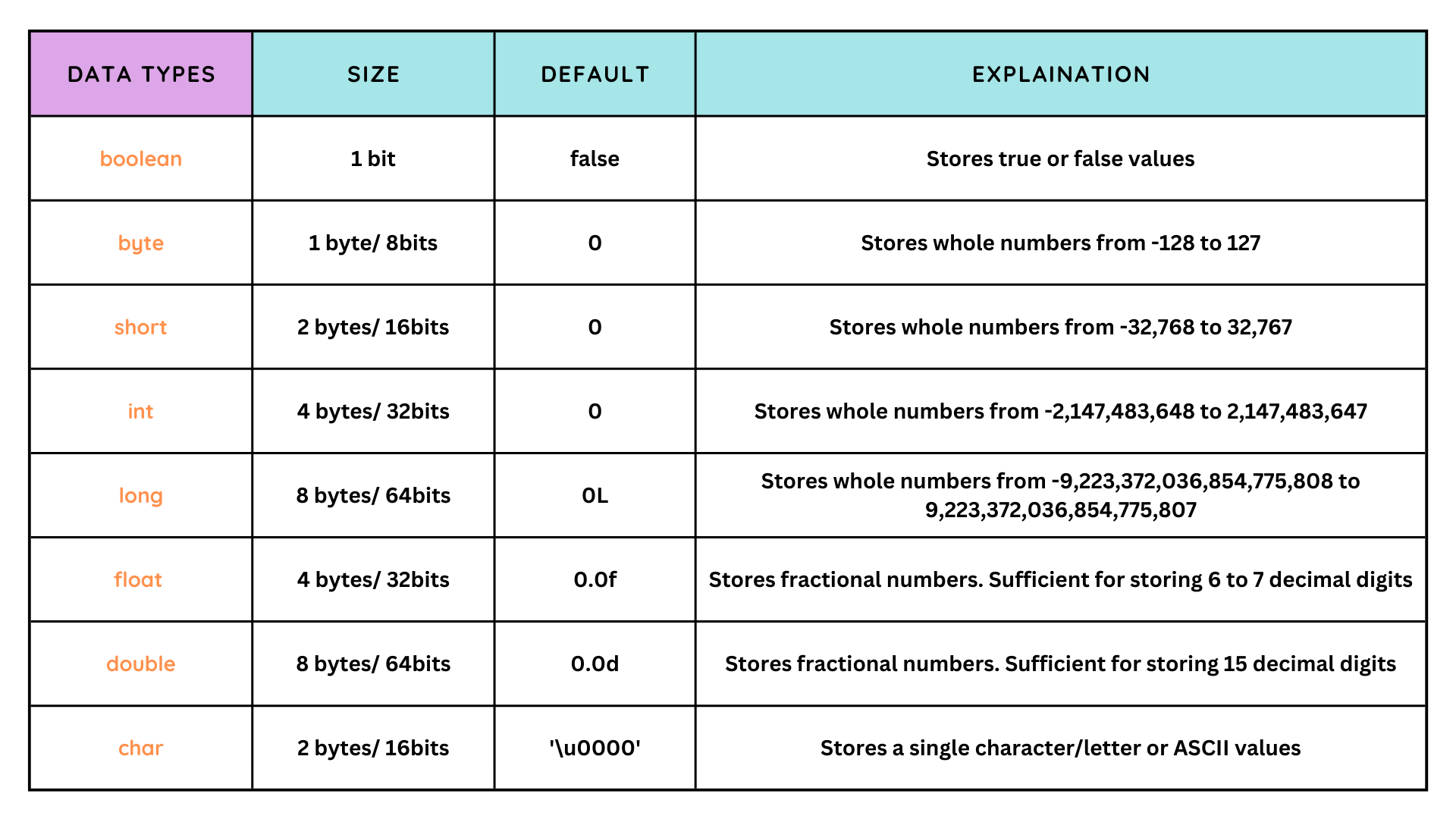
Widening Order:
byte → short → int → long → float → double
Narrowing Order:
double → float → long → int → short → byte
🔗 Related Reads
- What are the different types of Java data types?
- Type Conversion in Programming: The Ultimate Guide to Safer, Smarter Code — and Costly Casting Errors to Avoid
- Stack in Data Structure: The Hidden Power Behind Every App, Algorithm & AI System
- What is Web Development? A Beginner’s Guide to Crafting the Digital World
- C – Primitive Data Types
Final Thoughts
Understanding implicit and explicit type casting is fundamental for every programmer.
You learned:
- What is type casting
- Implicit type casting in Java, Python, C
- Explicit type casting in Java, Python, C++
- Difference between implicit and explicit type casting
- Difference between type casting and type conversion
Master this concept early, and your programming foundation becomes much stronger.


