Introduction
Object-Oriented Programming (OOP) is a programming paradigm that is based on the concept of “objects.” In OOP, you design and model your software by creating objects, which are instances of classes, and defining relationships and behaviors between these objects. OOP promotes the organization and structuring of code in a way that makes it easier to understand, maintain, and scale.
Table Of Content
- Introduction
- What is OOPS?
- Top Features of OOPS
- 1.Inheritance
- 2.Encapsulation
- 3.Abstraction
- 4.Polymorphism
- 5.Method Overriding
- 6.Method Overloading
- 7.Objects
- 8.Classes
- 9.Constructors and Destructors
- Conclusion
- FAQs
- 1. Which are the best features of OOPs, and why? Explain.
- 🔒 Encapsulation
- 🧬 Inheritance
- 🌀 Polymorphism
- 🎭 Abstraction
- 🧱 Classes and Objects
- 2. What is an object in OOPs?
- ✅ Attributes (Properties)
- ⚙️ Methods (Behaviors)
- 🔒 Encapsulation
- 📌 State
- 🆔 Identity
- 🧪 Instantiation
- 3. What are the basic principles and features of OOPs?
- 🛡️ Encapsulation
- 🧬 Inheritance
- 🔁 Polymorphism
- 🎯 Abstraction
What is OOPS?
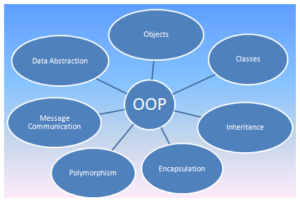
Object-Oriented Programming (OOP) is a programming paradigm that uses objects and classes to design and structure code. It revolves around four main principles: encapsulation, inheritance, abstraction, and polymorphism. These principles help in creating modular and reusable code, improving code maintainability, and reducing code complexity.
Top Features of OOPS
1.Inheritance
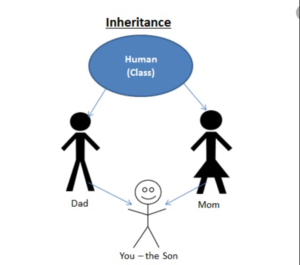
- Inheritance is a fundamental feature of OOP that allows a class (subclass or derived class) to inherit properties and behaviors (fields and methods) from another class (superclass or base class). This promotes code reuse and establishes a hierarchy of classes.
- For example, you can create a base class called “Vehicle” with common attributes like “color” and “speed,” and then derive subclasses like “Car” and “Motorcycle” that inherit these attributes.
2.Encapsulation
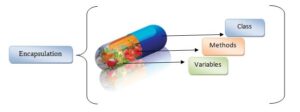
- Encapsulation is one of the core features of OOP. It refers to the bundling of data (variables) and methods (functions) that operate on the data into a single unit called a class.
- This ensures data protection and hides the internal state from outside interference.
- Encapsulation is the concept of bundling data (attributes or fields) and methods (functions) that operate on that data into a single unit called a class. It also involves restricting direct access to some of an object’s components.
- Encapsulation helps in data hiding and protecting the internal state of an object, allowing controlled access through methods (getters and setters).
- For example, you can encapsulate the “age” attribute of a “Person” class and provide methods like “getAge” and “setAge” to control access to it.
3.Abstraction
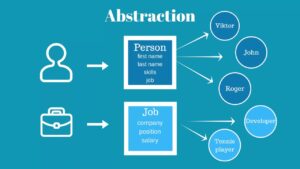
- Abstraction allows you to hide complex implementation details and show only the necessary parts to the user.
- This is one of the most powerful features of object oriented programming that simplifies the development process.
- Abstraction is the process of simplifying complex reality by modeling classes based on the essential properties and behaviors while ignoring non-essential details.
- It allows you to focus on what an object does rather than how it does it.
- For example, when modeling a “BankAccount” class, you abstract away the details of the banking system and focus on its core functionalities like “deposit,” “withdraw,” and “getBalance.”
4.Polymorphism
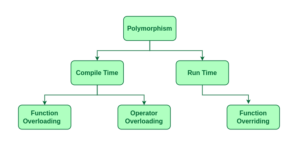
- Polymorphism enables a single function or method to behave differently based on the context.
- This feature of OOP allows flexibility and scalability in object-oriented systems.
- Polymorphism allows objects of different classes to be treated as objects of a common superclass. It enables you to perform operations on objects without knowing their specific types.
- Polymorphism can be achieved through method overriding and method overloading.
- For example, you can have a common interface “Shape” that various shapes like “Circle” and “Rectangle” implement. Then, you can iterate through a list of shapes and call a common “calculateArea” method on each of them, without knowing the specific shape.
5.Method Overriding
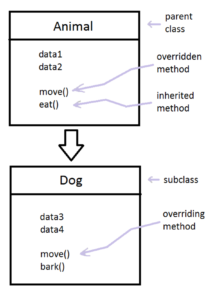
- Method overriding is a form of polymorphism where a subclass provides a specific implementation of a method that is already defined in its superclass.
- This allows a subclass to customize or extend the behavior of a method inherited from the superclass.
- For example, you can override the “toString” method in a subclass to provide a customized string representation of an object.
6.Method Overloading
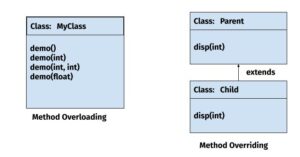
- Method overloading is the ability to define multiple methods in a class with the same name but different parameter lists (different signatures).
- It allows you to provide multiple ways of using a method within the same class.
- For example, you can define different constructors in a class, each accepting different sets of parameters.
7.Objects
- The features of OOPs revolve around the interaction between objects, making the code structure more intuitive and easier to manage
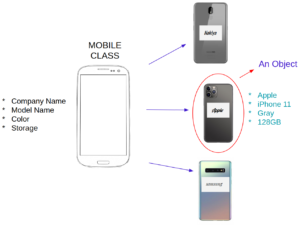
- In OOP, everything is treated as an object, which is an instance of a class. Objects have both data (attributes) and behaviors (methods).
- Objects are created from classes and can interact with each other through method calls and data sharing.
8.Classes
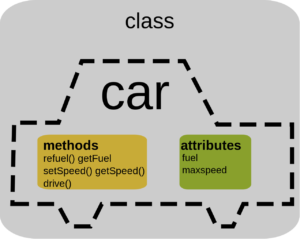
- Classes are the blueprint or template for creating objects. They define the structure (attributes and methods) that objects of the class will have.
- Classes encapsulate the state and behavior of objects.
9.Constructors and Destructors
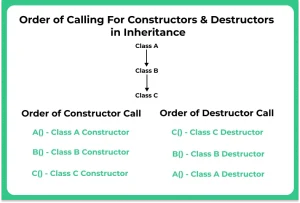
Constructors are special methods within a class that are called when an object of that class is created. They initialize the object’s state.
Destructors (in some programming languages) are methods called when an object is destroyed or goes out of scope, typically used for cleanup operations.
Conclusion
Object-Oriented Programming (OOP) offers a robust methodology to design and structure modern software. The features of OOPs such as encapsulation, inheritance, abstraction, and polymorphism provide the foundation for creating modular, reusable, and maintainable code. These features of object oriented programming enable developers to model real-world entities more effectively using classes and objects.
By understanding and applying the features of OOP, programmers can write cleaner, more organized, and scalable applications across multiple domains and programming languages.
FAQs
1. Which are the best features of OOPs, and why? Explain.
Here are the core features of OOP along with their advantages:
🔒 Encapsulation
Definition: Encapsulation is the bundling of data (attributes) and methods (functions) into a single unit called a class.
Advantage: It protects internal object states and provides controlled access through methods (getters/setters), making code secure and easier to maintain.
🧬 Inheritance
Definition: Inheritance allows one class (child) to inherit the properties and methods of another class (parent).
Advantage: Among the top features of object oriented programming, inheritance promotes code reusability and hierarchical classification of classes.
🌀 Polymorphism
Definition: Polymorphism allows one interface to be used for different underlying data types.
Advantage: It lets objects behave differently based on their class, even when accessed through the same interface. This OOP feature simplifies code and enhances flexibility.
🎭 Abstraction
Definition: Abstraction focuses on exposing only essential features while hiding complex details.
Advantage: It helps reduce programming complexity and increases efficiency by separating interface from implementation.
🧱 Classes and Objects
Definition: A class is a blueprint; an object is an instance of a class.
Advantage: OOP treats everything as an object, encouraging a real-world problem-solving approach. This is one of the foundational features of OOPs.
2. What is an object in OOPs?
An object is a key concept in object oriented programming and represents an instance of a class. It combines attributes (data) and methods (functions) to model real-world entities.
✅ Attributes (Properties)
Attributes define the state of the object. For example, a Car object might have color, make, and model.
⚙️ Methods (Behaviors)
Methods define how an object behaves. For example, a Car object might have startEngine() and stopEngine() methods.
🔒 Encapsulation
Objects encapsulate both data and methods, which is one of the fundamental features of OOP that enhances data security.
📌 State
An object’s state is determined by the current values of its attributes.
🆔 Identity
Each object has a unique identity and can be distinguished from others.
🧪 Instantiation
Creating an object from a class is known as instantiation, which allocates memory and initializes its data.
3. What are the basic principles and features of OOPs?
Here are the four main features of OOPs that every programmer must understand:
🛡️ Encapsulation
Encapsulation ensures that an object’s internal state is hidden from the outside world. This feature of object oriented programming promotes better security and modularity.
🧬 Inheritance
Inheritance supports reusability by allowing a new class to inherit functionality from an existing class, making it one of the core features of OOP.
🔁 Polymorphism
Polymorphism provides a unified interface to different types of objects. This enhances flexibility and scalability in software design.
🎯 Abstraction
Abstraction hides implementation complexity and shows only the relevant details, allowing the programmer to focus on what an object does rather than how it does it.