


What Exactly Is the Alphabet in Numbers?
Let’s get this out of the way first, real simple.
Table Of Content
- What Exactly Is the Alphabet in Numbers?
- ✨ 1. It Starts with A = 1, but It Gets Weirdly Deep
- 🧙 2. Ancient Civilizations Were Obsessed With This
- 💌 3. Secret Codes & Hidden Messages
- 💁 4. Your Name Has a Vibe (Yes, Really)
- 🔠 5. Not Just English — Other Languages Do It Too
- 🧠 6. Brain-Training Games Using Alphabet Numbers
- ✉️ 7. Create Personal Codes for Journaling or Art
- ⚡ Wrap-Up: Why Alphabet in Numbers Still Matters
- 🧭 Quick Tips to Play Around with Alphabet Numbers
- 🧩 Final Thoughts
-
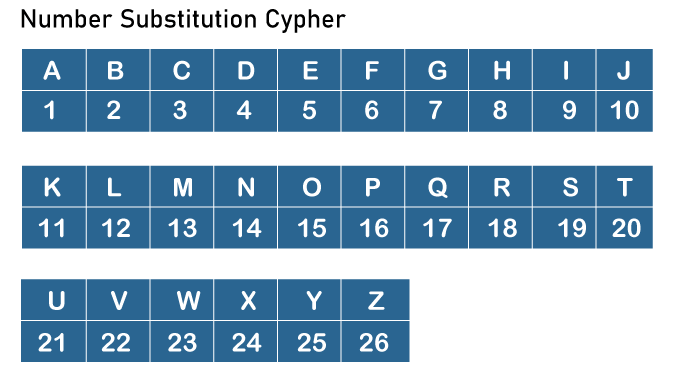
A = 1
-
B = 2
-
C = 3
-
…
-
Z = 26
This system of matching each letter in the alphabet to a number is sometimes called the simple alphabet number code, or even just “A1Z26” in nerdier circles.
But don’t let the simplicity fool you—there’s a lot more going on here than just grade-school games. It’s basically the skeleton key for ciphers, codes, numerology, and even spiritual systems (yep, we’ll get to that).
✨ 1. It Starts with A = 1, but It Gets Weirdly Deep
Here’s a fun example: let’s convert the word “LOVE.”
-
L = 12
-
O = 15
-
V = 22
-
E = 5
12 + 15 + 22 + 5 = 54
Now, reduce that down: 5 + 4 = 9
In numerology, 9 is all about compassion, humanity, and… you guessed it… love.
Coincidence? Maybe. But a cool one.
🧙 2. Ancient Civilizations Were Obsessed With This
Before computers or even standardized numerals, people found ways to encode values into letters.
The Greeks used a system called isopsephy, and the Hebrews had gematria—each assigning numeric values to letters and using that to interpret sacred texts.
Back then, the alphabet in numbers wasn’t just for fun—it was a way to understand life, the universe, and everything in between.

💌 3. Secret Codes & Hidden Messages
Okay, time for story time. In high school, I had a friend who’d write notes using just numbers—so 8 5 12 12 15 meant “HELLO.” It was a simple code, but back then, it felt like we were secret agents.
Wartime spies used basic cipher systems based on alphabetic shifts, like the Caesar cipher, to scramble messages. Some ciphers use A=1 format as their base before applying more complex transformations.
Want to try something cool? Take a phrase, convert it to numbers, shift each by 3, then convert back to letters. Instant secret code. 🕵️

💁 4. Your Name Has a Vibe (Yes, Really)
Ever hear of numerology? It’s the idea that numbers—especially the ones tied to your name or birthday—carry a unique energy or frequency.
Let’s say your name is Emma.
-
E = 5
-
M = 13
-
M = 13
-
A = 1
→ 5 + 13 + 13 + 1 = 32
→ 3 + 2 = 5
In numerology, 5 is all about freedom, adventure, and curiosity. Sound familiar?
You can check out sites like numerology.com to play around with your name’s numeric breakdown. It’s not science—but it’s strangely accurate sometimes.
🔠 5. Not Just English — Other Languages Do It Too
While we focus on the English alphabet in numbers, other writing systems have their own equivalents.
-
Arabic uses the Abjad system
-
Greek has isopsephy
-
Hebrew uses gematria (famously used to interpret the Torah)
These aren’t just old school hacks—they’re baked into the language, tradition, and spiritual practice. Numbers and letters have always been deeply connected across cultures.
🧠 6. Brain-Training Games Using Alphabet Numbers
I like to use the alphabet in numbers method as a kind of mental workout. Here’s one challenge:
Take the word “BRAIN”
Convert each letter to its number: 2, 18, 1, 9, 14
Add them up: 44
Now try to find a different 5-letter word that also adds up to 44.
It’s harder than it looks—and an awesome way to trick your brain into doing math without realizing it. 😄
✉️ 7. Create Personal Codes for Journaling or Art
You can use the alphabet in numbers to hide meaning in poetry, lyrics, even tattoos.
One person I know got a tattoo that simply said “7 4 5” — turned out it was the initials of their siblings: G, D, E. It looked cryptic, but it was super personal.
There’s something special about using numbers to encode feelings, stories, or moments. It’s like writing in invisible ink.
⚡ Wrap-Up: Why Alphabet in Numbers Still Matters
If you’ve stuck with me this far—first off, thank you. 😊 But more importantly, I hope you now see how the alphabet in numbers isn’t just a quirky idea.
It’s:
-
A key to ancient systems and beliefs
-
A base for ciphers and spycraft
-
A tool for creativity, journaling, and introspection
-
A fun way to make everyday words just a bit more magical
And hey, next time you’re bored? Try converting your grocery list into numbers. You’ll never see “MILK” the same way again (13 + 9 + 12 + 11 = 45, by the way).
🧭 Quick Tips to Play Around with Alphabet Numbers
-
Use an alphabet-to-number converter online to skip the math
-
Try numerology apps to break down your name
-
Make DIY secret codes for friends or journal entries
-
Use it for puzzle-making or escape room challenges
-
Add the total of a word’s values and reduce it for its numerology “vibe”
🧩 Final Thoughts
The alphabet in numbers isn’t just an old-school curiosity—it’s a surprisingly powerful tool for creativity, cryptography, and self-reflection. Whether you’re exploring numerology, designing secret messages, or just looking for a brain teaser, A=1 to Z=26 opens the door to countless possibilities. If this kind of pattern-based thinking excites you, you might also enjoy diving into our Blockchain Course—where data, encryption, and smart logic come together in the real world.


