
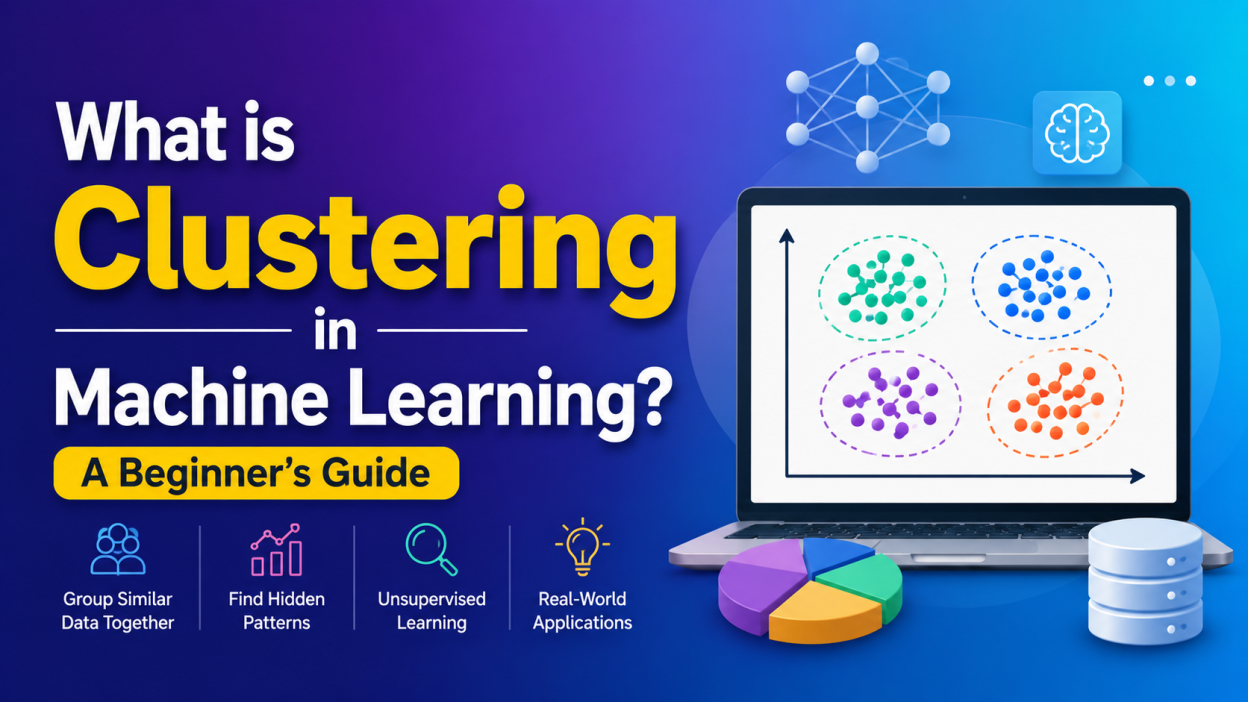
If you’ve searched for “What is Clustering in Machine Learning? A Beginner’s Guide,” you’re probably trying to understand what clustering actually means without getting lost in complicated technical words. Trust me—I was in the same position when I first started learning Machine Learning. Every article seemed full of math formulas and difficult terms, and I almost gave up.
So, let me make it simple.
What is Clustering in Machine Learning? A Beginner’s Guide explains one of the most important concepts in Machine Learning: grouping similar data together. That’s it! Imagine sorting different colored marbles into separate bowls or arranging your music playlist by genre. That’s essentially what clustering does.
In this beginner-friendly guide, I’ll explain what clustering in Machine Learning is, how it works, why it’s useful, its advantages, disadvantages, real-world examples, and whether beginners should learn it. Let’s get started! 🚀
🌟 Key Highlights
- ✅ Learn What is Clustering in Machine Learning? A Beginner’s Guide
- ✅ Understand what clustering means in simple words
- ✅ Learn how clustering works
- ✅ Explore different types of clustering algorithms
- ✅ Discover real-life applications
- ✅ Know the advantages and disadvantages
- ✅ Understand the difference between clustering and classification
- ✅ Find beginner-friendly learning resources
What is Clustering in Machine Learning? A Beginner’s Guide
Let’s imagine you’re cleaning your bedroom.
You have books, clothes, shoes, gadgets, and notebooks scattered everywhere.
Would you throw everything into one box?
Probably not.
Instead, you’d create separate groups:
- 📚 Books together
- 👕 Clothes together
- 👟 Shoes together
- 🎧 Gadgets together
Without realizing it, you’ve just performed clustering.
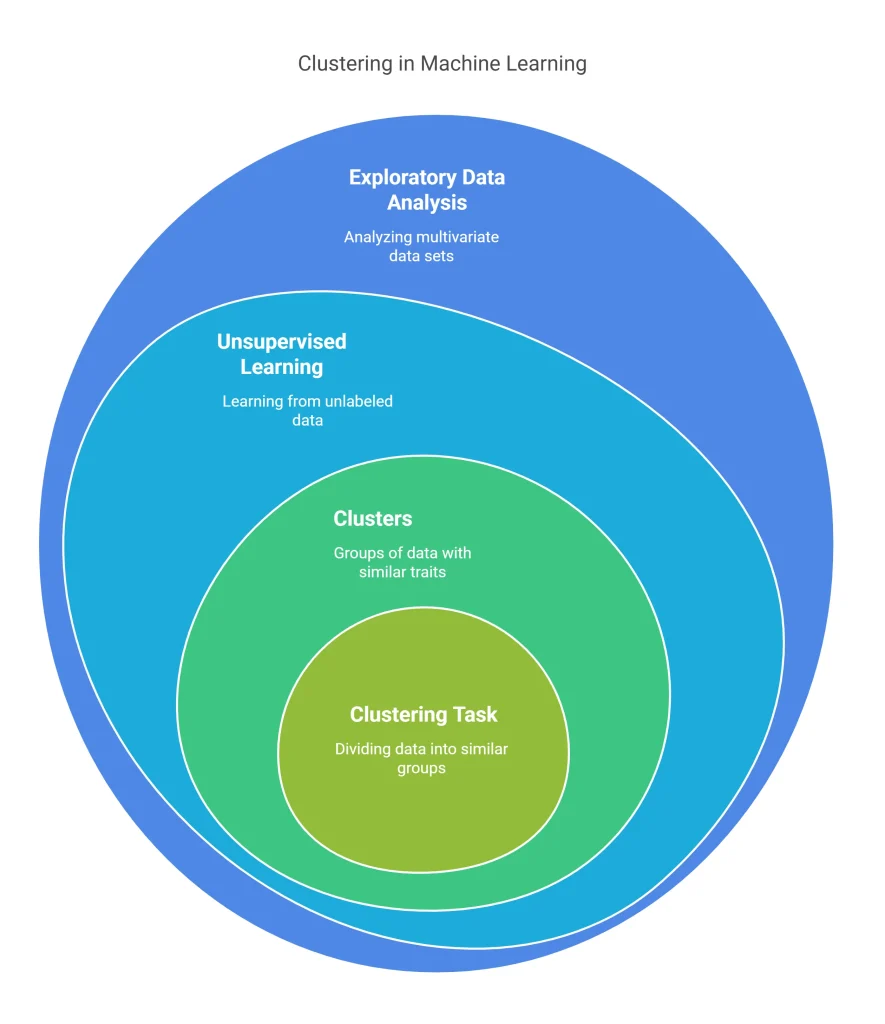
In Machine Learning, clustering works the same way. It groups similar data points together based on their characteristics, without anyone telling the computer what those groups should be.
That’s why clustering is called an Unsupervised Machine Learning technique.
🤔 What Does “Unsupervised Learning” Mean?
This confused me when I first heard the term.
Here’s the simplest explanation.
Imagine a teacher gives students a basket of mixed fruits.
She doesn’t tell them which fruits belong together.
The students naturally group apples with apples, bananas with bananas, and oranges with oranges.
That’s exactly how clustering works.
The computer finds patterns on its own.
No labels.
No answers provided beforehand.
Just patterns waiting to be discovered.
💡 Why is Clustering Important?
You might wonder,
“Why do companies even need clustering?”
The answer is simple.
Today’s businesses collect enormous amounts of data.
Looking through millions of records manually would take forever.
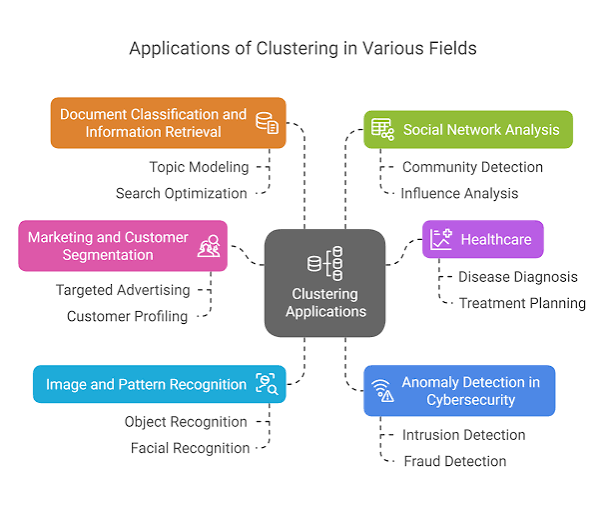
Clustering helps organize that information into meaningful groups.
For example:
- Online stores group customers based on shopping habits.
- Banks identify customers with similar spending patterns.
- Hospitals group patients with similar symptoms.
- Streaming platforms recommend similar movies.
- Marketing companies divide customers into target audiences.
Without clustering, finding useful patterns would be much harder.
⚙️ How Does Clustering Work?
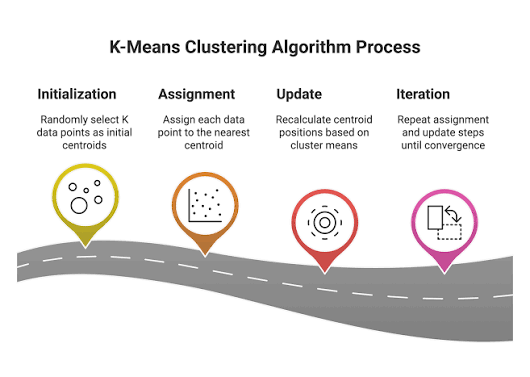
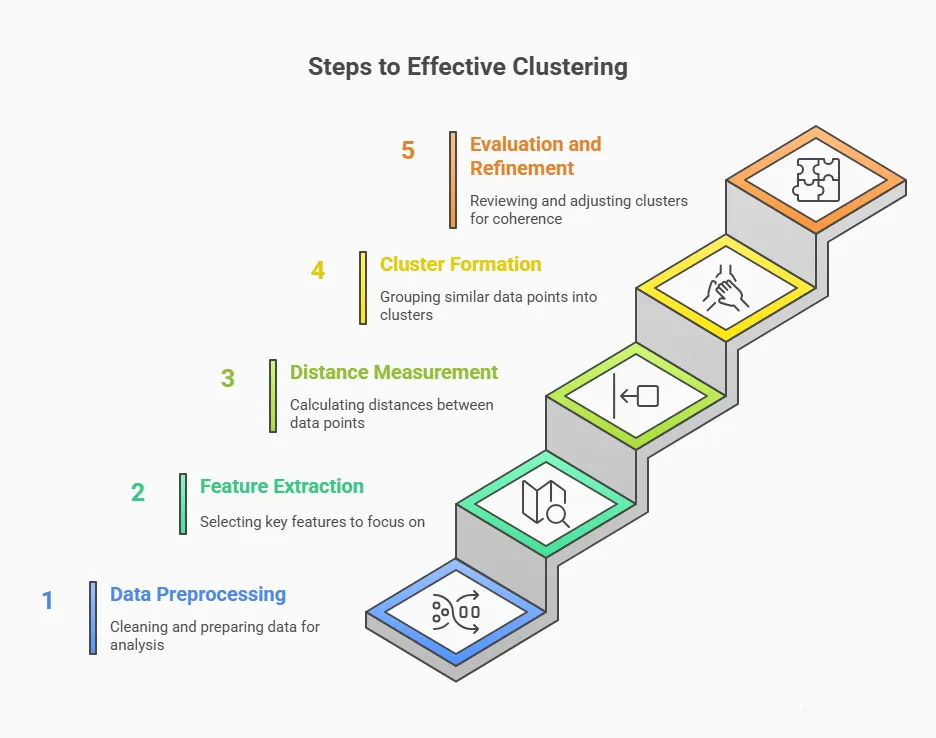
Although different algorithms work differently, the overall process is quite simple.
Step 1: Collect Data
The system gathers information from different sources.
Example:
- Age
- Salary
- Location
- Shopping history
Step 2: Find Similarities
The algorithm compares the data points.
It checks which records are most alike.
Step 3: Create Groups
Similar items are placed into the same cluster.
Different items go into different clusters.
Step 4: Analyze the Clusters
Businesses and data scientists study each group to make better decisions.
Simple—but incredibly powerful.
📚 Types of Clustering Algorithms
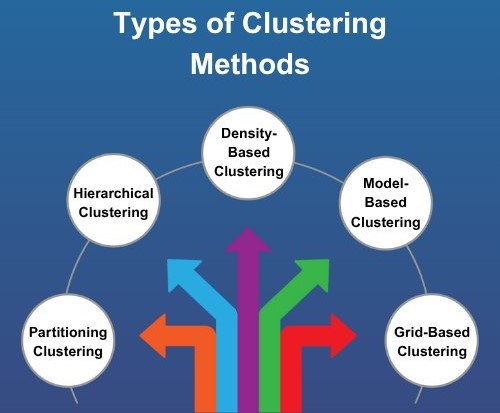
There isn’t just one way to perform clustering.
Here are some popular methods.
1. K-Means Clustering
This is the most popular clustering algorithm for beginners.
It divides data into a predefined number (K) of groups.
It’s:
- Fast
- Easy to understand
- Widely used
2. Hierarchical Clustering
Instead of creating all groups at once, this method builds a tree-like structure of clusters.
It’s useful when you want to understand relationships between groups.
3. DBSCAN
DBSCAN groups closely packed data points while identifying unusual points (outliers).
It’s especially useful when clusters have irregular shapes.
4. Mean Shift Clustering
This algorithm identifies dense areas in the data without needing to specify the number of clusters beforehand.
🌍 Real-Life Examples of Clustering
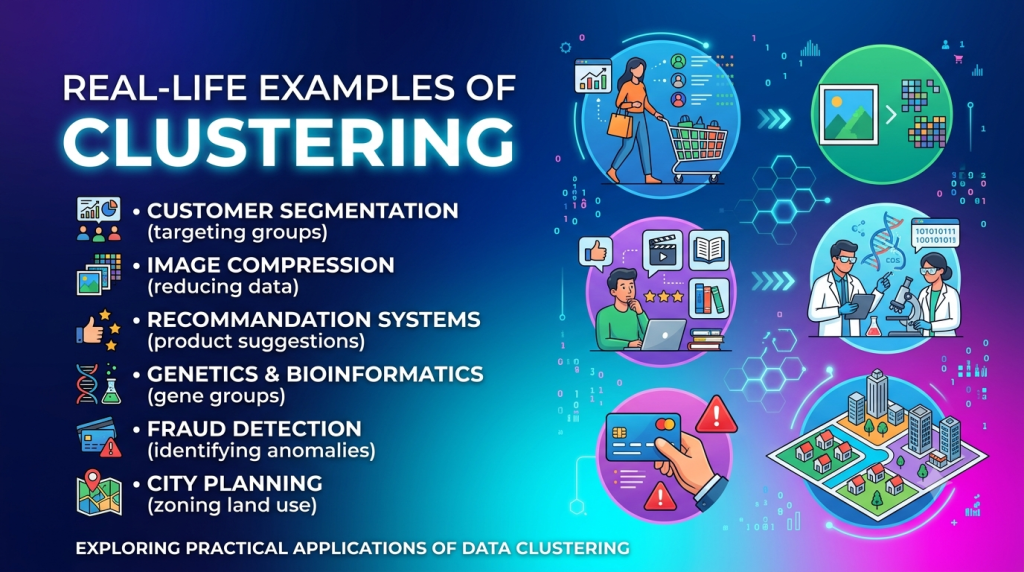
This is where I finally understood clustering.
🛒 Online Shopping
Amazon groups customers with similar buying habits to recommend products.
🎬 Movie Recommendations
Streaming platforms recommend movies based on users with similar preferences.
🏥 Healthcare
Hospitals group patients with similar medical conditions to improve diagnosis and treatment planning.
📱 Social Media
Platforms group users based on interests to personalize content and advertisements.
🏦 Banking
Banks identify spending patterns to detect unusual or potentially fraudulent transactions.
😊 My Experience Learning Clustering
I’ll be honest.
When I first saw the word “clustering,” I imagined it was something incredibly difficult.
Then my instructor gave a simple example.
He asked us to separate different fruits into baskets.
That’s when everything clicked.
I realized Machine Learning isn’t always about complicated equations. Sometimes, it’s just about organizing similar things together.
That small example changed how I approached Machine Learning.
✅ Advantages of Clustering in Machine Learning
There are many reasons why clustering is widely used.
✔ Finds Hidden Patterns
Clustering reveals relationships that may not be obvious at first glance.
✔ No Labeled Data Required
Unlike supervised learning, clustering works without pre-labeled data.
✔ Improves Business Decisions
Companies use clustering to understand customers and improve services.
✔ Better Customer Segmentation
Businesses can create personalized marketing campaigns for different customer groups.
✔ Handles Large Datasets
Modern clustering algorithms can analyze vast amounts of information efficiently.
❌ Disadvantages of Clustering
Like every Machine Learning technique, clustering has some limitations.
❌ Results Can Vary
Different algorithms may produce different clusters for the same data.
❌ Sensitive to Data Quality
Poor-quality or noisy data can reduce clustering accuracy.
❌ Choosing the Right Method Can Be Difficult
Not every clustering algorithm works well for every dataset.
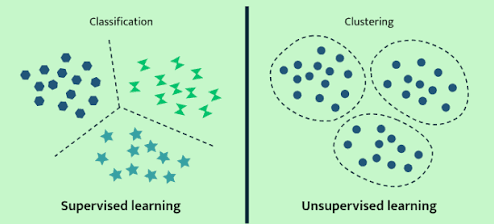
🔄 Clustering vs Classification
Many beginners confuse these two concepts.
Here’s an easy comparison.
| Clustering | Classification |
|---|---|
| Unsupervised Learning | Supervised Learning |
| No labeled data | Uses labeled data |
| Finds hidden groups | Predicts predefined categories |
| Discovers patterns | Makes predictions |
A simple way to remember it:
- Clustering discovers groups.
- Classification predicts labels.
🎯 Is Clustering Still Important?
Absolutely.
As businesses generate more data than ever before, clustering remains one of the most valuable techniques in Machine Learning, Artificial Intelligence (AI), healthcare, finance, retail, cybersecurity, and scientific research.
If you’re planning to learn Machine Learning, clustering is one of the first concepts you should understand.
💡 Tips for Beginners
If you’re just starting your Machine Learning journey, here’s what helped me.
- Learn Python basics first.
- Understand data before learning algorithms.
- Practice with small datasets.
- Visualize clusters using graphs.
- Don’t rush into advanced mathematics.
- Build mini projects to strengthen your understanding.
The more examples you work through, the easier clustering becomes.
🎯 Final Thoughts
If someone asked me today, “What is Clustering in Machine Learning? A Beginner’s Guide?”, I’d explain it like this:
Clustering is the process of grouping similar data points together without predefined labels. It’s one of the core techniques in Unsupervised Machine Learning and helps uncover hidden patterns in data.
When I first learned clustering, I expected it to be intimidating. Instead, I found that simple real-life examples—like sorting fruits or organizing books—made the concept much easier to understand.
Whether you’re aiming to become a data scientist, AI engineer, or simply curious about Machine Learning, learning clustering is a smart investment. Start with the basics, practice consistently, and don’t worry if it feels confusing at first. Every expert once began as a beginner, and with time, you’ll connect the dots too. 🌟
Kaashiv Infotech Offers, Full Stack Python Course, Data Science Course, & More, visit their website www.kaashivinfotech.com.

